
Sterling Silver Condiment Pot
A sterling silver condiment pot brings practical elegance to the dining table, offering refined vessels for mustard, pepper, and salt.
Sterling Silver Condiment Pot
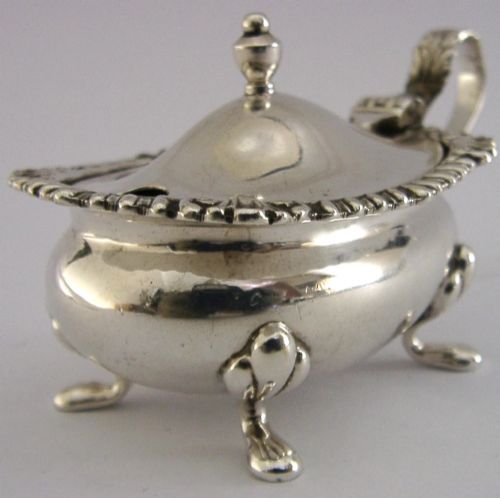
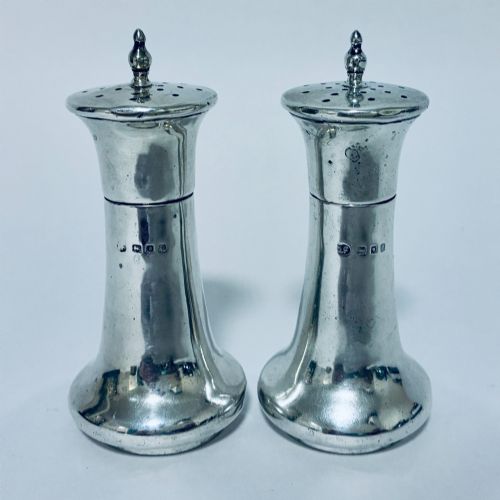
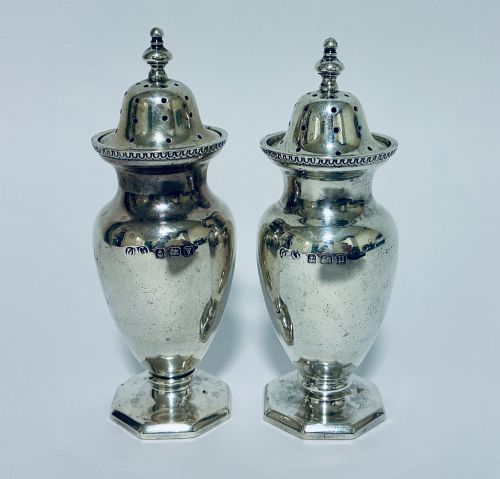
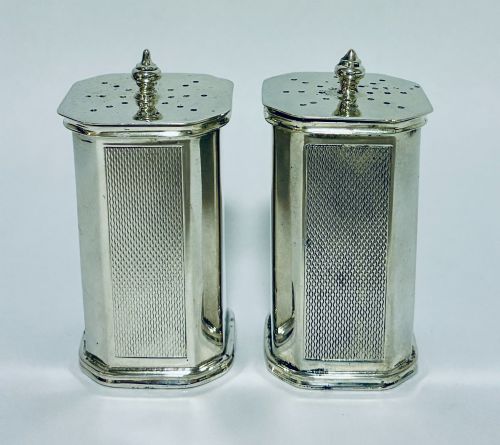
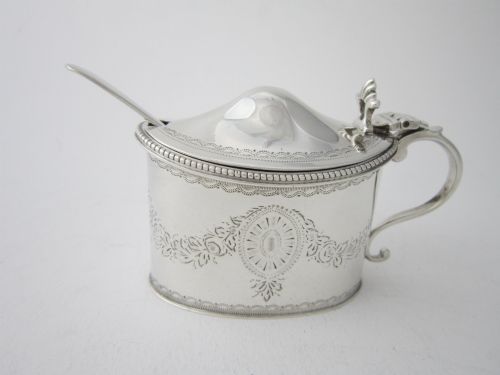
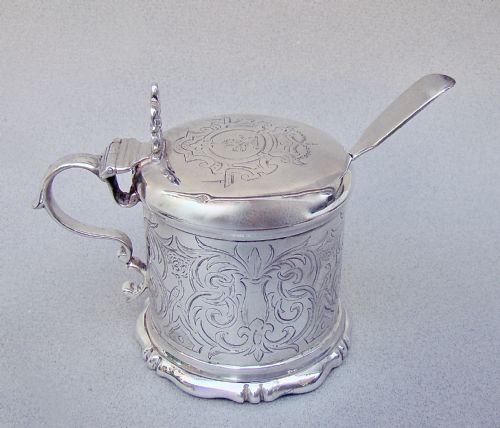
A sterling silver condiment pot is a small table vessel designed for holding mustard, salt, or pepper during meals. When searching for a sterling silver condiment pot, buyers frequently encounter mustard pots, pepper pots, and salt cellars dating from the Georgian, Victorian, and Edwardian periods.
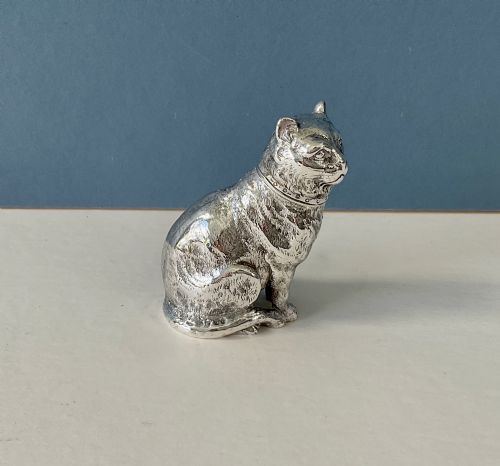
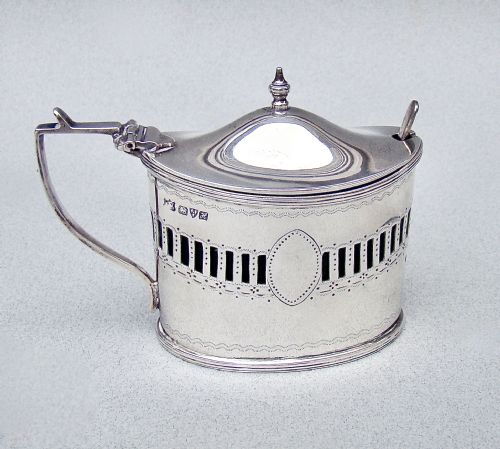
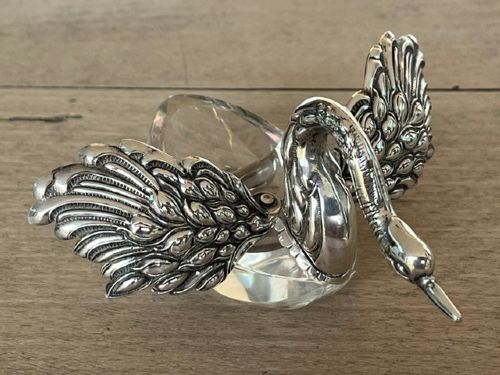
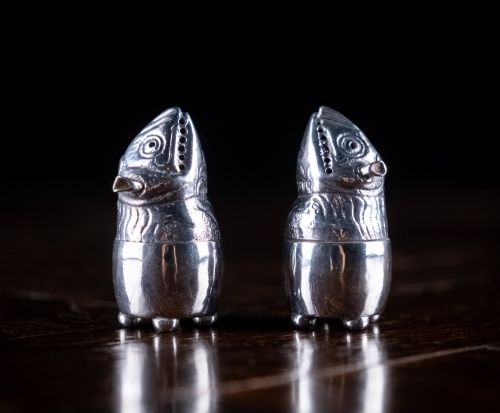
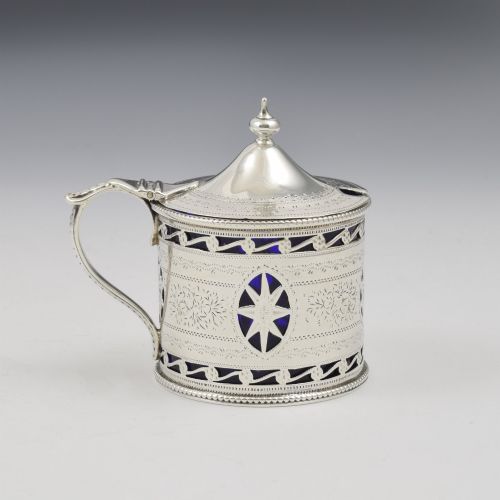
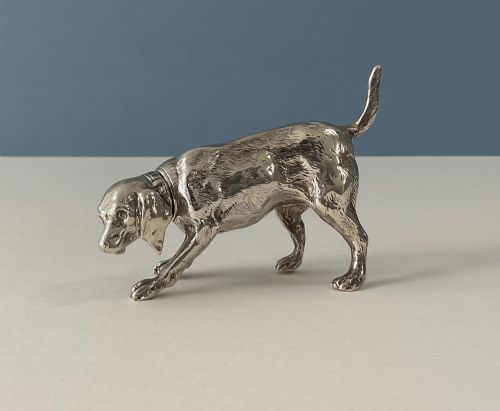
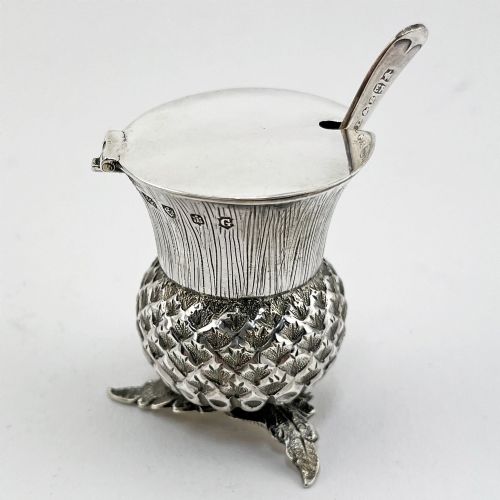
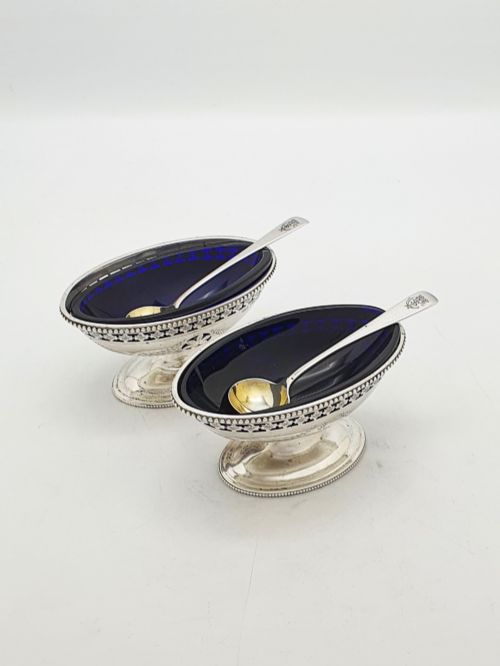
The selection ranges from simple drum and oval mustard pots to elaborate novelty pieces shaped like cats, dogs, birds, owls, and thistles. Many examples incorporate glass liners, including cobalt glass and cut glass, which protect the silver from corrosive condiments.
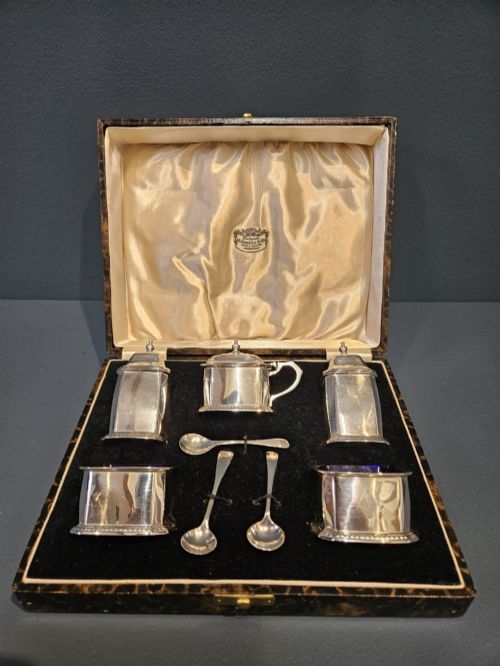
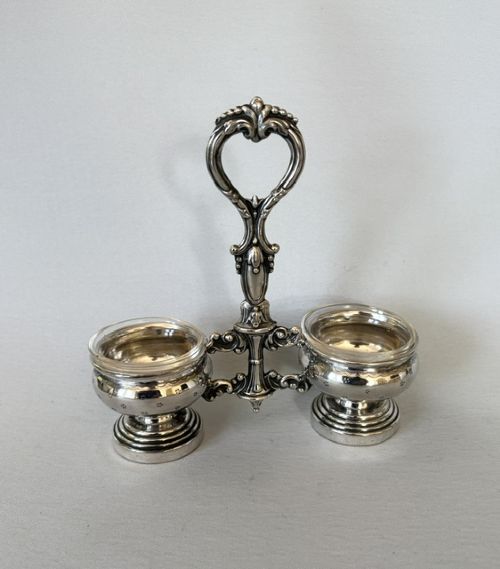
Cruet sets and condiment sets group multiple pots together on stands or trays, often accompanied by matching spoons. These tablewares span diverse styles such as French Rococo, Georgian Revival, and Art Deco, reflecting shifting dining customs across two centuries.
How they were made
Silversmiths utilised sterling silver alongside clear, cut, and coloured glass liners to construct durable yet decorative tableware. Pierced silver work created intricate latticework patterns on drum and oval mustard bodies, allowing the coloured glass beneath to remain visible.
Novelty items and figural salt cellars employed casting and detailed chasing techniques to shape realistic animal forms with movable elements like wings. Hand-soldered joints, beaded rims, and applied wirework defined the construction of handles, hinges, and feet.
Sterling Silver Condiment Pot Retail Price Guide 2026
Typical asking prices for sterling silver condiment pot among the pieces listed under this phrase on Sellingantiques today, from the lower quarter to the upper quarter. They describe what is for sale here now, not the wider market.
What varies in quality
The quality of a piece rests upon the crispness of the chased or pierced ornamentation and the weight of the silver used in its construction. Heavier gauges of silver provide structural integrity, particularly on hinged lids and delicate handles.
Makers' marks and hallmarks stamped into the metal establish authenticity and origin, while the retention of an original matching glass liner adds considerable merit to a piece.
Goldsmith & Silversmith's·Alfred Marston·Frederick Brasted·Nathan & Hayes·Charles & George Fox·William Neale·Matthew Boulton·Lee & Wigfull
The Sterling Silver Condiment Pot Glossary
- Sterling silver
- An alloy containing a high proportion of pure silver alloyed with other metals to ensure durability for everyday objects. It forms the primary material for the bodies and lids of these pots.
- Cobalt glass
- Deep blue glass utilised as a removable liner inside silver salt cellars and mustard pots. It prevents mustard and salt from tarnishing the interior silver.
- Cruet set
- A collection of small glass and silver bottles or pots mounted on a shared stand for holding table condiments. These sets often include mustard pots, pepper pots, and oil cruets.
- Pierced work
- A decorative technique where holes are cut through the silver sheet to form geometric or floral patterns. This method lightens the object while showcasing the glass liner within.
Sterling Silver Condiment Pot: Frequently Asked Questions
What is a sterling silver condiment pot?
A sterling silver condiment pot is a small tabletop vessel created to hold seasonings such as mustard, salt, or pepper during formal or family dining.
These pieces range from plain utilitarian cylinders to decorative figural shapes and pierced designs fitted with coloured glass liners.
How were silver mustard pots used?
Silver mustard pots sat upon the dining table filled with prepared mustard, accompanied by a tiny spoon for serving onto individual plates.
The glass insert protected the precious silver metal from the acidic properties of the mustard.
How do I clean a silver condiment pot?
Cleaning requires a soft microfibre cloth and a gentle, non-abrasive silver polish formulated to lift tarnish without removing the hallmarks.
Glass liners should be removed and washed separately in warm soapy water before reassembly.
How can I tell the period of a piece?
The period is identified through a combination of the stamped hallmarks, maker's marks, and stylistic characteristics like Georgian simplicity or Victorian pierced decoration.
Design motifs often mirror the broader aesthetic movements popular during their manufacturing era.