


Silver Mustard Container
These silver mustard container pieces combine utility with elegance, offering collectors fine sterling silver work and glass linings that elevate any table setting.
What a silver mustard container is
A silver mustard container serves as a dedicated table vessel for holding and serving condiments during meals. The examples recorded here span the Victorian, George III, and Art Deco eras, showing how domestic dining traditions evolved over time.
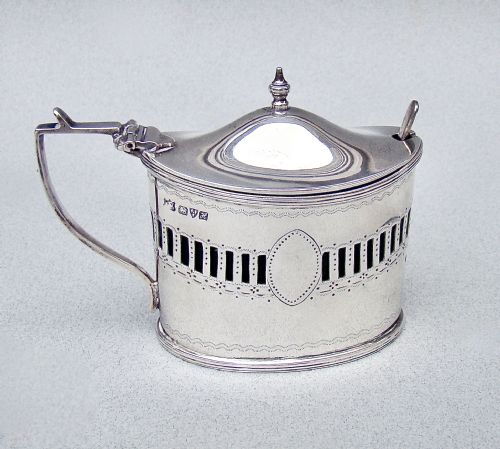
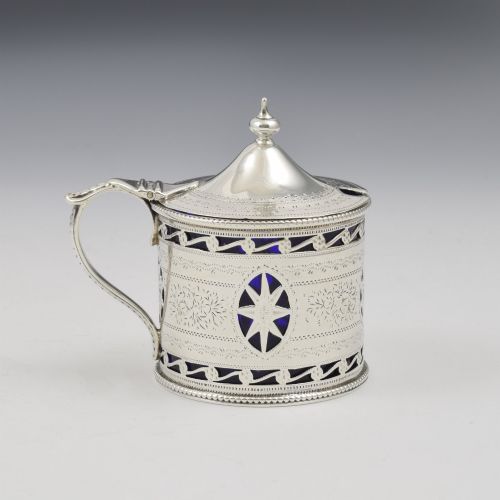
The most common forms you encounter are small lidded pots designed to hold a removable glass liner. These vessels range from simple cylindrical drums to unusual pagoda designs and pierced silver constructions.
Makers utilised various techniques such as openwork piercing and solid casting to shape these functional items. They appear in styles characteristic of their respective periods, from ornate Victorian detailing to cleaner twentieth-century lines.
How they were made
Silversmiths constructed these pieces primarily from sterling silver, shaping the metal through hammering, casting, and piercing. Pierced silver drum mustard pots required careful hand-sawing to create openwork patterns without compromising structural integrity.
Many containers incorporate a blue-glass or cobalt glass container fitted inside the silver exterior to protect the metal from vinegar and mustard acids. Lids were often hinged and attached to small handles, sometimes accompanied by matching silver spoons.
Listings feature sterling silver and cobalt glass materials across Victorian and Art Deco styles.
What varies in quality
Quality in a silver mustard container rests on the heaviness of the silver gauge, the crispness of any pierced or engraved decoration, and the presence of original components like the glass liner. Pieces bearing clear hallmarks and the marks of notable makers demonstrate superior workshop standards.
Unusual architectural or novelty forms, such as pagoda designs, demand greater skill from the silversmith and therefore represent a higher tier of craftsmanship than standard drum shapes.
Nathan and Hayes·Elkington and Company
The Silver Mustard Container Glossary
- Sterling silver
- A silver alloy containing 92.5 percent pure silver by mass and 7.5 percent other metals, usually copper. This standard ensures the durability required for functional tableware.
- Cobalt glass
- A deep blue coloured glass frequently used for liners inside silver mustard pots. It provides a striking visual contrast against the polished silver exterior.
- Hallmark
- An official stamp applied by an assay office to indicate the purity of the metal, the maker, and the year of manufacture. These marks allow collectors to date pieces accurately.
- Pierced work
- A decorative technique involving the cutting or piercing of holes through sheet metal to form geometric or floral patterns. This method lightened the visual weight of silver objects.
Frequently Asked Questions
What is a silver mustard container used for?
These vessels were designed to hold prepared mustard on the dining table, allowing diners to serve themselves using a small spoon.
They replaced larger communal condiment jars as formal dining placed greater emphasis on individual table settings during the eighteenth and nineteenth centuries.
Are glass liners original?
Original glass liners fit snugly inside the silver body and often feature polished rims or matching contours. Finding a piece with its original cobalt glass container significantly enhances its completeness.
Replacements are common because the glass was fragile and prone to breakage during daily use and washing.
How do I date a silver mustard pot?
You can date a piece by examining the hallmarks stamped into the silver, which record the assay office, date letter, and maker's mark. Style also provides a strong clue, distinguishing between Victorian ornamentation and later Art Deco designs.
Comparing the decorative motifs against known manufacturing periods helps narrow down the year of production.
How do I clean silver mustard pots?
Silver requires gentle cleaning with a specialised polish and a soft cloth to remove tarnish without scratching the metal surface. Avoid harsh abrasive cleaners that can wear down engraved details or hallmarks.
Removable glass liners can be washed separately in warm soapy water before being dried and placed back inside the silver housing.