
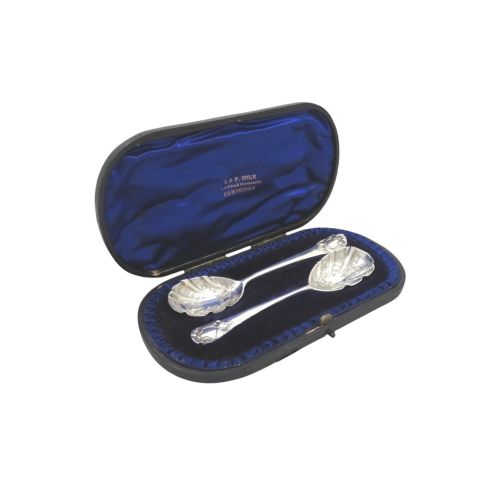
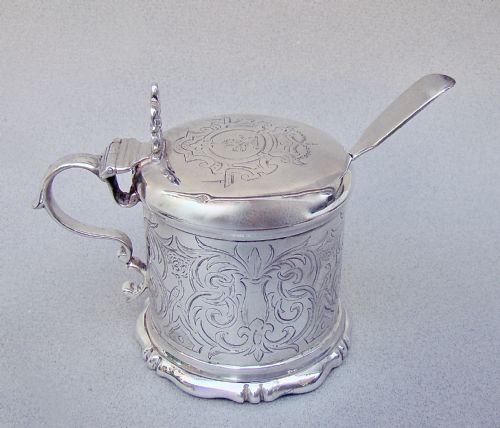
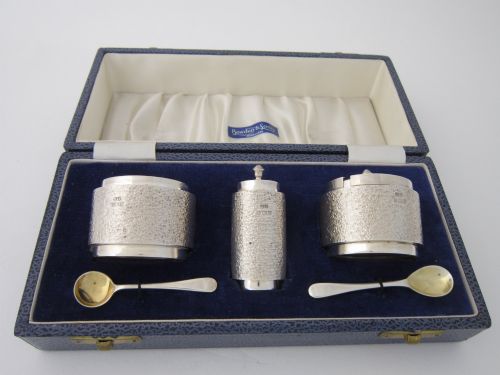


Silver Condiment Spoon Set
A silver condiment spoon set brings proper finish to the dining table, pairing small spoons with salts, mustards and cruets.
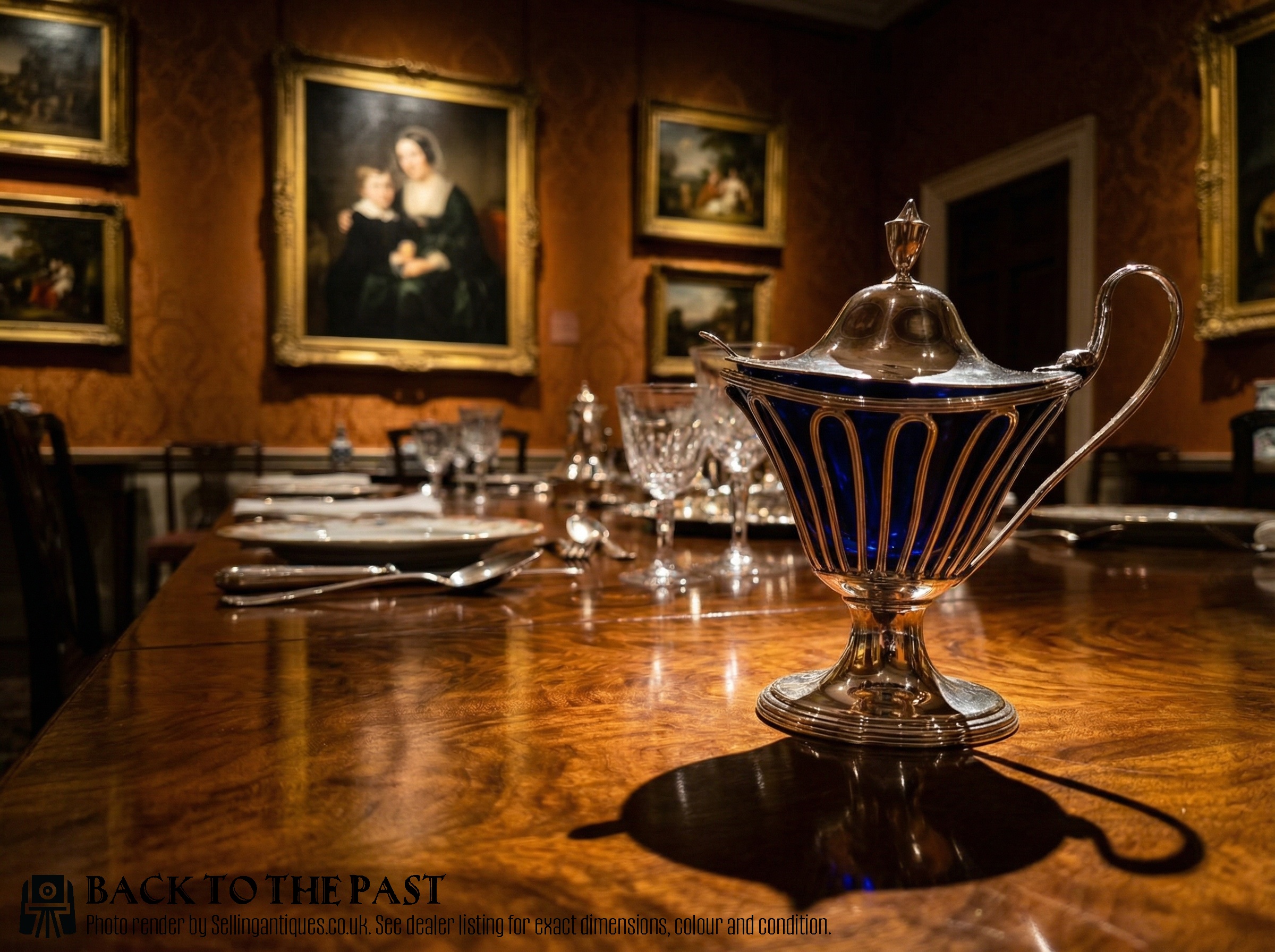
Silver Condiment Spoon Set
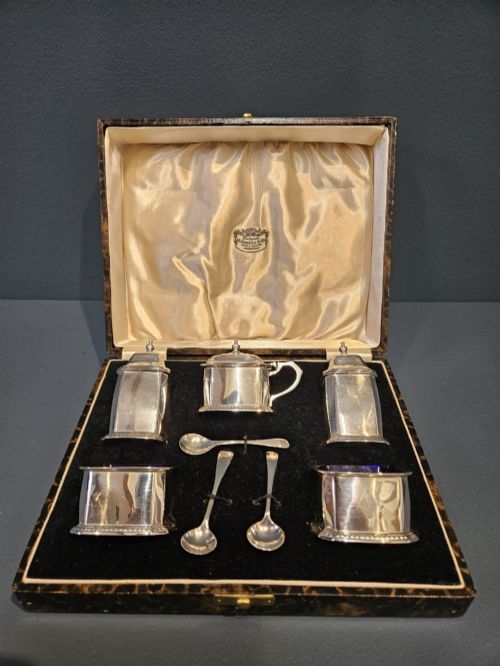
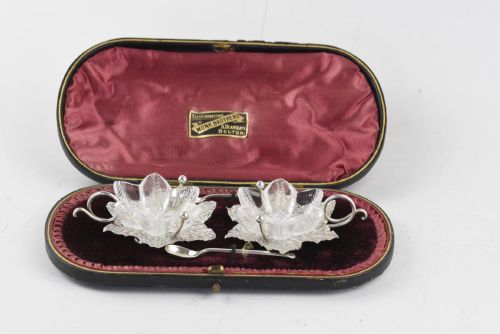
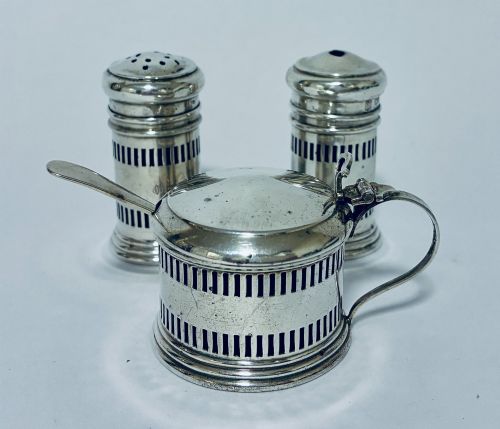
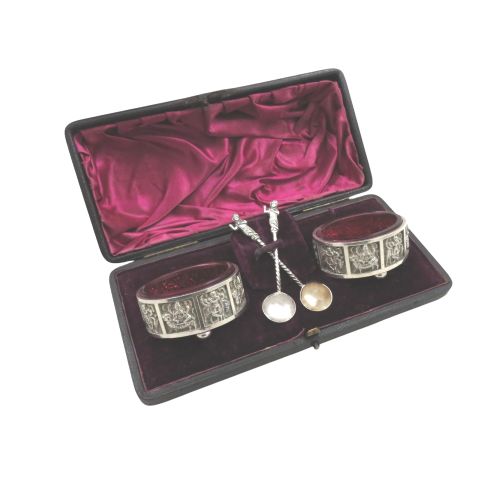
A silver condiment spoon set brings together small spoons with salt cellars, mustard pots, cruet stands and jam jars for the dining table. When you search for a silver condiment spoon set, you encounter pieces spanning from the Victorian and Edwardian eras into the Art Deco period.
The selections range from cased pairs and sets of four open salts with matching spoons to multi-piece cruet sets and novelty designs. Many include fitted presentation boxes lined with silk or velvet to protect the small implements.
Originating largely from English workshops, these sets reflect the formal dining habits of the nineteenth and early twentieth centuries. They appear in solid sterling silver and silver plate, frequently accompanied by blue glass or cobalt glass liners.
Materials and methods
Silversmiths utilised sterling silver and silver plate for the spoons, frames and pots, shaping them through casting, hammering and piercing. Workshops in cities such as London, Birmingham and Sheffield punched hallmarks into the metal to certify standard and origin.
Makers integrated contrasting materials by blowing or moulding cobalt glass and cut glass for liners inside open salts and mustard pots. Fitted cases lined with silk, velvet and leather provided secure storage for delicate cased sets.
Materials include cobalt glass liners, silk-lined presentation boxes, cut glass and leather.
Judging quality in condiment sets
Quality rests on the crispness of casting and the retention of original matching components, such as spoons paired correctly with their specific salt cellars or mustard pots. Substantial gauge metal and clear hallmarks from established makers elevate a piece above standard production.
The survival of original fitted boxes and undamaged coloured glass liners adds significant merit. Finer sets display detailed ornamentation, whether through aesthetic movement engraving, Victorian novelty motifs or clean Art Deco lines.
Charles and George Fox·Bricks and Sons·William Neale and Son·Wilmot Manufacturing Co·Elkington and Company·Vale Brothers and Sermon
The Silver Condiment Spoon Set Glossary
- Cruet set
- A matched collection of bottles, pots and spoons held in a frame for condiments. These sets sit centrally on the dining table during formal meals.
- Salt cellar
- An open bowl or vessel used to hold loose salt before shaker bottles became common. They often require small spoons to dispense the contents.
- Hallmark
- A series of stamped marks on silver indicating the maker, assay office, standard of purity and date of production. English silver bears these marks to guarantee authenticity.
- Cobalt glass
- A deep blue glass used for liners inside open salt cellars and mustard pots. The rich colour creates a visual contrast against polished silver.
- Silver plate
- A base metal coated with a layer of silver. This technique offered an accessible alternative to solid sterling silver tableware.
Silver Condiment Spoon Set: Frequently Asked Questions
What is a silver condiment spoon set used for?
These sets serve mustard, salt, jam and preserves at the dining table using dedicated small spoons.
They coordinate with open cellars and pots to transfer condiments to individual plates.
How do I clean antique silver spoons?
Use a soft cloth and a gentle silver polish formulated for antiques to preserve the original finish.
Avoid abrasive materials that can wear down detailed engraving or remove dark highlights in crevices.
Are glass liners original to the set?
Original liners fit snugly inside the silver salt cellars or mustard pots without excessive movement.
They often feature cobalt or cut glass matching the period style of the metal frame.
How do I identify the date of a set?
Examine the stamped hallmarks on the silver components to find the assay office and date letter.
Stylistic cues such as Aesthetic movement engraving or Art Deco geometry also help determine the period.