




Silver and Blue Glass Liner
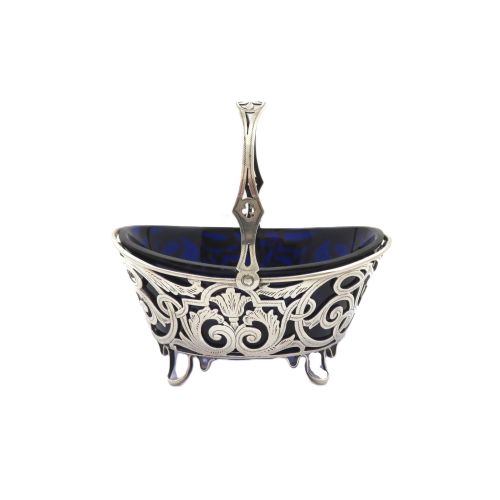
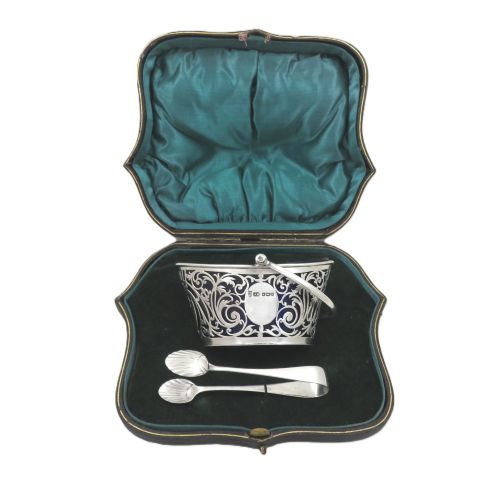
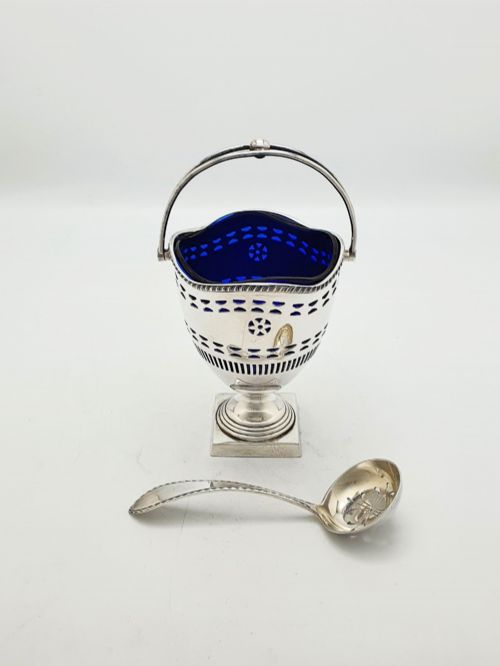
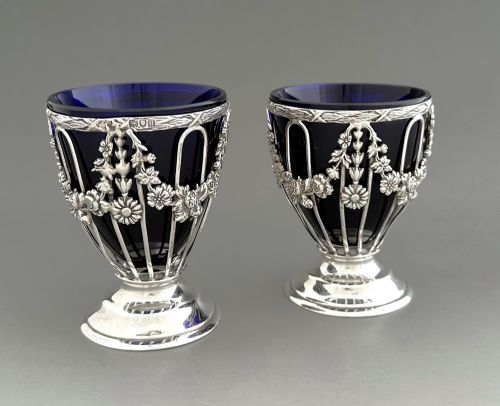
These pieces featuring a silver and blue glass liner combine precious metalwork with vibrant coloured glass containers designed for table service.
Silver and Blue Glass Liner
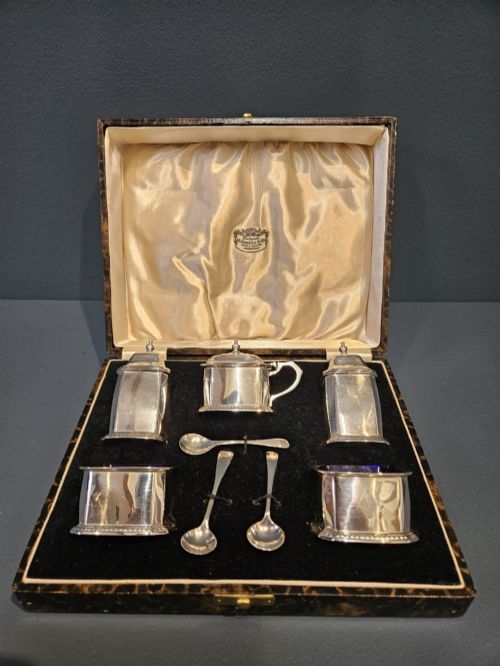
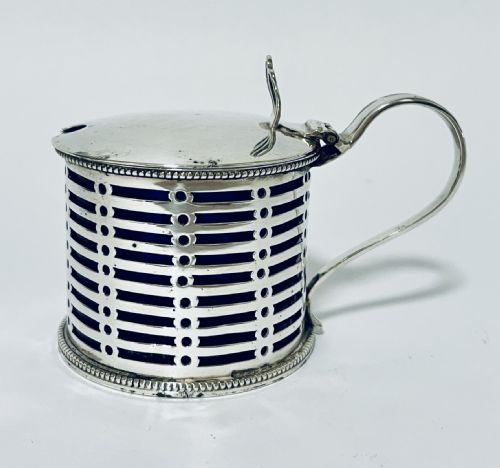
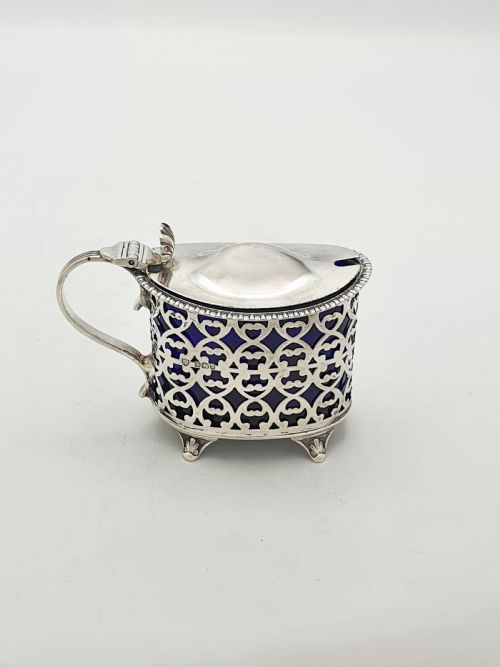
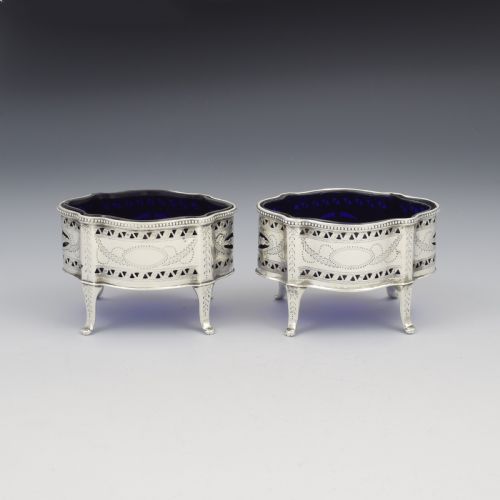
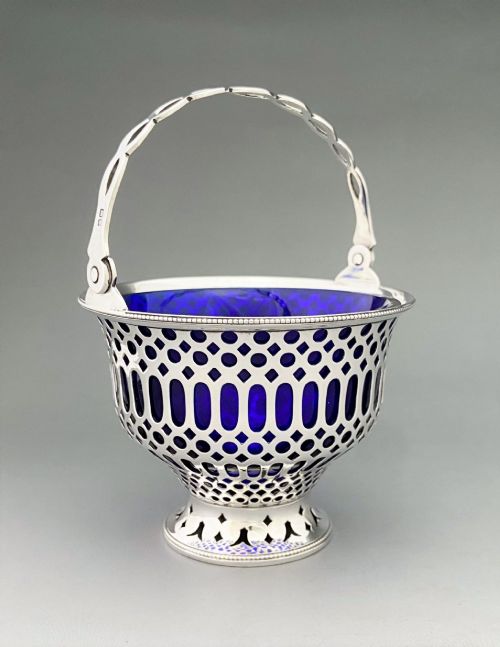
A silver and blue glass liner typically takes the form of table salt cellars, mustard pots, sugar baskets, and condiment sets used for dining. These tablewares appear most frequently in Victorian, Edwardian, and Georgian styles alongside later Art Deco iterations.
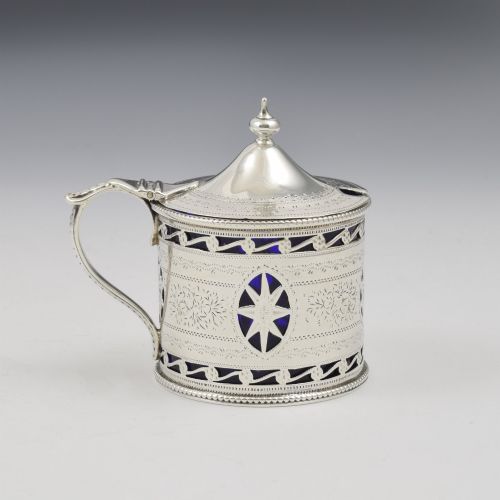
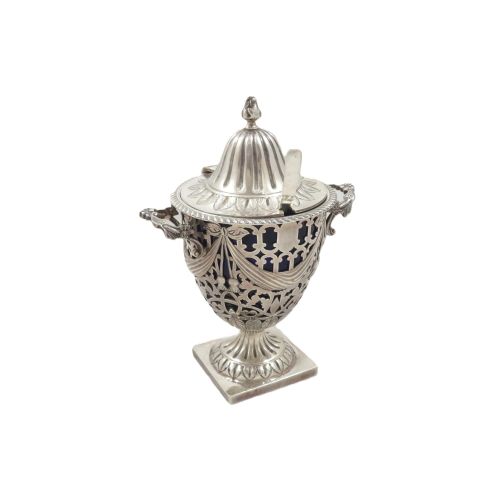
The objects combine an outer pierced or solid silver frame with a removable glass insert in shades of cobalt or Bristol blue. The construction protects the silver from corrosive condiments while displaying the rich tone of the glass through decorative cutouts.
Materials and technique
Silversmiths utilised sterling silver and silver plate to fashion frames through piercing, casting, and wirework techniques. Pierced motifs and wirework scroll frames allow the vibrant blue glass vessel within to remain visible from the exterior.
Glassmakers blew and moulded cobalt blue and blue glass to fit precisely inside the corresponding metal mount. The removable glass liner ensures practical daily use and straightforward cleaning.
The listings show objects spanning the 18th century through the Georgian, Victorian, Edwardian, and Art Deco periods, utilising sterling silver, silver plate, and cobalt glass.
Judgement of quality
Quality rests upon the crispness of the silversmith's piercing and the weight of the metal frame. Finer examples display delicate cast floral handles, intricate openwork patterns, and heavier gauge silver rather than thin stamped plating.
The integrity and originality of the glass component heavily influence the piece. Surviving period glass liners that fit the metal mount without wobble distinguish superior examples from those with later replacement inserts.
Nathan & Hayes·Aldridge & Green·William Neale·William Neale & Son·Charles Stuart Harris·Omar Ramsden
The Silver and Blue Glass Liner Glossary
- Salt Cellar
- An open vessel for holding salt at the dining table before the invention of the spring-loaded salt shaker. These often require a small blue glass liner.
- Mustard Pot
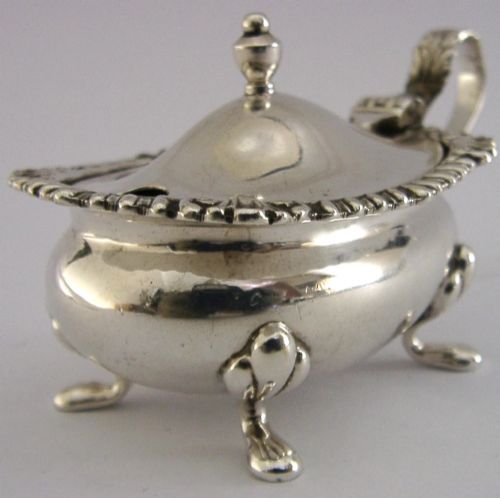
- A small covered jar designed to serve prepared mustard accompanied by a spoon. Most period examples pair a hinged silver lid with a blue glass insert.
- Sugar Basket
- A swinging-handled container used to hold loose sugar lumps or grains on the tea table. They frequently incorporate cobalt glass liners to contrast with openwork silver frames.
- Piercing
- A decorative technique where silversmiths cut open patterns through sheet metal. This method reduces weight while creating ornamental lattice designs around the glass liner.
- Cruet Set
- A matched collection of condiment containers held in a single frame. These commonly group mustard pots, salt cellars, and pepper shakers together.
Silver and Blue Glass Liner: Frequently Asked Questions
What are these silver and blue glass liners used for?
These vessels serve condiments such as mustard, salt, and sugar at the dining table. The silver frame holds the glass container securely while offering decorative pierced or solid metalwork.
The blue glass insert protects the surrounding silver from chemical reactions caused by salt and vinegar condiments. This combination keeps the dining table equipped for functional service.
How do I clean a silver and blue glass liner?
The glass liner lifts directly out of the silver mount for independent washing in warm soapy water. Cleaning the glass separately prevents harsh metal polishes from damaging the surface.
The silver frame requires standard metal cleaning paste applied carefully with a soft cloth. Keeping the components apart during maintenance protects both the glass and the silver hallmarks.
Are the glass liners usually original to the silver?
Many surviving pieces retain their original blown or moulded blue glass inserts. Exact fitment inside the metal frame indicates a period pairing.
Replacements do occur due to accidental breakage over centuries of use. Examining the rim and base for proper seating helps determine if the glass belongs to the original mount.
How do I identify the date of a piece?
Hallmarks stamped directly onto the silver frame provide the exact assay office, metal purity, and date letter. These tiny marks decode the year of manufacture and the silversmith's registered mark.
Stylistic details such as heavy Victorian casting or geometric Art Deco lines also point toward specific decades. Comparing the overall form to documented design periods confirms the age.