


Cobalt Glass Salt Cellar
A cobalt glass salt cellar brings deep blue colour and brilliant sparkle to a dining table.
Cobalt Glass Salt Cellar
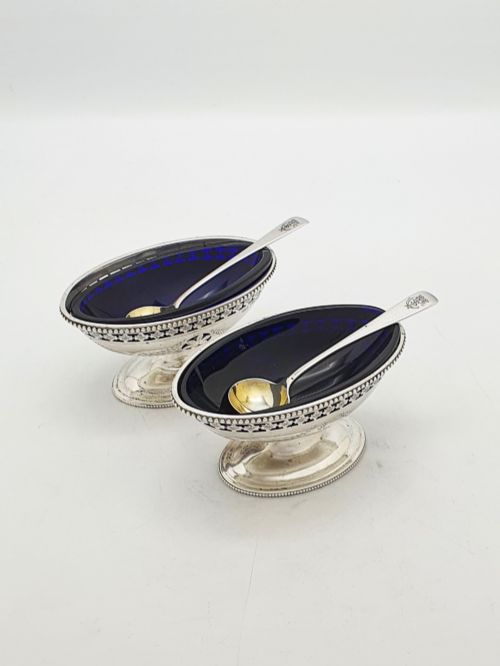
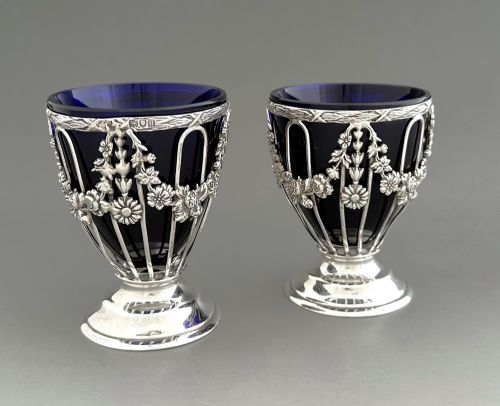
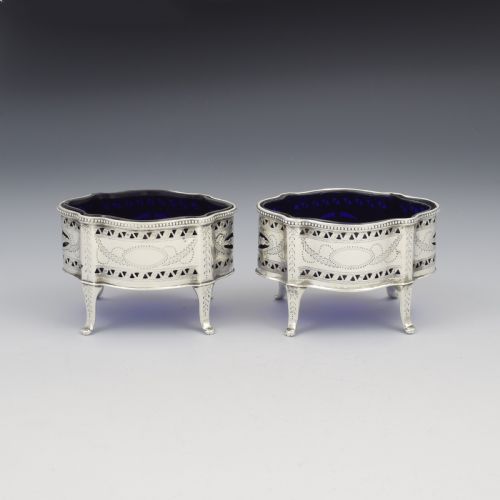
A cobalt glass salt cellar is an open vessel designed to hold dry condiments at the table, most commonly found paired with silver or silver-plated frames. When you search for a cobalt glass salt cellar, you encounter small glass liners nestled inside pierced or wirework metal mounts dating from the eighteenth century to the twentieth century.
The pieces on this page span several distinct periods, including Victorian, Edwardian, and Georgian eras, alongside later Art Deco designs from nineteen thirty. You will frequently find them offered in pairs or matching sets of four, accompanied by small spoons in fitted boxes.
Forming part of traditional tableware and cruet sets, these items range from simple boat-shaped salt cellars to elaborate serpentine table salts. The rich blue glass provides a striking visual contrast against polished sterling silver and silver plate.
Materials and construction
The manufacturing process combines molten blown or pressed lead glass with metalwork frames fashioned from sterling silver or silver plate. Craftsmen shaped the deep blue glass liners to fit snugly within pierced, wirework, or solid metal mounts.
Silver components were often worked by hand using techniques such as piercing and casting, particularly during the Victorian and Edwardian periods. Metal frames securely hold the removable glass inserts, allowing for easy cleaning after dining.
Factors that distinguish quality
Quality rests upon the crispness of the metalwork and the weight of the silver or silver plate used for the mount. Finer examples display intricate pierced patterns or delicate wirework rather than plain stamped metal.
The Cobalt Glass Salt Cellar Glossary
- Cobalt Glass
- Deep blue glass coloured with cobalt oxide during the melting process. This material imparts a vibrant hue that remained popular across multiple design periods.
- Sterling Silver
- A silver alloy containing ninety-two point five percent pure silver by mass. British pieces commonly bear hallmarks indicating the standard of the metal.
- Table Salt
- A small open vessel used to hold salt on the dining table before the invention of the shaker. Diners used a small spoon or pinched the salt with their fingers.
- Cruet Set
- A matched collection of bottles, jars, or open cellars held in a stand for condiments and sauces. These sets sat at the centre of the dining table.
- Monteith
- A bowl with a scalloped or notched rim originally used for cooling wine glasses. Georgian examples occasionally feature distinct blue glass elements.
Cobalt Glass Salt Cellar: Frequently Asked Questions
How do I clean a silver salt cellar with a glass liner?
Remove the cobalt glass liner from the silver frame before cleaning to prevent harsh metal polishes from damaging the glass surface. Wash the glass in warm soapy water and dry it thoroughly with a soft cloth.
Polish the silver mount separately using an appropriate cloth and paste, ensuring no residue enters the glass. Reinsert the liner only after both components are completely dry.
Were these salt cellars used with salt spoons?
Open salt cellars were routinely accompanied by miniature spoons for transferring salt to the plate. Many surviving sets retain their original matching spoons inside fitted presentation boxes.
Using a spoon protected the silver from corrosion caused by direct contact with salt over long periods. Replacements can be sourced if the original spoon is missing.
How do I date an antique salt cellar?
British sterling silver pieces generally bear hallmarks indicating the assay office, date letter, and maker's mark. Consulting official hallmarking records provides the exact year of manufacture.
Stylistic cues such as Georgian wirework or Art Deco geometric shapes also help narrow down the period when hallmarks are absent or rubbed.
Can I still use antique salt cellars for dining?
Open salt cellars function well for everyday dining or formal dinner parties when used with dry table salt. The removable glass liners protect the metal frames from direct contact with moisture and seasoning.
Care should be taken to empty and clean the cellars after use to preserve both the glass and the metal mounts.