
Antique Open Salts
These antique open salts bring small scale craftsmanship and historical detail to the dining table.
Antique Open Salts
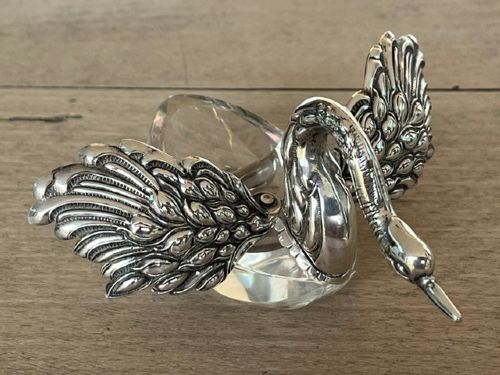
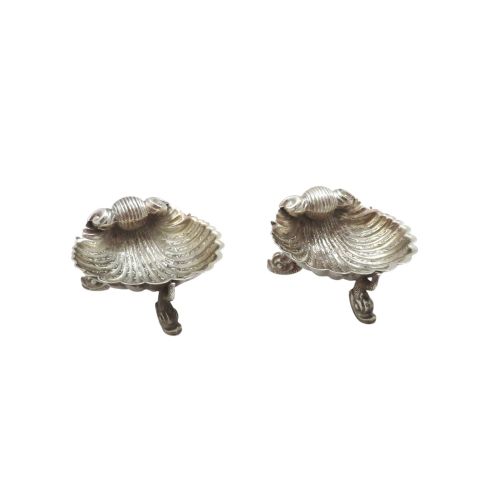
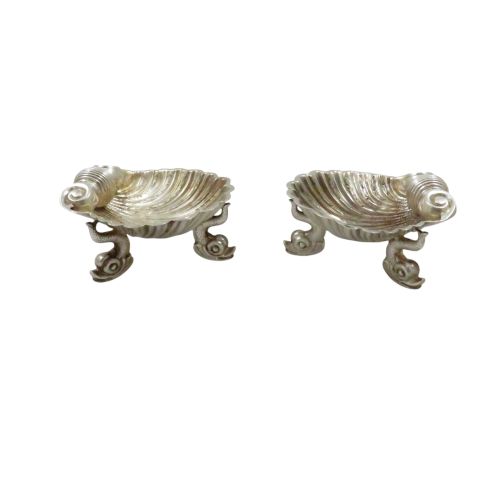
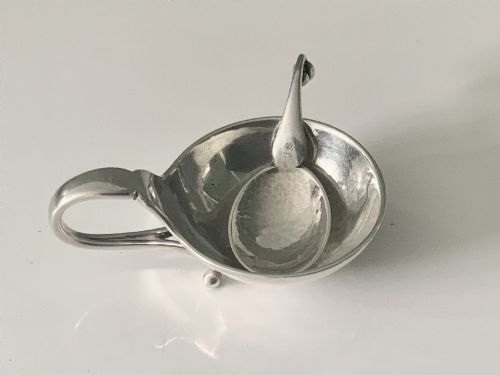
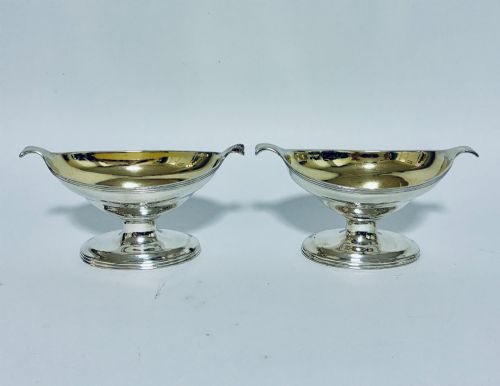
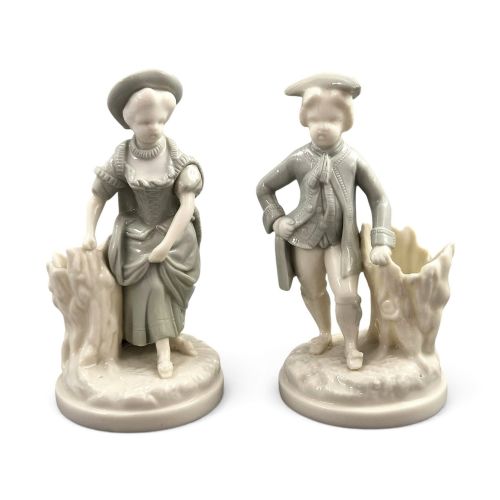
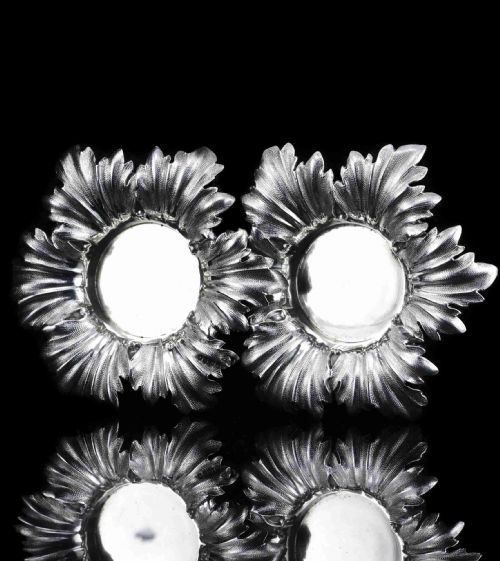
When you search for antique open salts, you encounter small vessels designed to hold loose salt for individual diners before the widespread adoption of domestic shakers. These pieces appear frequently as matched pairs or sets, taking forms from simple circular bowls to figural birds, shells, and silver salt boats.
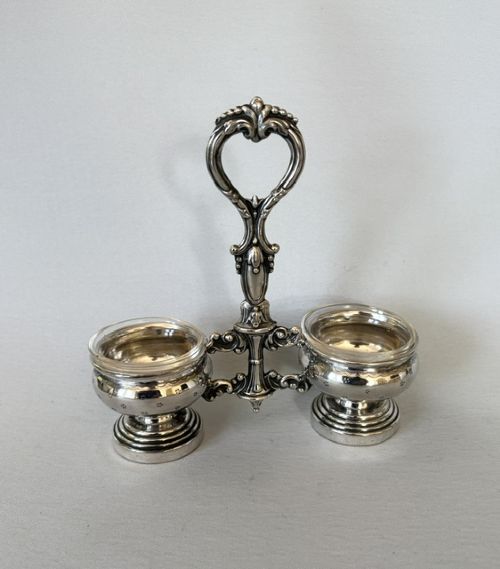
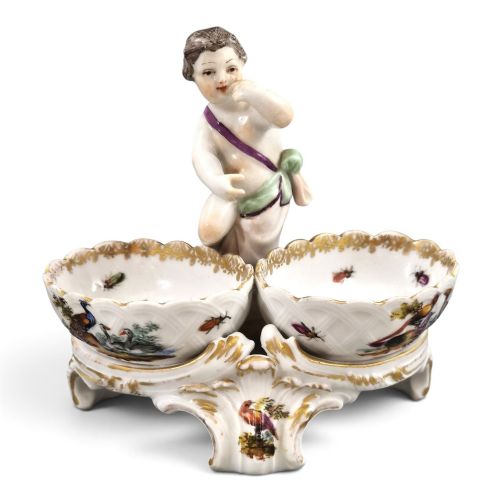
The selection on this page spans several centuries, with particular strength in Georgian and Victorian examples alongside Edwardian and earlier 18th-century pieces. You will find small vessels meant for direct placement on the dining surface as well as larger double salts and items intended for condiment stands.
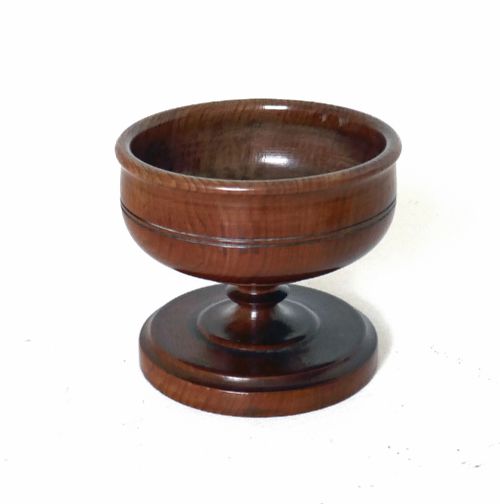
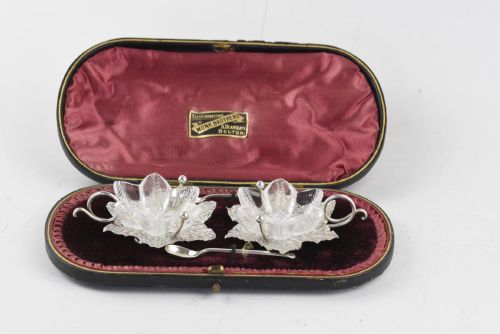
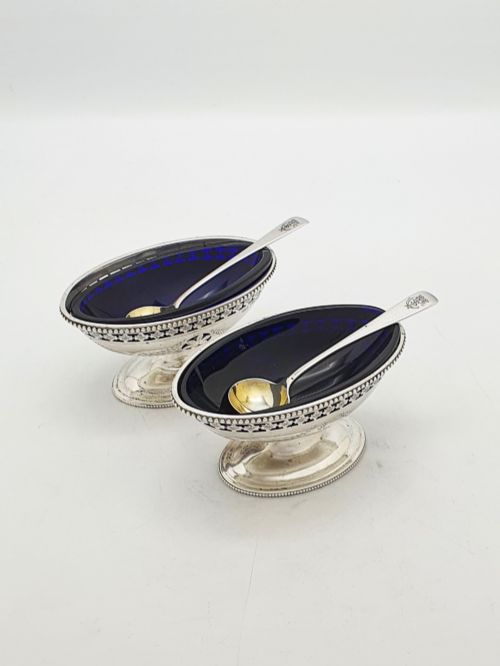
Materials range from solid sterling silver and silver plate to cut glass, coloured glass liners, enamel, and treen woodwork. The forms reflect shifts in dining customs, moving from substantial trencher salts down to ornate pierced silver vessels accompanied by small spoons.
Materials and construction methods
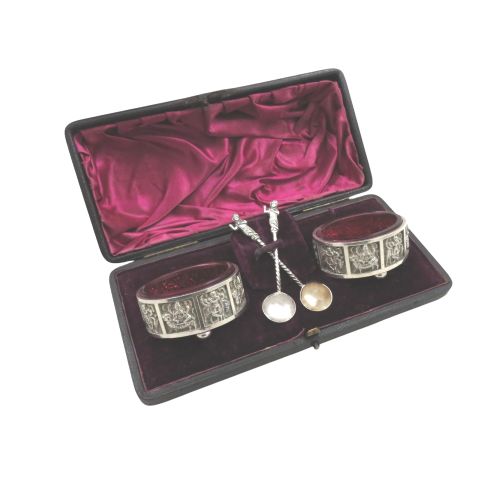
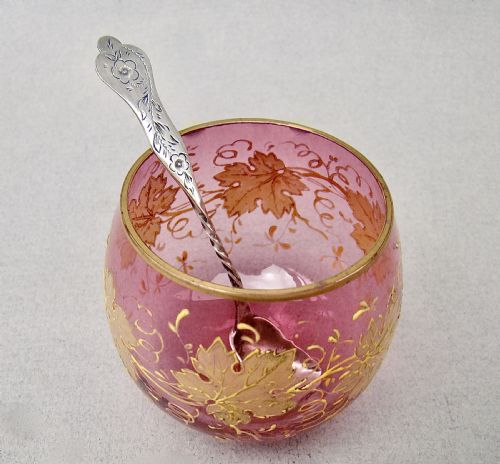
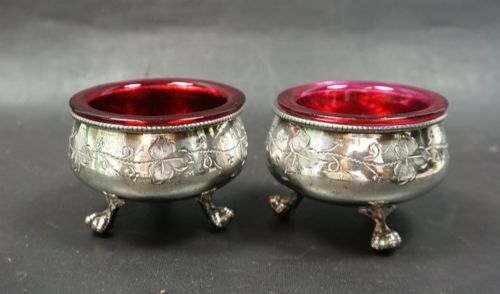
Metalsmithing dominates the record, with silversmiths hammering, casting, and piercing sterling silver to create cauldron bodies, tripod feet, and wirework frames. Many silver examples rely on contrasting coloured glass liners, particularly cobalt blue and cranberry glass, which protect the metal from corrosive salt while adding visual depth.
Antique Open Salts Retail Price Guide 2026
Typical asking prices for open salts among the pieces listed under this phrase on Sellingantiques today, from the lower quarter to the upper quarter. They describe what is for sale here now, not the wider market.
The listings on this page span the 18th century through the Victorian era into the 20th century, combining sterling silver, cut glass, enamel, and treen woodwork.
Distinctions in quality
Quality rests upon the crispness of the chasing, the precision of pierced metalwork, and the weight of the metal utilised in the body. Master silversmiths and established makers achieved finer details in naturalistic motifs, such as floral chasing or animal forms, compared to standard production pieces.
The survival of original components also dictates standard, particularly the presence of matching glass liners, fitted spoons, and original presentation cases. Pieces retaining clear hallmarks and undamaged glass demonstrate greater historical integrity.
Georg Jensen·KPM Berlin·Royal Worcester·Moser·David Hennell·John Edmonstone·William Bateman·Barnards·Roberts and Belk·Josiah Williams and Co·HB Quimper
The Antique Open Salts Glossary
- Trencher salt
- A small individual salt cellar placed beside the diner. These early forms are often heavier and more geometric than later Victorian designs.
- Salt boat
- A small vessel shaped like a miniature boat, usually supported on a fixed foot or small legs. They are frequently found in Georgian silver.
- Cauldron salt
- A small round salt cellar raised on three feet, resembling a miniature cooking pot. This form is particularly common in 18th-century and Victorian silver.
- Treen
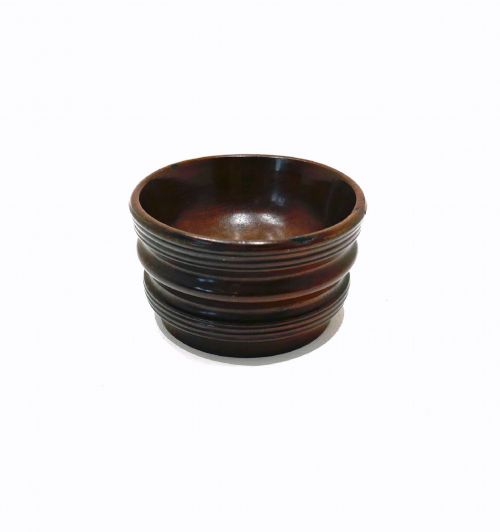
- Small domestic wooden objects turned on a lathe. Early examples use dense native timbers with polished finishes.
- Liner
- A removable insert, typically made of coloured glass, placed inside open metal salts to prevent salt corrosion. They are often cobalt blue or cranberry.
Antique Open Salts: Frequently Asked Questions
How were open salts used at the table?
Diners used open salts by taking a small pinch of salt from the vessel using a tiny salt spoon or the tip of a clean knife, then dusting it onto the plate. These small bowls sat directly on the dining table for individual use.
Before the invention of the shaker, the open salt was the standard method for seasoning food during meals. Wealthy households often provided one salt cellar between every two guests.
Why do many silver salts have glass liners?
Glass liners were introduced to protect the metal from the corrosive nature of salt, which tends to pit and tarnish silver over long periods of contact. Cobalt blue and cranberry glass liners also introduced a strong splash of colour.
When inspecting these pieces, collectors value the survival of the original matching glass insert, as replacements alter the complete historical set.
How can I tell a Georgian salt from a Victorian one?
Georgian salts, particularly those from the 18th century, tend to feature heavier gauge silver, simpler geometric forms like the trencher style, and minimal ornamentation. Maker marks and assay office stamps from this era provide precise dating clues.
Victorian pieces often display much heavier ornamentation, including naturalistic floral chasing, figural animal supports, pierced gallery work, and complete fitted presentation boxes.
Can I still use antique open salts today?
Many people continue to use antique open salts for modern dining, dinner parties, or as small dishes for jewellery and trinkets. Their small scale suits contemporary table settings well.
Care is required to empty and clean silver and glass vessels immediately after use to prevent salt from damaging historical metal surfaces or fragile glass liners.