


Sterling Silver Open Salts
These sterling silver open salts bring the elegance of Georgian and Victorian dining tables directly to your collection.
Sterling Silver Open Salts
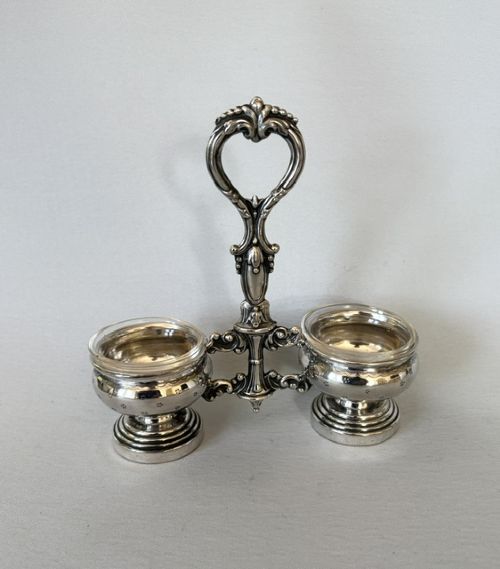
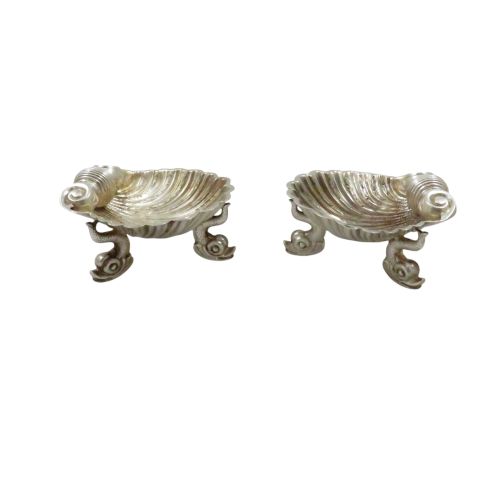
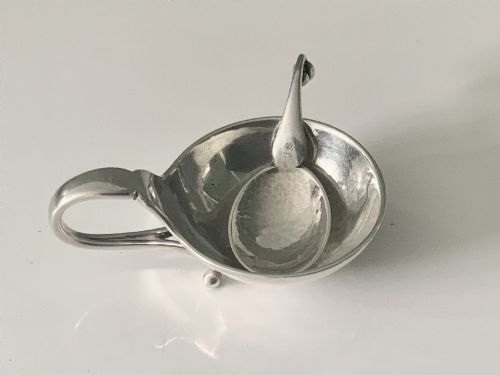
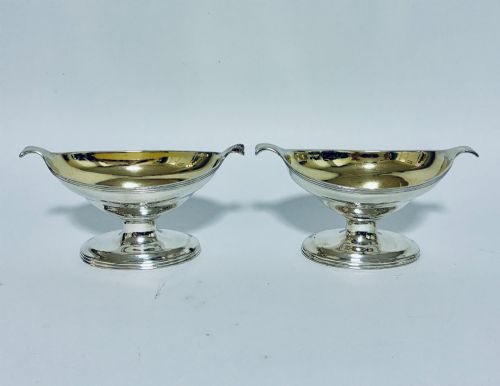
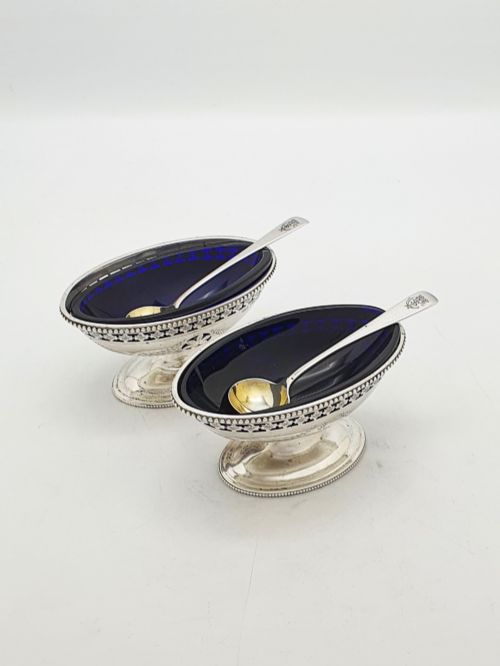
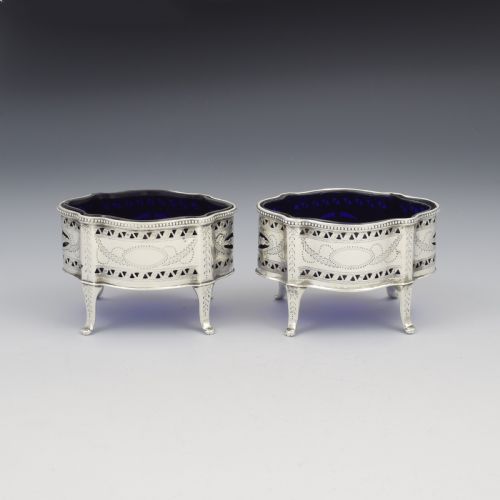
When you search for sterling silver open salts, you encounter small vessels designed to hold loose salt for individual diners at the table before modern shakers became common. Most examples on this page hail from the Victorian and Georgian periods, taking the form of open bowls, boat shapes, or cauldron designs.
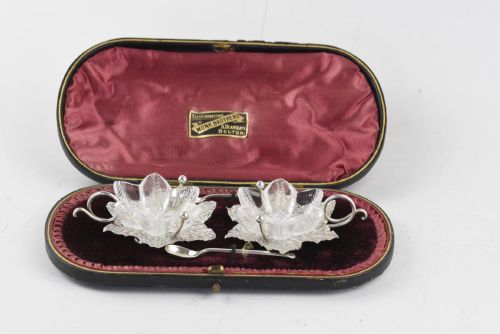
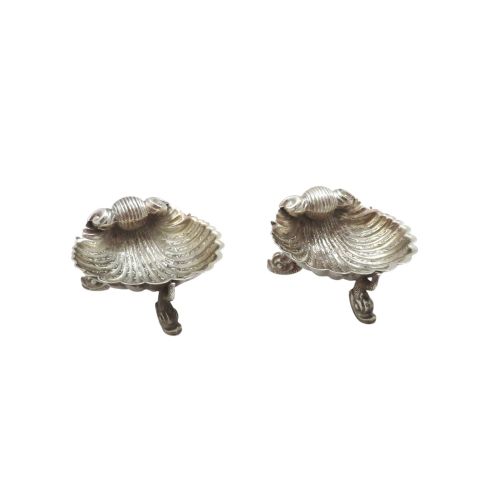
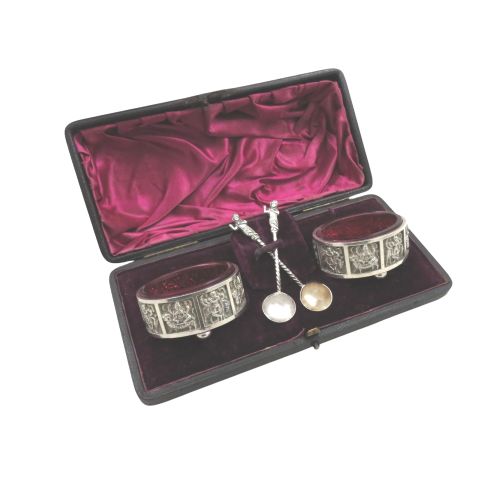
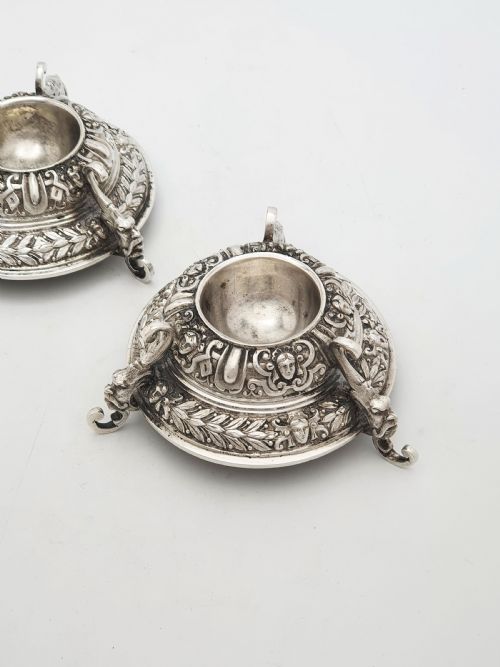
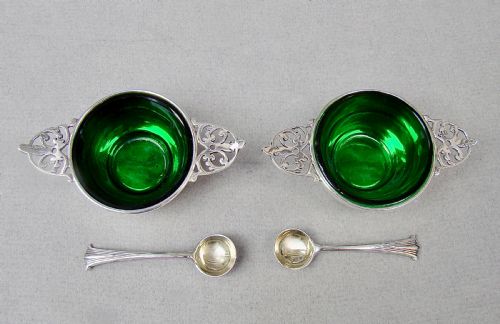
Makers produced these pieces in pairs or larger sets, frequently accompanied by matched spoons and fitted presentation cases. You will find them resting upon delicate feet, ranging from naturalistic floral motifs to dolphin designs and traditional tripod supports.
Materials and Construction
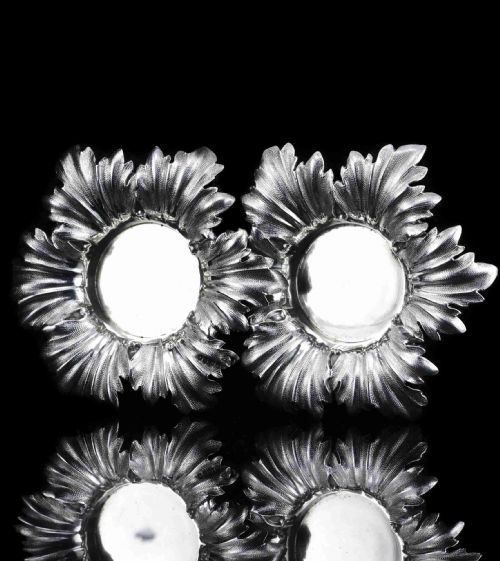
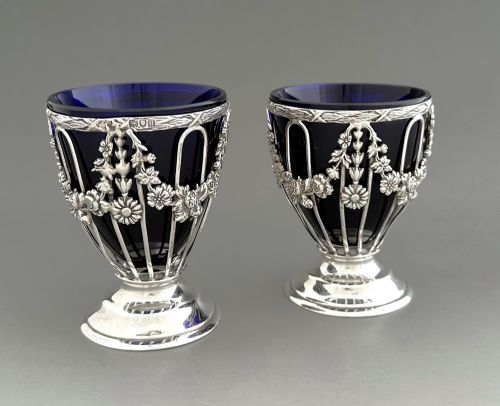
Silversmiths constructed these vessels from solid silver, utilising techniques such as piercing, repoussé, and foliate chasing to ornament the body. Many designs incorporate removable glass liners, particularly in cobalt blue, to protect the silver from the corrosive nature of salt.
Some pieces feature interior gilding, known as vermeil, whilst others integrate crystal, silk, velvet, and leather within cased sets to secure the small spoons and salt cellars safely.
Sterling Silver Open Salts Retail Price Guide 2026
Typical asking prices for sterling silver open salts among the pieces listed under this phrase on Sellingantiques today, from the lower quarter to the upper quarter. They describe what is for sale here now, not the wider market.
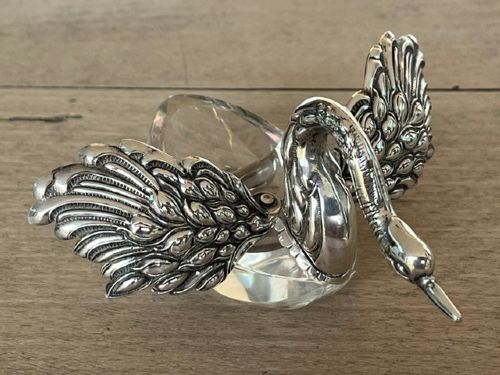
Swans feature twice as salt cellars, with one pair possessing movable wings and another taking a double-headed shape.
Distinctions in Quality
The distinction between standard domestic salt cellars and superior examples lies in the crispness of the chasing and the weight of the metal. Top tier pieces display intricate hand-worked detail, such as naturalistic flower designs or pierced serpentine walls executed by master silversmiths.
The inclusion of original components, such as matching spoons, fitted leather cases, and undamaged coloured glass liners, elevates the standing of a piece significantly.
Georg Jensen·Josiah Williams and Co·David Hennell·John Edmonstone·William Bateman·Paul Storr·Thomas Smily·Rebecca Emes
The Sterling Silver Open Salts Glossary
- Open salt
- A small tabletop vessel designed to hold loose salt rather than dispensing it through shaker holes. Diners used a tiny spoon or their fingers to take the salt.
- Cauldron salt
- A small, round salt cellar raised upon three feet, closely mimicking the shape of a traditional cooking pot. This form was especially popular during the Georgian and Victorian periods.
- Trencher salt
- An early form of salt cellar, often heavy and geometric, placed on the dining table to mark the status of guests. Examples date back to the eighteenth century.
- Vermeil
- Sterling silver that has been plated with a thin layer of gold on the interior surface. This application protected the silver from the corrosive effects of salt.
- Chasing
- A metalsmithing technique where the artisan hammers the metal from the front to push details inward and create raised decorative patterns. This method produced the foliate designs seen on many Victorian pieces.
Sterling Silver Open Salts: Frequently Asked Questions
How were open salts used at the table?
Diners sat with an individual salt cellar placed near their plate, using a tiny salt spoon to transfer seasoning to their food. Before the invention of free-flowing table salt, these small dishes held coarse salt for the meal.
Servants filled the cellars before the meal began, and the matching spoons allowed guests to serve themselves cleanly without touching the contents.
Why do many silver salts have glass liners?
Salt is highly corrosive and reacts chemically with silver over extended periods, causing pitting and tarnishing. Inserting a glass liner protected the precious metal from direct contact with the contents.
Cobalt blue glass liners were particularly favoured during the Georgian and Victorian eras because they provided a striking visual contrast against polished sterling silver.
How do I date a set of silver salts?
British silver typically carries hallmarks stamped into the metal, including a date letter, a town mark, and a lion passant indicating sterling standard. Consulting a hallmarking guide will reveal the exact year and assay office of manufacture.
Stylistic clues such as Aesthetic Movement engraving or heavy Georgian casting also help narrow down the period when hallmarks are rubbed or missing.