
Silver Open Salt Cellars
Silver open salt cellars bring genuine historical weight to the dining table through Georgian and Victorian forms.
Silver Open Salt Cellars
Silver open salt cellars are small vessels designed to hold loose salt on the dining table, often paired with matching spoons. When you search for silver open salt cellars, you encounter domestic tableware spanning the Georgian, Victorian, and Edwardian periods.
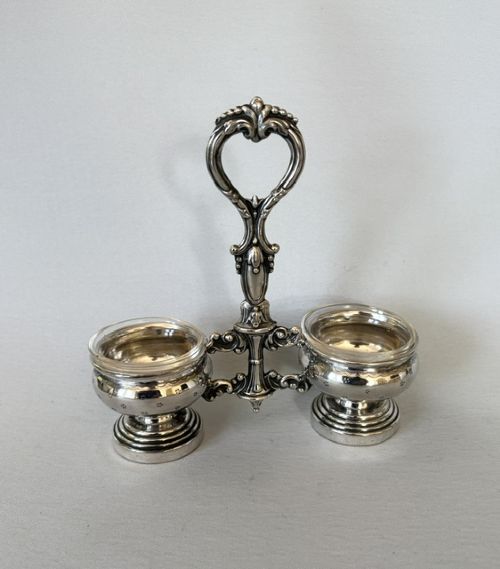
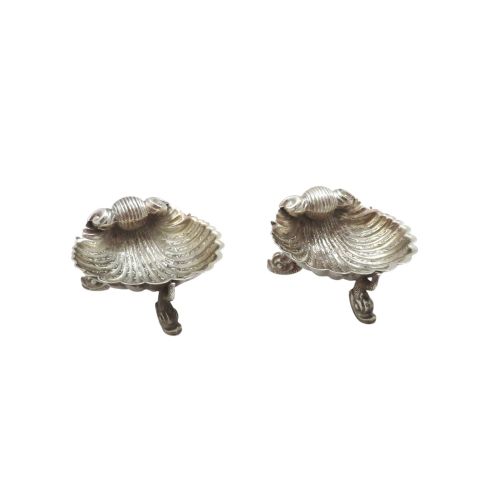
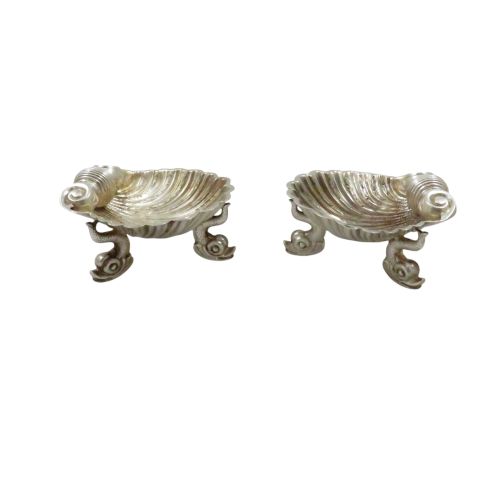
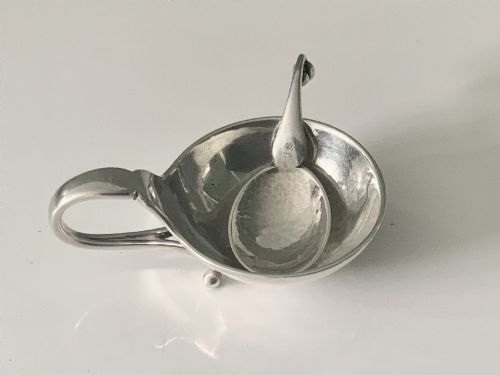
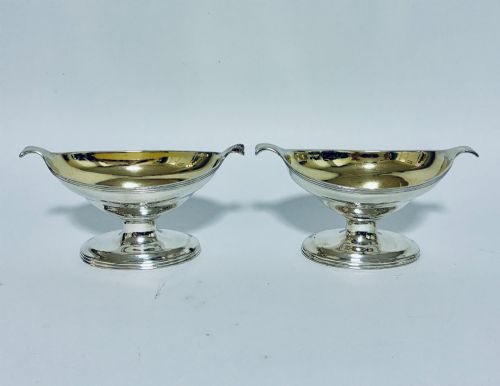
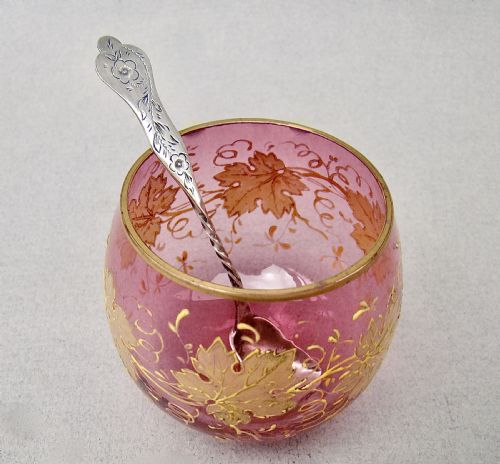
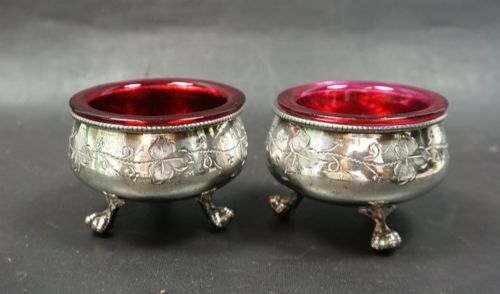
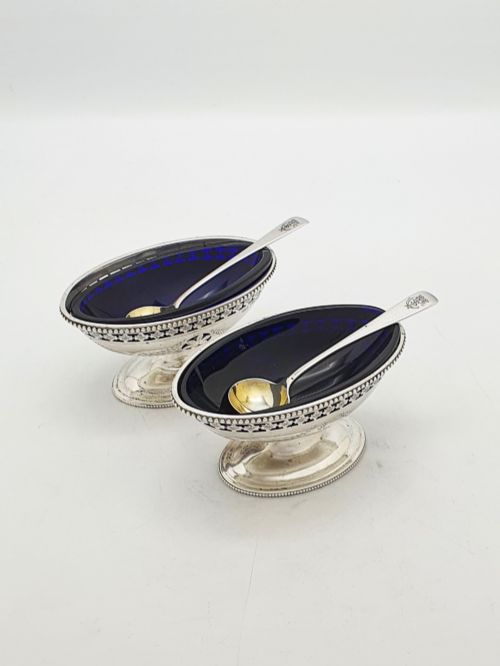
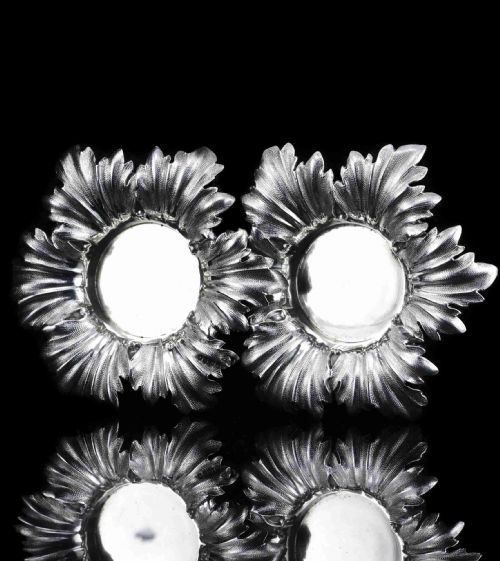
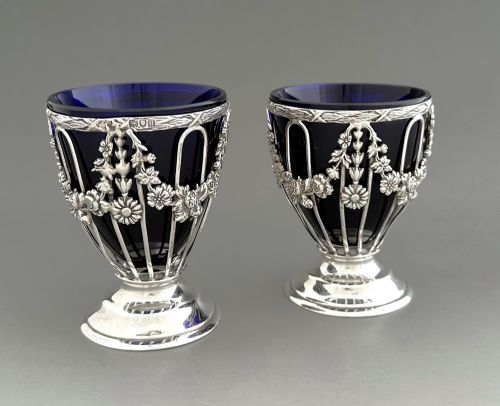
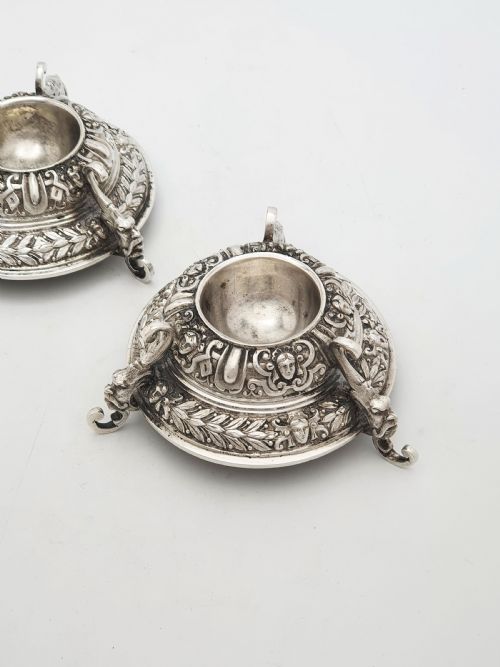
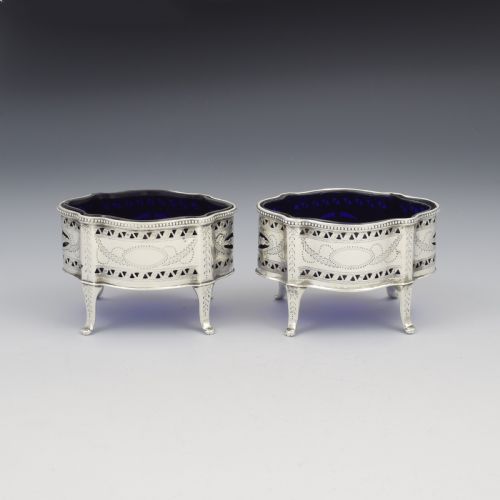
The most common forms on this page include pairs of cauldron-shaped pots, boat-shaped dishes, and shell-moulded bowls. These pieces frequently rest on distinct feet such as dolphins, or appear alongside glass liners in cobalt blue or cranberry hues.
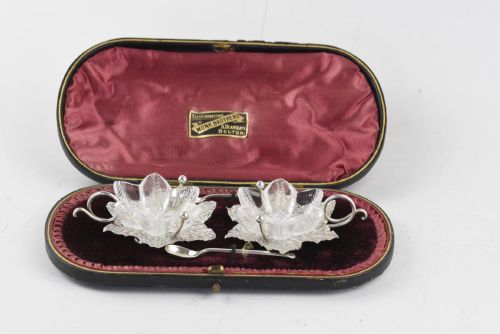
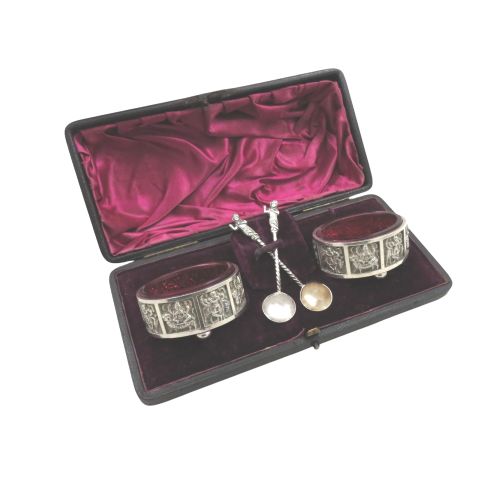
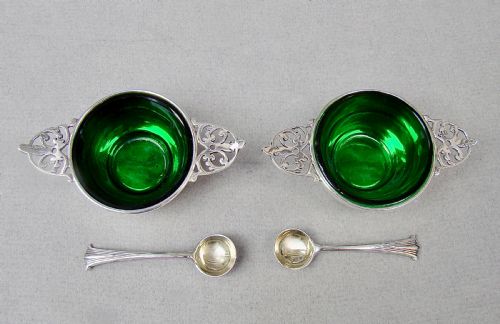
Makers utilised various traditional configurations, ranging from individual open salts to sets housed within cased presentations or integrated into larger condiment stands and cruet sets.
Materials and methods of construction
Silversmiths constructed these vessels primarily in sterling silver and silver plate, frequently employing techniques such as piercing, wirework, and elaborate foliate chasing to create ornate bodies.
Many designs incorporate delicate glass inserts, specifically cobalt glass and cranberry glass liners, which protected the silver from the corrosive nature of salt. Artisans also applied gold gilt interiors to solid silver bowls for the same protective purpose.
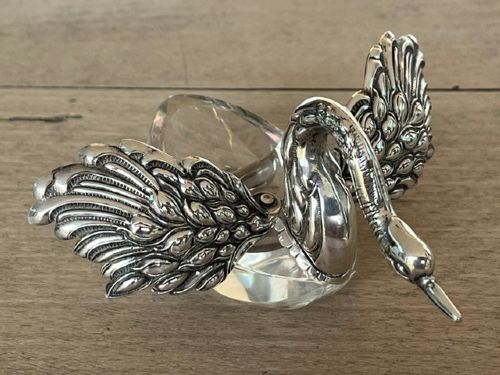
Specialist makers utilised cast and chased components, attaching dolphin feet, naturalistic flower designs, or bird and swan motifs to the main salt bodies.
Silver Open Salt Cellars Retail Price Guide 2026
Typical asking prices for silver open salt cellars among the pieces listed under this phrase on Sellingantiques today, from the lower quarter to the upper quarter. They describe what is for sale here now, not the wider market.
Movable swan wings and dolphin feet ensure the dining table retains a charming menagerie.
Distinctions in standard and execution
Quality in these pieces rests upon the crispness of the chasing and the weight of the metal utilised in the body. Superior examples display sharp detail in motifs such as foliate patterns, shell ribs, and animal figures without softening from wear or over-polishing.
The presence of original components influences the character of the piece, particularly matched spoons and intact coloured glass liners that fit the interior precisely. Maker marks and clear hallmarks from regional assay offices provide documentary depth that elevates specific items.
Barnards·Josiah Williams And Co·David Hennell·John Edmonstone·William Bateman·Paul Storr·Thomas Smily
The Silver Open Salt Cellars Glossary
- Trencher salt
- A heavy, often geometric salt cellar originating from the period before individual salts became common place settings. These robust pieces sat directly on the board.
- Cauldron salt
- A small, round salt cellar raised on three or four legs, mimicking the shape of a cooking pot. This form became particularly popular during the Georgian era.
- Cobalt glass
- A deep blue glass used widely for the removable liners inside silver salt cellars. It provides a striking visual contrast against polished sterling silver.
- Gilt
- A thin layer of gold applied to the interior surface of a silver salt cellar. This process prevents the salt from tarnishing the silver directly.
- Pierced work
- A decorative technique where metal is cut through to create openwork patterns and lattices. It appeared frequently on Victorian serpentine salt dishes.
Silver Open Salt Cellars: Frequently Asked Questions
How were silver open salt cellars used?
Diners used these small open vessels to hold salt at the table before modern shakers became standard. A tiny spoon or a clean finger was used to take a pinch of salt from the bowl.
They stood beside each place setting or were shared between a pair of guests across the dining table.
Why do some salts have glass liners?
Salt is highly corrosive and can pit or stain sterling silver over long periods of contact. Removable glass liners in cobalt blue or cranberry glass protected the metal interior.
Peculiar chemical reactions between unprotected silver and damp salt led silversmiths to adopt glass inserts and gold gilt interiors.
How do I date an antique salt cellar?
Hallmarks stamped directly onto the silver provide the most reliable method for dating these items. Letters, symbols, and assay office marks reveal the exact year and city of manufacture.
Stylistic cues such as Rococo revival chasing or Edwardian wirework also point toward specific decades of production.
Are these salt cellars safe for modern use?
Solid silver and silver plated salt cellars remain fully functional for modern dining tables. Regular cleaning prevents any residue from accumulating in the chased details.
Care should be taken with antique glass liners, washing them gently by hand rather than placing them in modern dishwashers.