


Pair Silver Salt Cellars
These pair silver salt cellars are small table vessels for salt, bringing period craftsmanship and gleaming metal to the dining table.

Identifying Pair Silver Salt Cellars
When you search for pair silver salt cellars, you are looking at matching sets of small open vessels designed to hold salt on the dining table. These pieces emerge predominantly from the Georgian, Victorian, and Edwardian periods, reflecting centuries of formal dining customs.
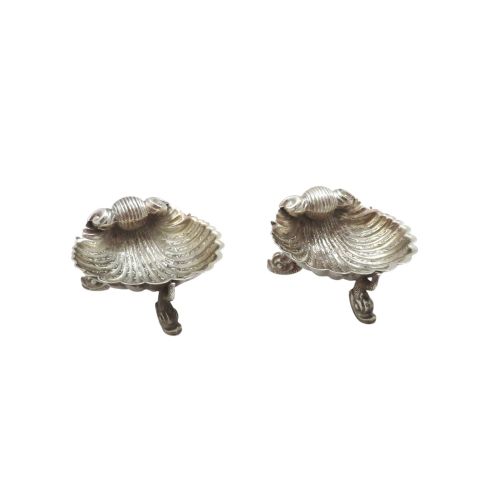
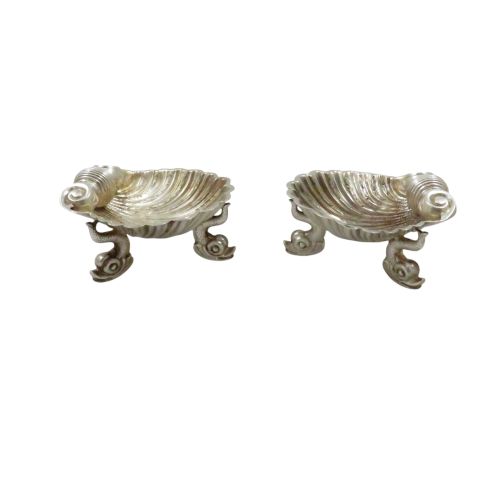
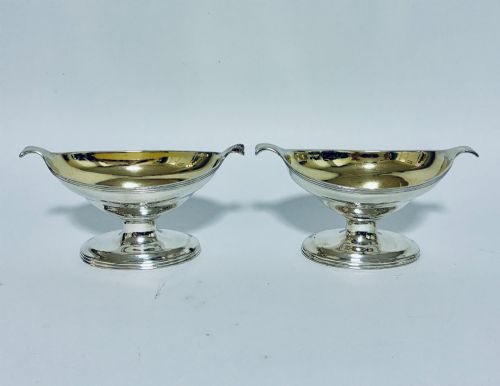
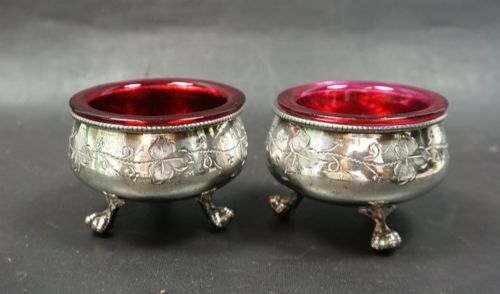
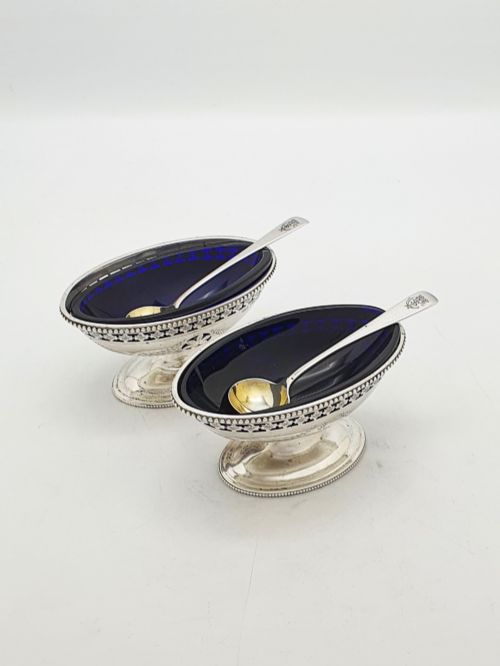
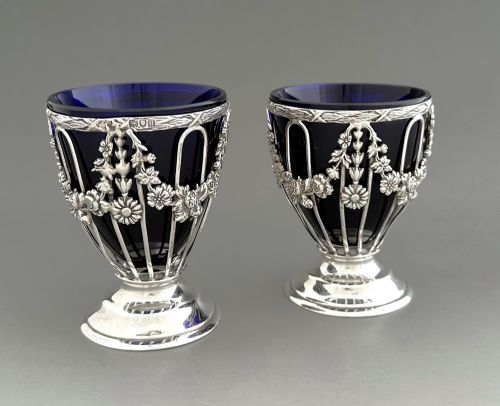
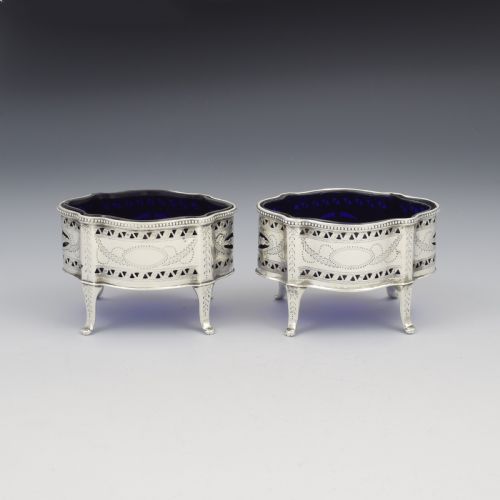
The most common versions met on this page include boat-shaped table salts, pedestal designs, and shell-shaped vessels. Many examples are accompanied by their original blue glass or cobalt glass liners, which protected the silver from the corrosive nature of salt.
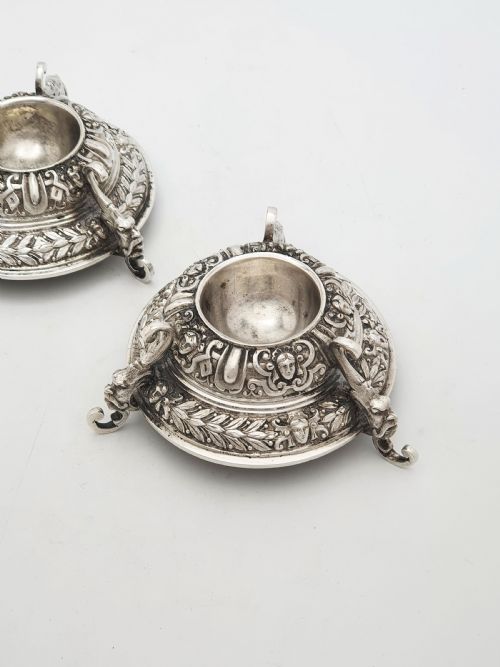
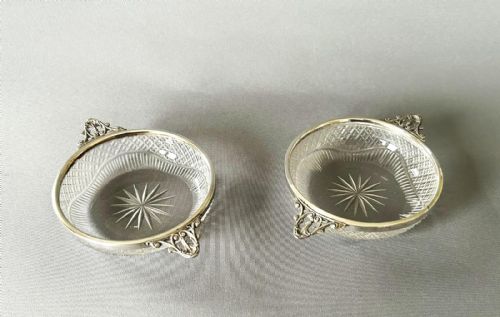
Makers utilised various forms, ranging from simple circular bowls to elaborate dolphin and shell motifs cast in solid sterling silver. Each pair demonstrates the stylistic preferences of its respective era, moving from the restrained lines of the eighteenth century to the heavier ornamentation of the late nineteenth century.
Materials and Construction
These items are constructed primarily from sterling silver, with select pieces featuring vermeil or internal glass liners. The metal was shaped through hammering, casting, and repoussé work to achieve the desired silhouette.
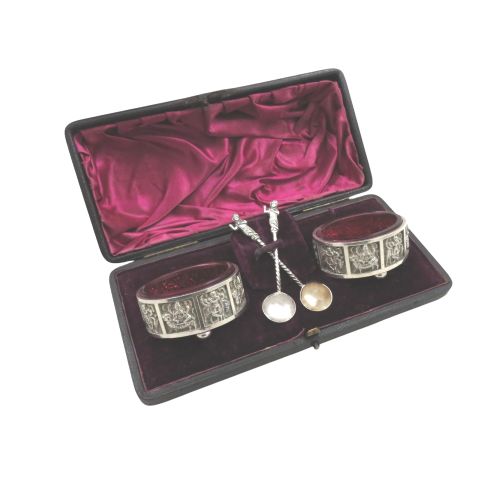
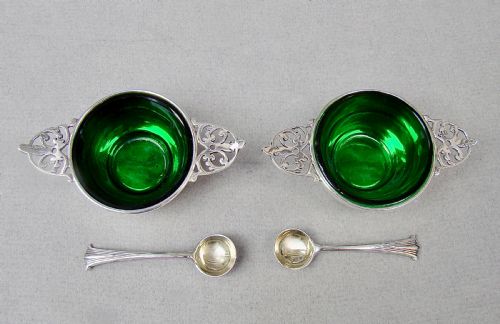
Internal glass components, often described as cobalt or blue glass liners, were hand-blown and fitted precisely to the interior of the silver bowls. Matching spoons frequently accompanied these sets, completing the functional ensemble.
Retail Price Guide 2026
Typical UK retail prices for pair silver salt cellars, calculated from the Sellingantiques database of over a million retail prices indexed since 2003. This retail price guide relies exclusively on Sellingantiques data; no external sources or auction records are used, so the figures do not describe the wider market.
Listings span from the eighteenth century through the Edwardian period, featuring sterling silver, vermeil, and cobalt glass.
Assessing Quality
The distinction between standard and superior pieces rests on the weight of the metal and the crispness of the casting. Heavier sterling silver components and sharply defined decorative motifs indicate higher craftsmanship.
The presence of original matching components, such as blue glass liners and fitted presentation cases, elevates the standing of a pair. Furthermore, clear hallmarks confirming the maker and date add historical substance to the object.
Gorham·George Unite·Daniel and John Wellby·Joseph Gloster·William Cripps·Joseph Felix Podio·Robert Harper
The Pair Silver Salt Cellars Glossary
- Sterling silver
- An alloy containing ninety-two point five percent silver and seven point five percent other metals, chosen for durability.
- Cobalt glass
- A deep blue glass used for the removable liners inside open salt cellars to prevent chemical reactions.
- Vermeil
- Sterling silver plated with a thin layer of gold, providing a rich interior finish.
- Hallmark
- A series of official marks stamped on precious metals, indicating the maker, standard of purity, and year of assay.
- Pedestal design
- A raised vessel form supported on a central foot or stem rather than direct feet.
Frequently Asked Questions
How were pair silver salt cellars used?
These vessels sat on the dining table to hold loose salt before individual shakers became common. Dinners used the accompanying spoons or pinched the salt directly from the open bowl.
They added considerable elegance to formal dining arrangements and often matched other table silver of the period.
Are glass liners original?
Many surviving pairs retain their original cobalt or blue glass liners, which protected the silver from corrosion. Finding a set with matching, undamaged liners is a significant advantage.
Replacements do exist, but original glass matches the exact contours of the silver interior.
How do I date these pieces?
Dating relies heavily on the hallmarks stamped into the metal, which record the assay office and year letter. Stylistic clues, such as boat shapes or pedestal mounts, also point toward specific decades like the Georgian or Victorian eras.
Matching the maker's mark against historical records provides the most precise timeframe.
How do I clean them?
Maintenance requires gentle silver polish and soft cloths to preserve the delicate details of the metal. Care must be taken around glass liners and any gilt interiors.
Regular, light cleaning prevents tarnish buildup without removing the historical patina.