
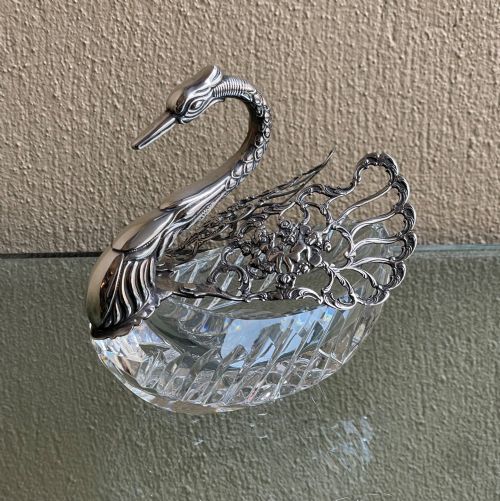


Silver Open Salt Dishes
Silver open salt dishes bring character to a dining table, offering miniature forms that hold condiments in glass-lined or solid silver bowls.
Silver Open Salt Dishes
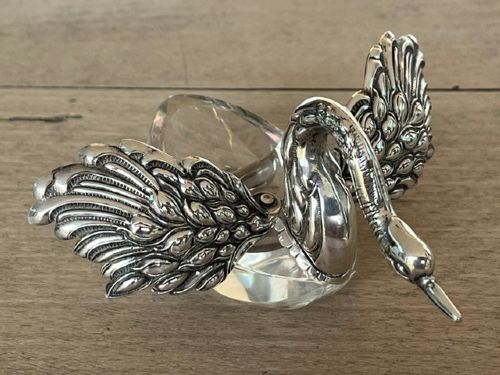
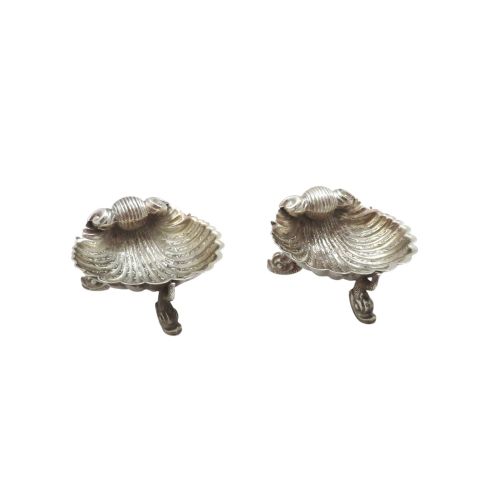
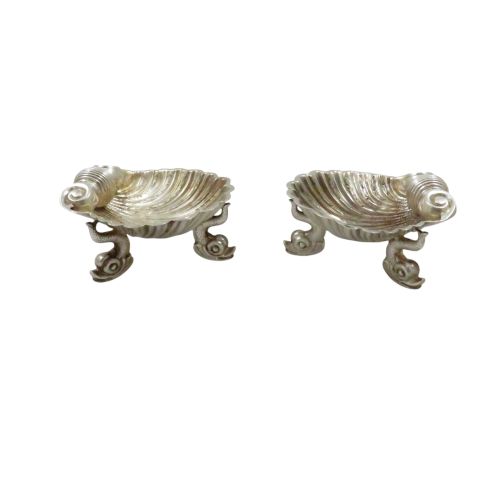
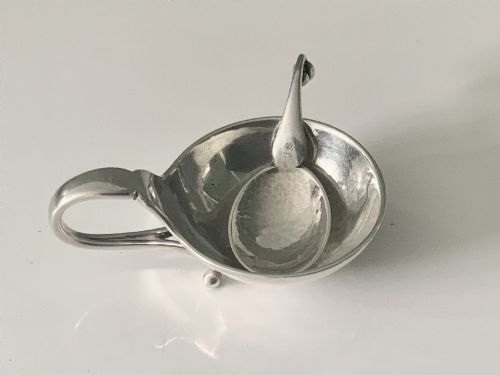
Silver open salt dishes are small tableware items designed to hold loose salt for individual diners or communal use before the invention of free-flowing table salt. These pieces range from simple boat shapes and lobed bowls to elaborate figural designs shaped as swans, shells with dolphin feet, and garden wheelbarrows. The examples found here span the Georgian, Victorian, and Edwardian periods, alongside mid-century pieces and Continental European work.
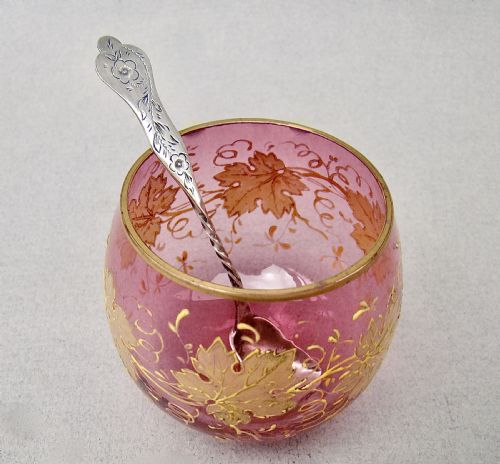
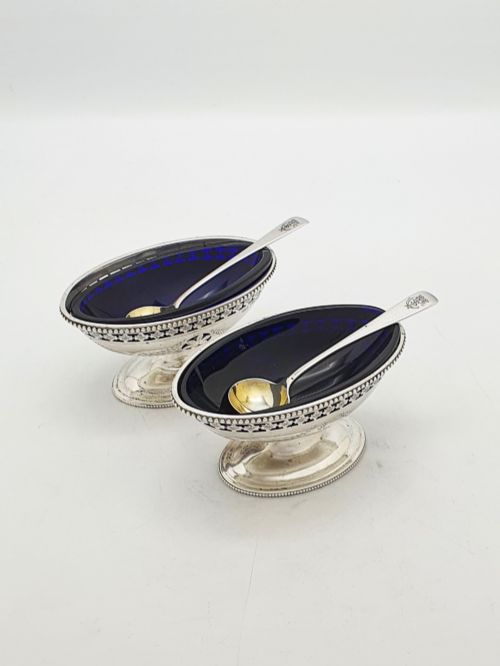
Buyers most frequently encounter pairs and sets of sterling silver or silver plated cellars, often accompanied by contrasting liners. Cobalt glass, cranberry glass, and clear crystal inserts fit inside pierced or solid silver bodies, allowing the vivid interior colour to show through the metalwork. Maker marks and assay dates trace production across decades of British and international silversmithing.
Quality differences
Quality rests upon the crispness of the chasing and the weight of the silver used in the body and feet. Heavier gauge silver retains sharper detail in naturalistic flower designs and shell motifs over generations of handling.
The presence of matching original glass liners and corresponding spoons elevates a piece. Hand-cut crystal and deeply saturated cobalt glass liners that fit snugly within the silver framework distinguish finer workshop production from standard domestic wares.
Listings feature sterling silver, silver plate, cobalt glass, and cranberry glass across Victorian, Georgian, and Edwardian periods.
Barnards·William Bateman·Paul Storr·Thomas Smily·Vale Brothers and Sermon
The Silver Open Salt Dishes Glossary
- Cobalt glass
- A deep blue glass used for liners inside open salt dishes. This material prevents the salt from corroding the silver while offering a bright contrast.
- Repoussé
- A metalworking technique where the silversmith hammers the metal from the reverse side to form raised decorative patterns on the front.
- Sterling silver
- An alloy consisting of pure silver and other metals, usually copper, to increase durability while maintaining a bright metallic lustre.
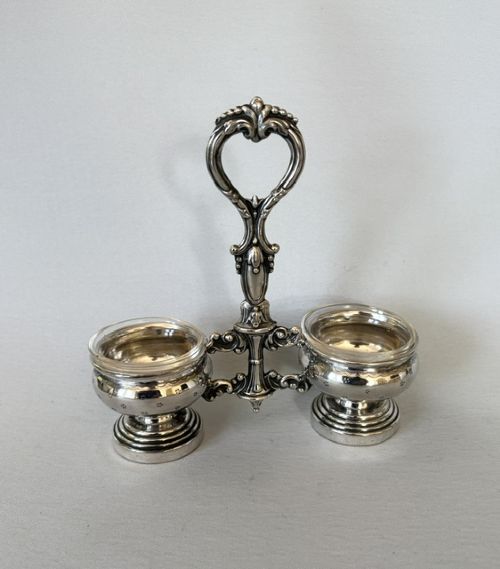
- Condiment stand
- A multi-part table frame designed to hold several open salt dishes or sauce bottles together in one central vessel.
- Foliate chasing
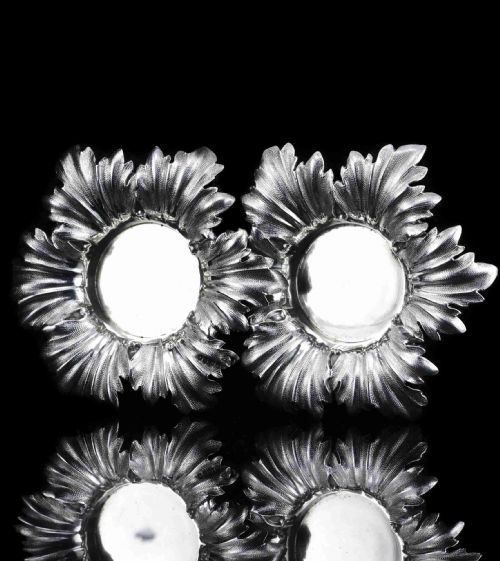
- Surface decoration hammered into metal that depicts leaves, vines, and floral motifs to enrich the outer walls of a dish.
Silver Open Salt Dishes: Frequently Asked Questions
How do you clean silver salt cellars?
Wash the silver gently in warm soapy water using a soft cloth, removing any residue left by salt crystals. Dry the metal thoroughly immediately afterwards to prevent spotting.
Take out glass liners before cleaning the silver so moisture does not become trapped between the metal and the glass insert.
What are original glass liners?
Original glass liners are the specific cobalt or clear glass inserts made to fit the interior of a salt dish during its period of manufacture. They match the exact contours and depth of the metal vessel.
Replacement liners often fit loosely or feature modern glass types that differ in weight and colour saturation from nineteenth-century examples.
How were open salts used?
Diners used open salt dishes during formal meals before table salt was manufactured with anti-caking agents. A small spoon or a clean pinch of fingers transferred salt from the dish to the plate.
Larger master salts sat in the centre of the table for communal use, while smaller pairs sat beside individual place settings.
How do you date Victorian silver salts?
Hallmarks stamped onto the underside of the silver body provide assay office symbols, date letters, and maker marks that pinpoint the exact year of production. British pieces carry standard duty marks and lion passant symbols indicating sterling standard.
Stylistic clues such as heavy foliate chasing or dolphin feet also point towards specific decades within the Victorian era.