


Antique Silver Salt Dips
Antique silver salt dips are miniature open vessels for the dining table, prized for their gleaming precious metal and bright glass linings.
Understanding antique silver salt dips
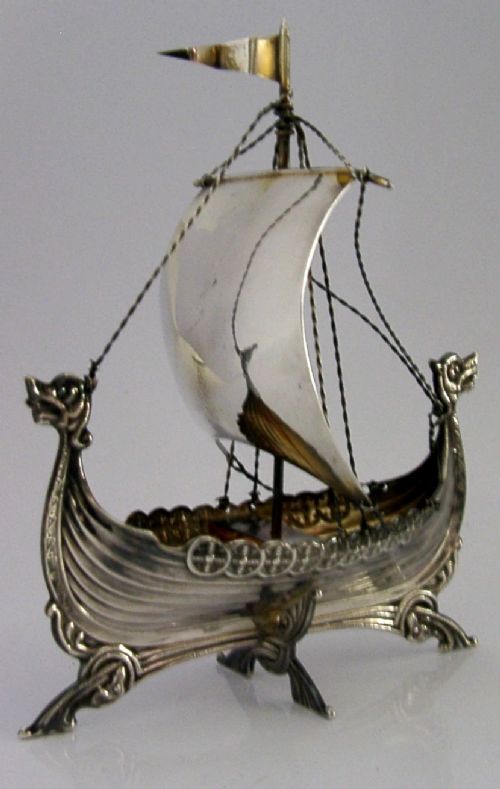
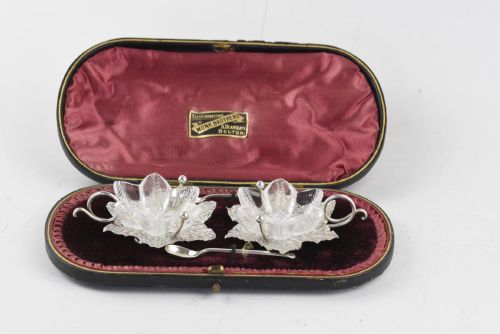
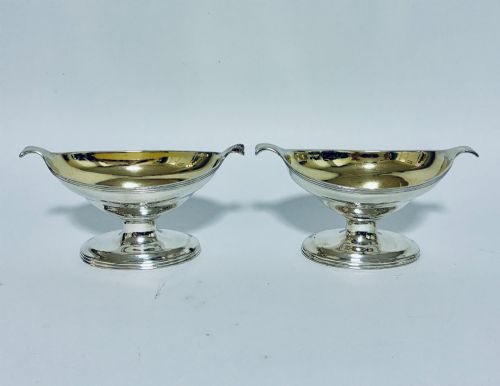
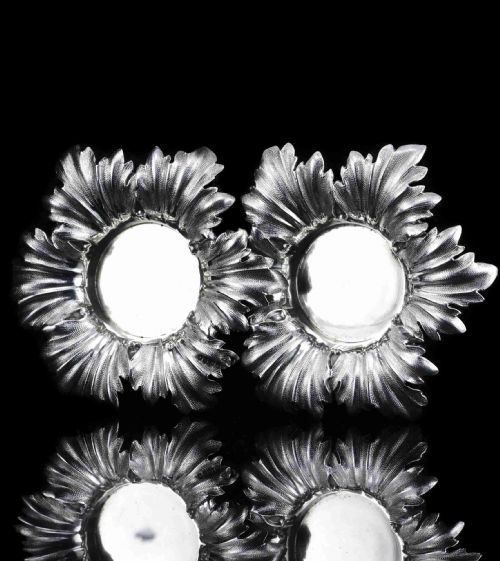
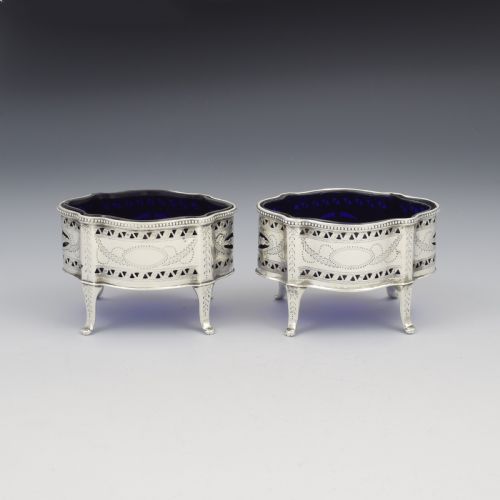
When buyers search for antique silver salt dips, they encounter small open dishes designed to hold ground salt for individual place settings. The examples on this page span the eighteenth, nineteenth, and early twentieth centuries, encompassing periods such as Georgian, Victorian, and Edwardian eras. These pieces appear as pairs or sets of four, taking forms like cauldron salts, serpentine table salts, and trencher salts.
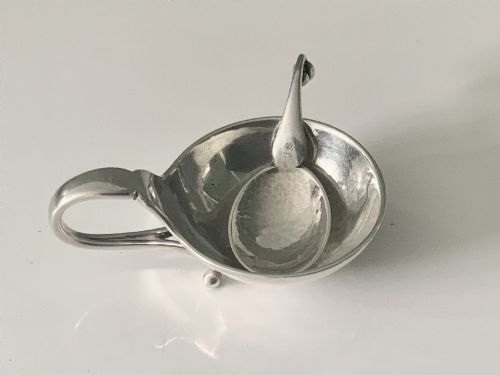
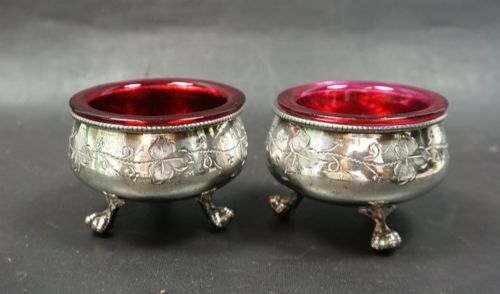
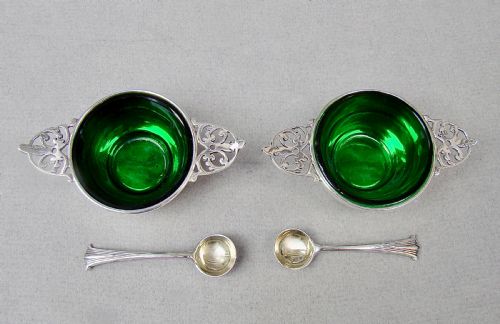
The most common formats on this page include Victorian cauldron salts alongside Georgian pieces, frequently accompanied by matching spoons or vibrant liners. Makers and retailers produced these tableware items in London, utilising sterling silver and silver plate. Buyers find both simple circular designs and heavily pierced or footed variations.
Materials and construction
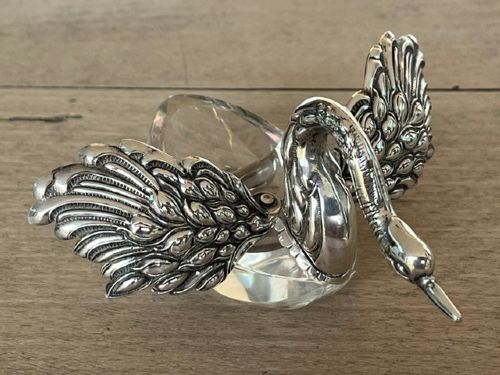
Silversmiths constructed these salt dips using sterling silver, silver plate, and vermeil, sometimes applying gold gilt to the interior surfaces to protect the metal from corrosive salt. Many open salt cellars incorporate removable cobalt glass or standard glass liners that fit snugly inside the silver body. The manufacturing methods involve casting, piercing, and hammering the silver to create sturdy feet and decorative rims.
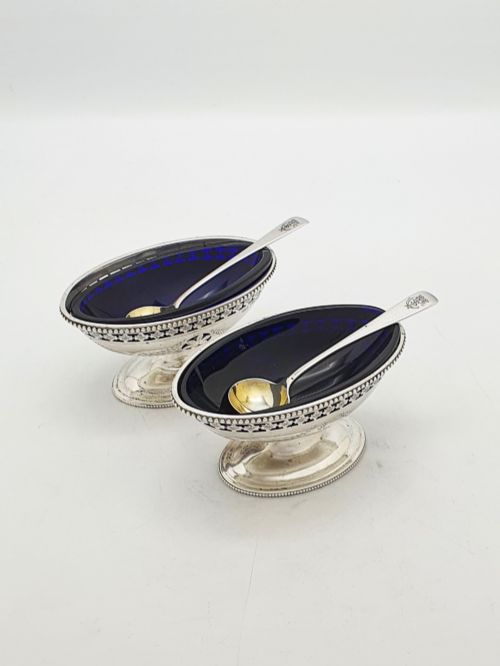
Detailing often includes delicate pierced work on the silver walls, creating intricate patterns that reveal the coloured glass liners within. Craftsmen worked metals and glass together with precision, ensuring that miniature bowls, whether shaped as cauldrons or flat-bottomed trenchers, sat steadily on the dining table.
Retail Price Guide 2026
Typical UK retail prices for silver salt dips, calculated from the Sellingantiques database of over a million retail prices indexed since 2003. This retail price guide relies exclusively on Sellingantiques data; no external sources or auction records are used, so the figures do not describe the wider market.
Judging quality in silver salt dips
Quality rests upon the weight of the metal, the crispness of any pierced ornamentation, and the presence of matching spoons or original glass liners. Pieces bearing clear hallmarks from established silversmiths demonstrate superior provenance compared to unmarked items. The fineness of the chasing and the stability of the miniature feet distinguish finer workshop output from standard production.
The integration of undamaged cobalt glass liners alongside heavy-gauge silver elevates an ensemble. Master silversmiths achieved a balance of proportion and form that remains evident in well-preserved Georgian and Victorian tableware.
David Hennell·Bateman·Thomas Smily
The Antique Silver Salt Dips Glossary
- Salt Cellar
- A small open bowl or dish used to hold salt at the dining table before the invention of the spring-loaded shaker. These vessels are also referred to as salt dips or salt bowls.
- Cauldron Salt
- A small round salt cellar raised on three short legs, mimicking the shape of a traditional cooking pot. This form became particularly popular during the Victorian period.
- Trencher Salt
- An early form of salt cellar, typically geometric or octagonal, designed to sit directly on the dining table beside the diner. George II examples frequently utilise this heavy, flat-bottomed format.
- Vermeil
- Sterling silver that has been plated with a thin layer of gold. This technique protects the silver surface from the corrosive properties of salt.
- Cobalt Glass
- A deep blue glass used to line open silver salt cellars. The dark colour provides a striking visual contrast against pierced or polished silver.
Frequently Asked Questions
How were salt dips used?
Diners used these small open vessels to hold individual portions of salt at the table. Guests would take a pinch of salt using a miniature spoon or the tip of a knife.
Before free-flowing salt was invented, coarse salt sat openly in these dishes. They formed an essential part of formal table settings across Georgian and Victorian households.
Are liners original?
Many Victorian and Edwardian salt dips retain their original cobalt glass or clear glass liners. These inserts prevented the salt from corroding the silver interior.
Replacements are common due to the fragile nature of old glass. Collectors look for liners that fit the specific contours of the silver body precisely.
Why buy in sets?
Tableware of this period was produced in matching pairs or sets of four to maintain symmetry across the dining table. Complete sets ensure a uniform appearance for display or use.
Matching spoons frequently accompany these sets, sharing the same period hallmarks as the salt cellars themselves.
How to date these pieces?
Hallmarks stamped onto the silver provide the most reliable guide to age, recording the assay office, date letter, and silversmith's mark. Stylistic clues such as Georgian trenchers or Victorian piercing also indicate the era.
Catalogues and surviving records link specific maker's marks to active working years in London.