
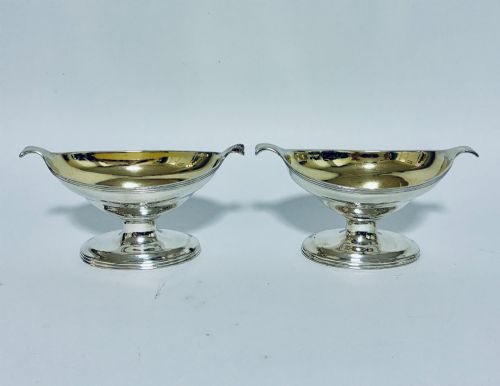


Silver Gilt Salt Cellars
These silver gilt salt cellars bring Georgian and Victorian craftsmanship straight to the dining table.
Silver Gilt Salt Cellars
When searching for silver gilt salt cellars, a buyer is examining small tabletop vessels designed to hold salt, frequently encountered as matched pairs or sets from the Georgian and Victorian periods. The selection on this page shows various forms, ranging from traditional boat shapes and cauldron salts to scallop shell dishes, pedestal designs, and tub formats.
The materials span sterling silver, vermeil, gold gilt, and silver-gilt, reflecting the rich surface finishes applied to these condiment pieces. Stylistic influences vary from classical Georgian restraint to elaborate Victorian naturalism and rococo details.
Materials and construction
These items are constructed from solid silver or sterling silver, providing a sturdy metallic foundation for the vessels. Artisans then applied a gold gilt or vermeil layer over the silver surface, creating the characteristic rich, yellow-gold appearance often preserved on the interior bowls.
Workshop methods involved hammering, casting, and repousse work, visible in the naturalistic flower designs, scallop shell contours, and smooth cauldron bodies. Makers finished these pieces with dedicated detailing, such as pedestal feet and matching spoons.
Materials recorded across the inventory include sterling silver, vermeil, gold gilt, and silver-gilt.
Assessing quality and craftsmanship
The distinction between standard examples and top quality pieces lies in the crispness of the chasing and the prominence of the maker. Master silversmiths executed complex forms, such as deep rococo scallop shells and heavy cauldron bodies, with precise balance and clean lines.
The preservation of the original gold gilt or vermeil coating across the interior surfaces also influences the standing of a piece. Finer examples retain their intended contrast between the bright silver exterior and the rich gilded bowl.
David Hennell·William Bateman·Paul Storr·Edward Farrell·Thomas Smily·Edward Wood
The Silver Gilt Salt Cellars Glossary
- Silver-gilt
- Sterling silver that has been coated with a thin layer of gold. This finish protects the silver from tarnishing while providing a warm golden appearance.
- Vermeil
- High-quality silver plated with gold. The term denotes a substantial layer of gold over a sterling silver base.
- Cauldron salt
- A small, bowl-shaped salt cellar raised on three feet. This traditional form mimics the appearance of a cooking cauldron.
- Trencher salt
- An early form of salt cellar placed directly on the dining table. These pieces are typically low and geometric in profile.
- Repousse
- A metalworking technique where the artisan hammers the design from the reverse side to form raised ornamentation. This method creates tactile floral and scroll motifs on the vessel wall.
Silver Gilt Salt Cellars: Frequently Asked Questions
What are silver gilt salt cellars?
These pieces are small open vessels created to hold salt at the dining table, constructed from silver with a surface application of gold gilt. They appear in forms such as cauldrons, boats, and shell-shaped dishes.
They reflect the decorative tastes of the Georgian and Victorian eras, often produced as pairs or complete sets for formal dining.
How were salt cellars used?
Historically, salt cellars sat upon the dining table to hold loose salt for guests before individual shakers became common. Diners used a small spoon or pinched the salt directly from the vessel.
Today, collectors utilise them as decorative tabletop items or small dishes for condiments and butter.
How do I date an antique salt cellar?
Dating relies heavily on hallmarks stamped into the silver, which indicate the assay office, the year of production, and the maker's mark. Stylistic clues also help, as rococo revival and naturalistic floral designs point towards the Victorian period, while simpler boat and cauldron shapes often date to the Georgian era.
The materials and manufacturing techniques seen in the listings align with the recorded 18th and 19th-century periods.
How do I care for silver gilt salt cellars?
These items require gentle handling to preserve the delicate gold gilt layer over the silver base. Cleaning should be done with a soft cloth, avoiding abrasive polishes that can wear away the vermeil finish.
They are best displayed away from direct moisture and harsh chemicals to maintain their surface condition.