
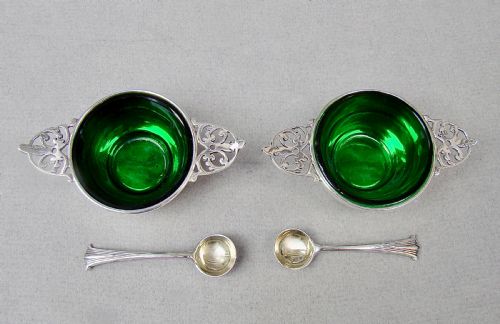


Georgian Open Salt Cellars
Georgian open salt cellars are small tabletop vessels designed to hold loose salt, combining practical dining history with fine silversmithing and glassmaking.
Georgian Open Salt Cellars
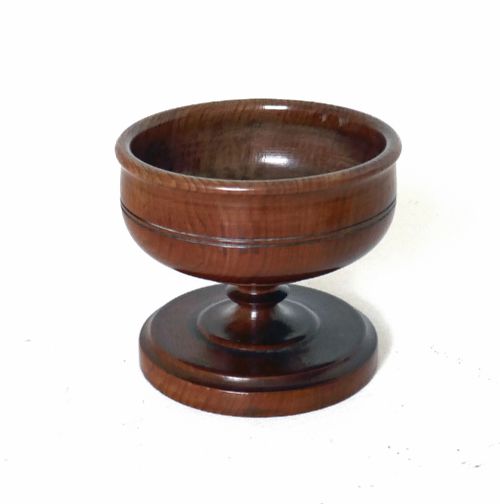
When you search for Georgian open salt cellars, you encounter miniature vessels created to hold salt for individual diners or communal table use. The form spans several decades and stylistic revivals, appearing in silver, glass, treen and pottery.
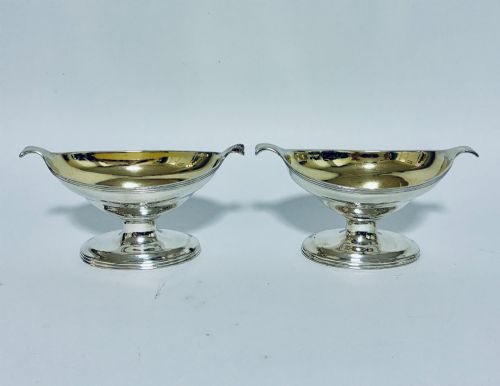
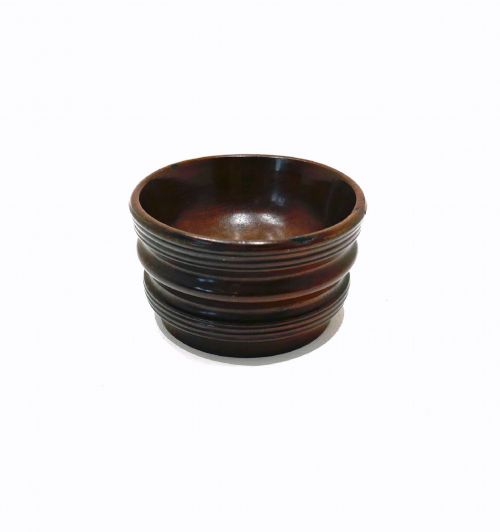
The pieces on this page range from early treen turned bowls to sterling silver cauldron shapes and cut glass tubs. You meet pairs and sets alongside individual pieces from the eighteenth and nineteenth centuries.
Makers shaped these cellars as boats, circular tubs and trencher forms, often raised on feet or integrated with fitted saucers. They reflect the shifting dining habits and domestic refinements of their periods.
What varies in quality
The distinction between ordinary and superior examples lies in the crispness of the casting, the depth of the glass cutting and the precision of the turning. Master silversmiths and glass cutters achieved sharper detail and better weight distribution in their work.
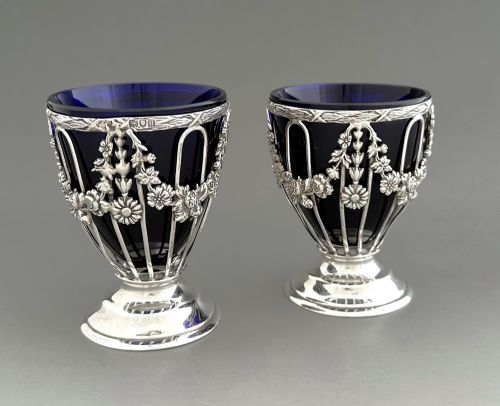
Original components dictate value and desirability, particularly the presence of matching blue glass liners or fitted saucers. The survival of clear hallmarks and distinct maker marks adds historical weight to silver pieces.
Some early salt cellars were turned from yew wood with such care that their natural grain mimics the movement of sea salt itself.
David Hennell·John Edmonstone·William Bateman·Paul Storr·Edward Wood·Josiah Williams & Co
The Georgian Open Salt Cellars Glossary
- Trencher salt
- A heavy, solid salt cellar, often square or octagonal, designed to sit directly on the dining table rather than on a raised foot.
- Treen
- Small handmade wooden household objects turned or carved from timbers such as yew or laburnum.
- Cauldron salt
- A small bowl-shaped salt cellar supported on three or four small legs, popular in silver during the Georgian period.
- Blue glass liner
- A removable insert placed inside an open silver salt cellar to protect the metal from corrosive salt.
- Wirework
- Openwork metal construction made from soldered silver wire, creating a cage-like frame for a glass insert.
Georgian Open Salt Cellars: Frequently Asked Questions
How were open salt cellars used at the table?
Diners used open salt cellars to hold loose salt at the table before modern salt shakers existed. Guests took a pinch using a small salt spoon or the tip of a clean knife.
They sat either individually at each place setting or as larger communal vessels shared across several diners during formal meals.
Why do some silver salts have glass liners?
Salt is highly corrosive and can pit or damage sterling silver over extended periods of contact. Removable glass liners protected the metal interior from chemical reactions.
These liners were typically made of cobalt or bright blue glass to provide a decorative contrast against the silver openwork.
How do I date a Georgian salt cellar?
Dating relies heavily on silver hallmarks, which record the assay office, date letter and maker's mark stamped directly onto the metal. Style changes also help, shifting from early heavy trencher forms to delicate boat shapes and wirework.
Material choices, such as eighteenth-century treen wood turning versus nineteenth-century ironstone, provide further chronological markers.
Can I use antique salt cellars today?
These pieces function well on modern dining tables for serving salt, spices or small condiments. Using plastic spoons rather than metal ones prevents scratching the antique surfaces.
Careful hand washing without harsh detergents preserves the silver patinas, glass clarity and delicate wood finishes.