



Blue Glass Salt Cellars
Blue glass salt cellars bring rich colour to the dining table, pairing brilliant liners with pierced silver frameworks from Georgian times onward.
Blue Glass Salt Cellars
When you search for blue glass salt cellars, you encounter open vessels designed to hold seasoning at the table, most frequently found paired with silver or silver-plated frames. These pieces appear across several eras, with Victorian, Edwardian, and Art Deco examples forming the core of what you see here.
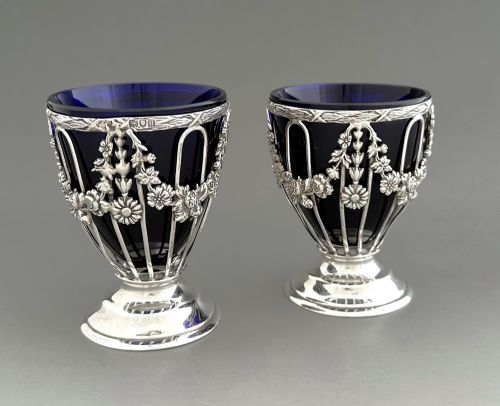
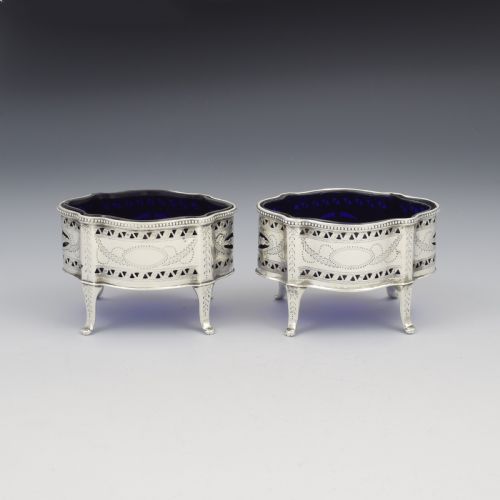
The objects take various forms, from boat-shaped table salts to round tubs and serpentine holders. Many retain their original coloured liners, which provide a striking contrast against pierced silver wirework or solid metal bases.
How they were made
Makers combined blown or moulded blue and cobalt glass with sterling silver, silver plate, and occasionally velvet linings. Metalwork frames involved piercing, casting, and wirework techniques to cradle the delicate glass bowls securely.
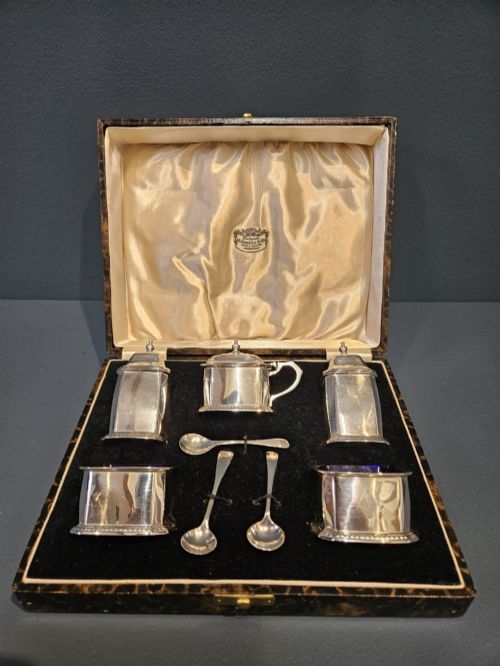
Silversmiths shaped solid silver and plated metal into boat and serpentine profiles, often matching individual salts into pairs or larger cased sets complete with spoons.
Listings span from the 18th century through the Georgian, Victorian, Edwardian, and Art Deco periods, utilising cobalt glass, sterling silver, and silver plate.
What varies in quality
The distinction between ordinary and finer examples rests on the crispness of the metalwork piercing and the weight of the silver frame. Heavier gauge metal and intricate wirework indicate superior craftsmanship.
The condition and depth of colour in the glass liners also set pieces apart, alongside the presence of matching spoons and original fitted presentation cases.
William Neale·Goldsmith & Silversmith's
The Blue Glass Salt Cellars Glossary
- Cobalt glass
- A deep blue glass coloured with cobalt oxide. This material is frequently used for salt liners because it resists staining from condiments.
- Open salt
- A small tabletop bowl used before free-flowing salt was invented. Guests took pinches of salt directly from the vessel.
- Cruet set
- A matched collection of condiment containers mounted on a stand. These often include mustard pots, pepper shakers, and salt cellars.
- Wirework
- Metal formed into thin wires and soldered into open patterns. This technique creates lightweight yet decorative frames for glassware.
Blue Glass Salt Cellars: Frequently Asked Questions
How were salt cellars used?
Diners used salt cellars to hold dry seasoning at individual places or shared points around the table. Guests pinched salt out using small spoons or clean fingers.
Before free-flowing table salt existed, these small open bowls kept coarse crystals neatly contained alongside meals.
Are liners usually original?
Many surviving pieces retain their original glass liners, though replacements do occur due to accidental breakage over time. Examining the fit and hue helps determine if the glass belongs to the frame.
Original liners fit snugly into the metal mounts and match the period characteristics of the silver housing.
How do I date a salt cellar?
Hallmarks stamped onto the silver metal provide the most reliable guide to a piece's age and origin. These tiny marks record the assay office, date letter, and maker's mark.
Stylistic cues such as Edwardian wirework or Art Deco geometric shapes also point to specific manufacturing decades.
Can I use them today?
These antique salts function well on modern dining tables for serving coarse sea salt, spices, or even small portions of sauces. Hand washing preserves both the silver and the coloured glass.
Careful handling ensures these historical tableware items remain usable for everyday dining or special occasions.