


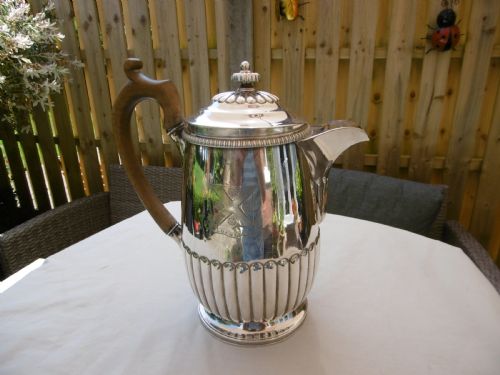


19th Century Silver Tableware
These 19th century silver tableware pieces bring Georgian and Victorian dining tables to life with sterling silver, silver plate, and cut glass.
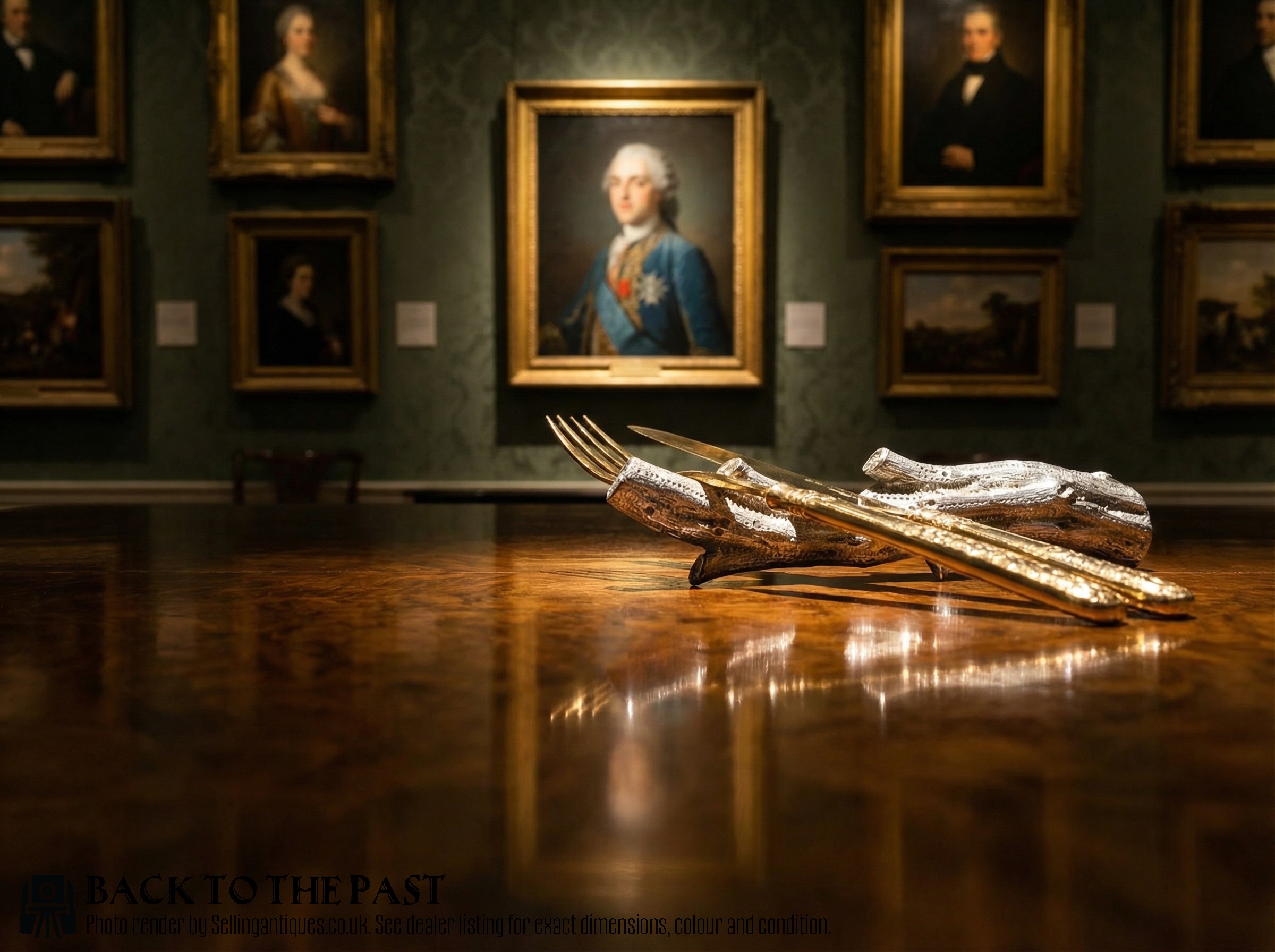
19th Century Silver Tableware
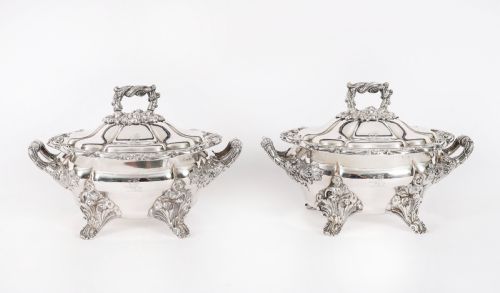
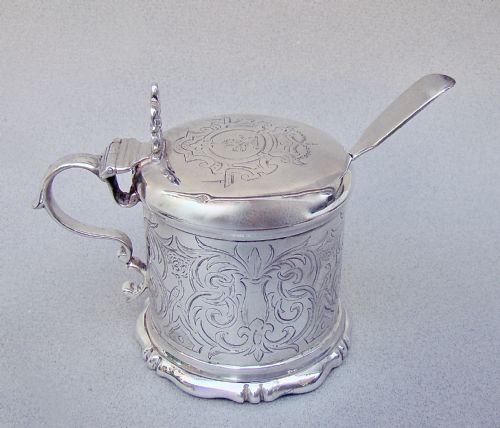
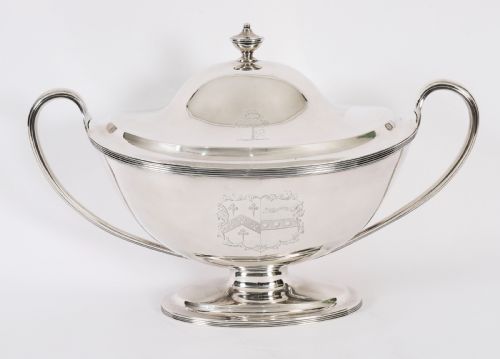
When you search for 19th century silver tableware, you encounter functional and decorative items designed for the dining room and parlour during the Georgian, Regency, and Victorian periods. The selection includes serving vessels like tureens and sauce boats, alongside smaller table accessories such as salt cellars, mustard pots, and condiment cruets.
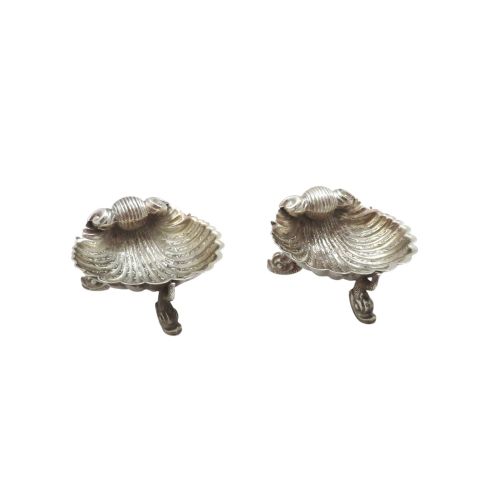
The pieces on this page lean heavily into Victorian manufacturing output, supplemented by earlier Georgian items and continental or Russian silver works. You find utilitarian items transformed into decorative statements through chasing, embossing, and naturalistic forms like acorns and shells.
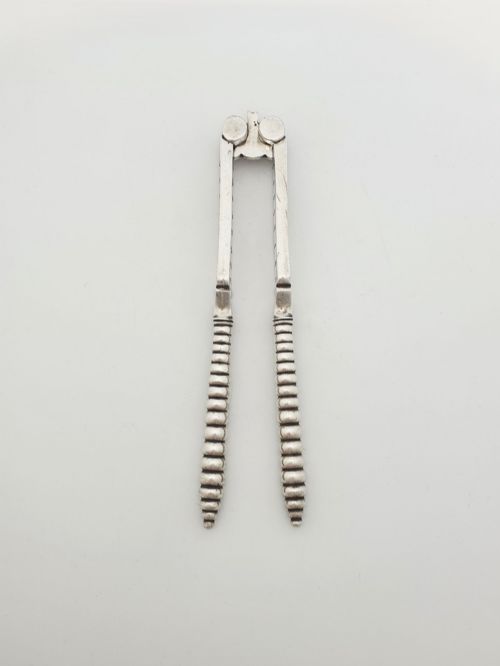
Objects range from large centrepieces like entree dishes and fruit baskets down to personal items like tea strainers, sugar tongs, and novelty pepperettes. Many items reflect the formal dining rituals of the era, where specialised vessels existed for every course and condiment.
How 19th century silver tableware was made
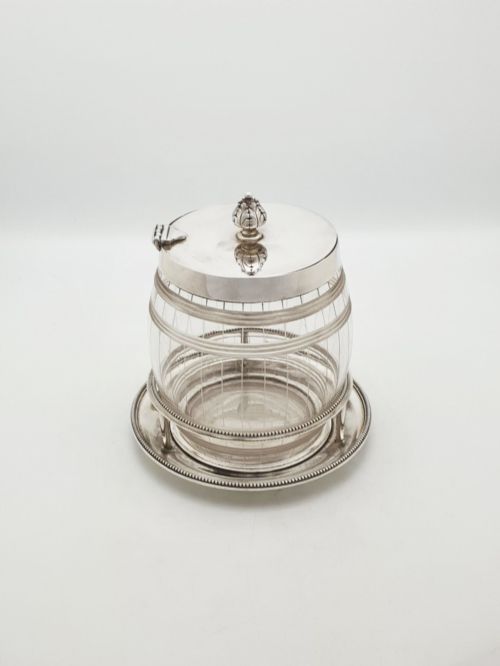
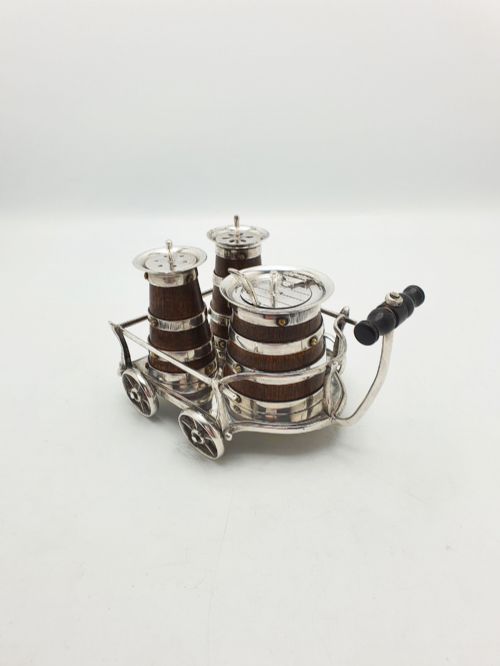
Makers utilised sterling silver and silver plate, often combining metal with cut glass, wood, and oak for barrels and stands. Old Sheffield plate appears alongside pieces created through traditional casting, hammering, and piercing techniques.
Surface decoration involved parcel gilding, niello, and cloisonné enamel, particularly on continental and Russian items. Handles were frequently cast separately or turned from wood, while intricate details like crests and naturalistic motifs were hand-finished.
Dining tables of this era featured playful pepperettes shaped like dogs and babies.
What varies in quality
Quality rests upon the crispness of the chasing and the weight of the metal utilised in the construction. Pieces with well-defined crests, secure maker marks, and robust hinges or stands demonstrate superior craftsmanship.
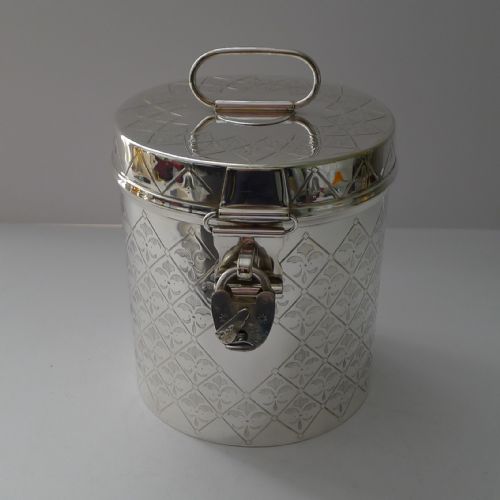
The integration of secondary materials, such as clear cut glass inserts within silver-plated stands, indicates the original ambition of the commission. Finer examples maintain the integrity of their gilding and show careful attention to functional mechanics like locking mechanisms on biscuit boxes.
Mappin and Webb·Elkington·Charles and George Fox·William Bennett·Matthew Boulton·Paul Storr·Mary Chawner·Josiah Williams and Co·Reid and Summers·William Hutton and Sons·Vasily Agafonov
The 19th Century Silver Tableware Glossary
- Sterling silver
- An alloy containing 92.5 percent silver by mass, widely utilised for British dining wares bearing hallmarks.
- Old Sheffield plate
- An early form of plated metal produced by fusing a sheet of silver to a copper base before rolling.
- Parcel gilt
- Silver objects that have portions of their surface gilded with gold, creating a contrasting two-tone effect.
- Niello
- A black metallic alloy used as an inlay on engraved silver, prominent in Russian pieces.
- Tureen
- A deep covered bowl used for serving soups, sauces, or entrées at the dining table.
19th Century Silver Tableware: Frequently Asked Questions
How do I identify periods?
Hallmarks stamped into the metal provide the most reliable guide to dating, showing assay office symbols, date letters, and monarch duty marks.
Stylistic shifts also help distinguish periods, moving from the restrained elegance of George III designs to the exuberant naturalism and novelty forms of the Victorian era.
Were these items used daily?
Most of these pieces served formal dining rooms during large household meals, dinner parties, and afternoon tea ceremonies.
Wealthy households maintained specialised vessels for every condiment and course, meaning many items saw service only during specific culinary rituals.
Can I use silver tableware today?
Many items, such as tea strainers, sugar tongs, and serving spoons, remain entirely functional for modern dining and hospitality use.
Delicate pieces with historical gilding or complex mechanisms like locking biscuit boxes are better suited for display and gentle occasional service.
What is Old Sheffield plate?
This material involves fusing a thin layer of silver onto a thicker copper core through heat and pressure before shaping the metal.
It represents an early precursor to electroplating, developed before standard silver plating techniques became widespread in the mid nineteenth century.