


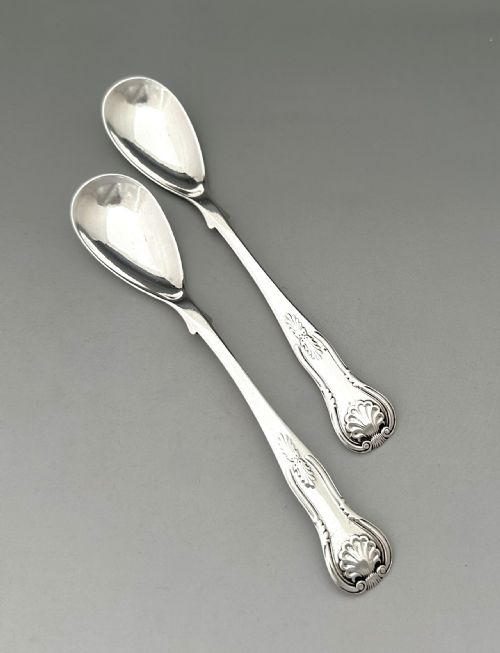
Pair of Silver Salts
When you search for a pair of silver salts, you enter a domain of miniature masterworks designed to hold seasoning on the dining table.

Understanding a pair of silver salts
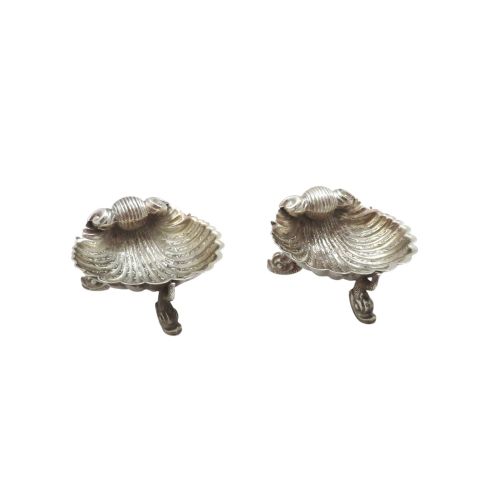
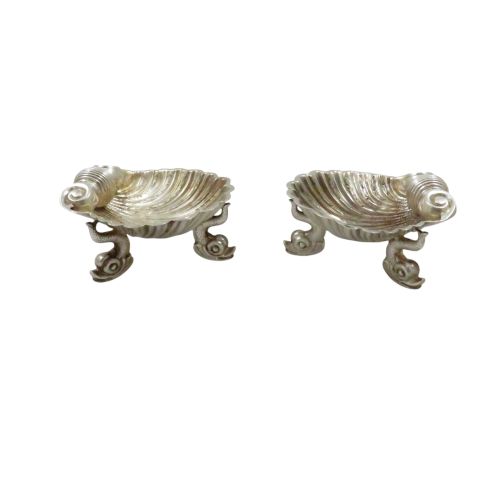
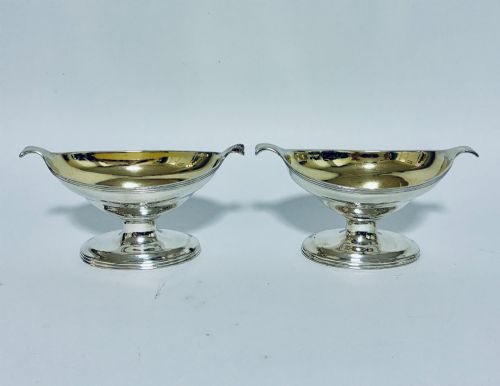
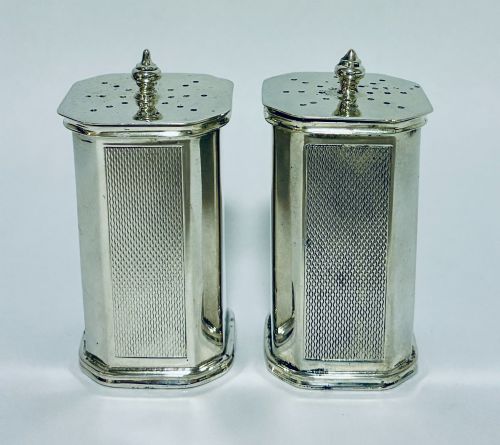
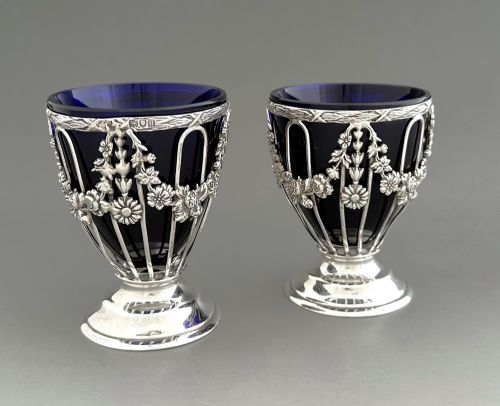
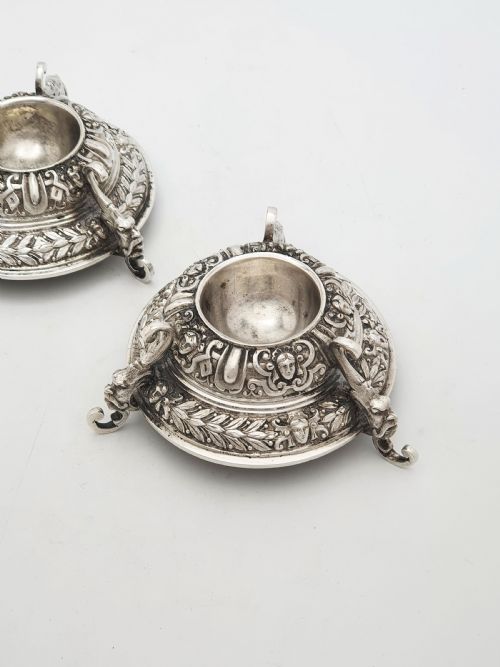
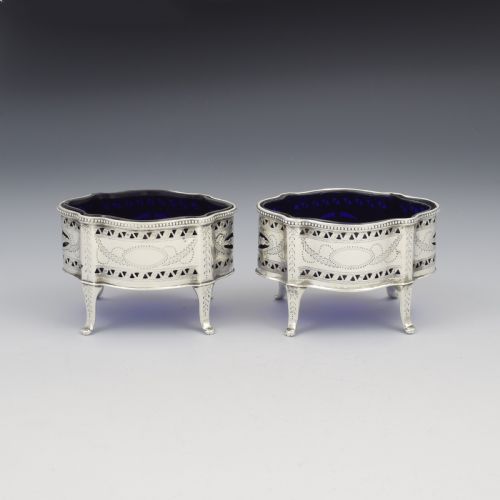
A pair of silver salts comprises matching small vessels designed to hold salt at the dining table, taking forms such as open cellars, pedestal urns, cauldrons, shells, and garden wheelbarrows. The examples found here span Georgian, Victorian, and nineteenth-century periods, demonstrating how domestic dining customs required dual receptacles for condiments.
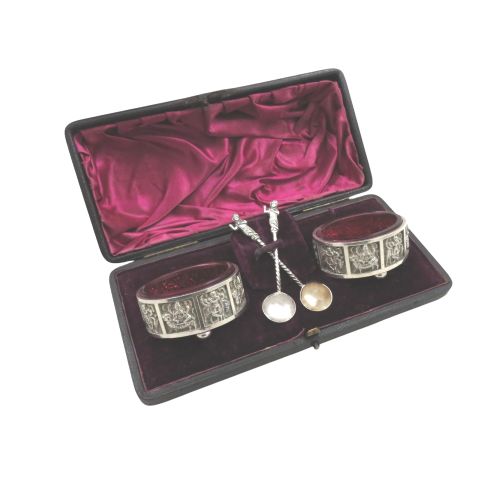
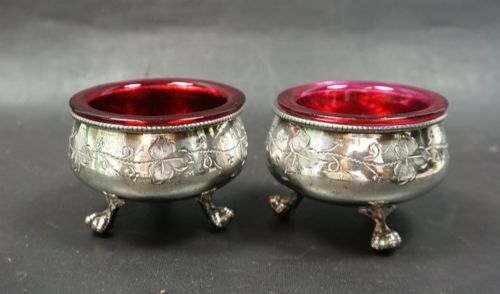
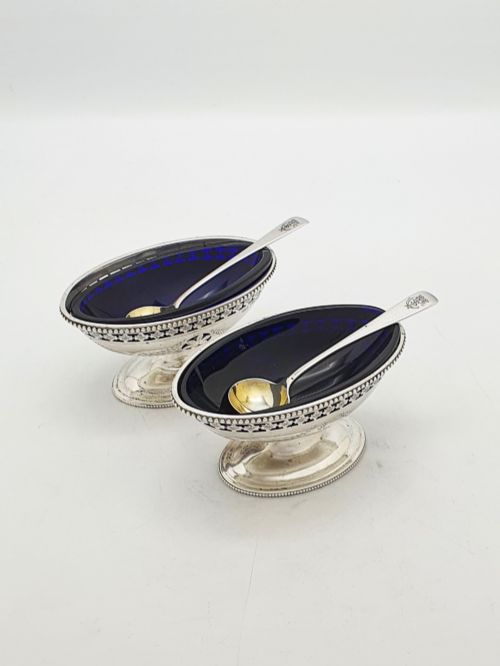
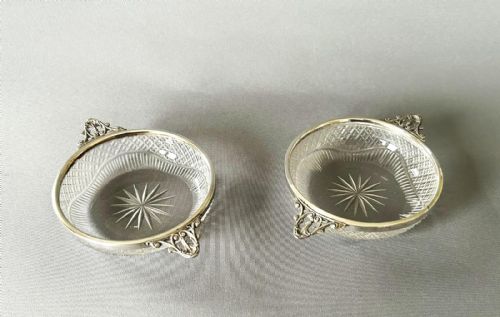
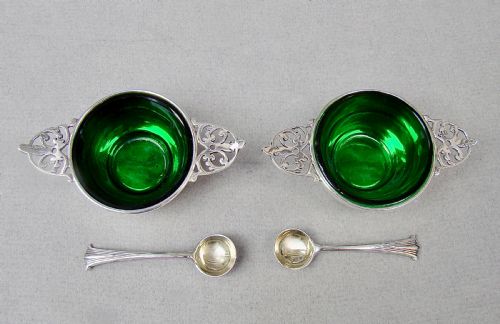
Buyers most frequently encounter Victorian pieces, alongside Georgian, William IV, and Edwardian specimens, often shaped into six-lobed bowls, serpentine edges, or novelty items like top hats. These miniature works frequently incorporate matching spoons and liners made from glass, such as ruby or cranberry glass, or enamel.
Originating from English, Scottish, Irish, French, Norwegian, German, and Danish workshops, these items reflect diverse regional silversmithing traditions. Certain pieces arrive complete with their original fitted presentation cases, preserving the set as intended by the maker.
Distinctions in quality
Quality rests upon the crispness of the chased or pierced ornamentation, the weight and gauge of the metal, and the survival of matching components such as original spoons and glass liners. Superior examples display sharp definition in decorative motifs like foliage or gadrooning, maintaining structural integrity across delicate rims and feet.
The presence of crisp hallmarks, distinguished maker marks, and fitted presentation cases elevates an assemblage. Pieces executed with fire gilding or complex enamel work demonstrate advanced workshop proficiency that distinguishes standard production from exceptional artistry.
Retail Price Guide 2026
Typical UK retail prices for pair of silver salts, calculated from the Sellingantiques database of over a million retail prices indexed since 2003. This retail price guide relies exclusively on Sellingantiques data; no external sources or auction records are used, so the figures do not describe the wider market.
Listings feature sterling silver, silver gilt, and glass materials across Victorian, Georgian, and nineteenth-century periods in forms such as salts and open cellars.
Vale Brothers and Sermon·Henry Williamson·Thomas Hart Stone·John Round·David Andersen·Peter and Ann Bateman·Paul Storr·Hampston Prince and Cattles·W G Keight and Co·Hester Bateman·William Aitken·Martin Hall and Co·Rebecca Emes·Elkington·Edward Lowe
The Pair of Silver Salts Glossary
- Salt cellary
- An open vessel designed to hold loose salt on the dining table before the invention of the spring-loaded shaker. These pieces often rest on three feet or a pedestal base.
- Silver gilt
- Silver that has been coated with a thin layer of gold on its interior or exterior surfaces. This application protects the silver base from salt corrosion.
- Glass liner
- A removable insert, often coloured in ruby or cranberry glass, placed inside an open salt to prevent direct contact between the salt and the silver.
- Guilloché enamel
- A decorative technique where a precise pattern is mechanically engraved into the silver beneath a translucent layer of coloured enamel.
Frequently Asked Questions
How were silver salts used?
Diners used these small open vessels to hold salt, taking a pinch with a dedicated miniature spoon or their fingers to season food at the table.
They stood in pairs or sets across the dining surface, accompanying individual place settings or shared centerpieces depending on the scale of the meal.
Why do some salts have glass liners?
Salt is highly corrosive and reacts chemically with silver over extended periods, causing pitting and tarnishing to the interior of the vessel.
Removable glass liners provided a protective barrier that kept the salt away from the metal while remaining easy to lift out and clean.
How do I care for silver salts?
Maintenance requires washing the vessels promptly after use to remove any residual salt, using warm water and a mild detergent rather than harsh abrasives.
Store them in dry conditions and polish the silver gently with a specialist cloth only when necessary to preserve the crispness of the hallmarks and chasing.
Are original spoons important?
Matching spoons enhance the completeness and historical integrity of a set, as these tiny utensils were easily separated or lost over generations.
Finding a pair accompanied by their original spoons, particularly those sharing identical maker marks or stylistic periods, adds considerable charm for collectors.