


Sterling Silver Salt Dips
Sterling silver salt dips bring centuries of dining history to the table, offering tactile metalwork and bright glass liners that catch the eye.
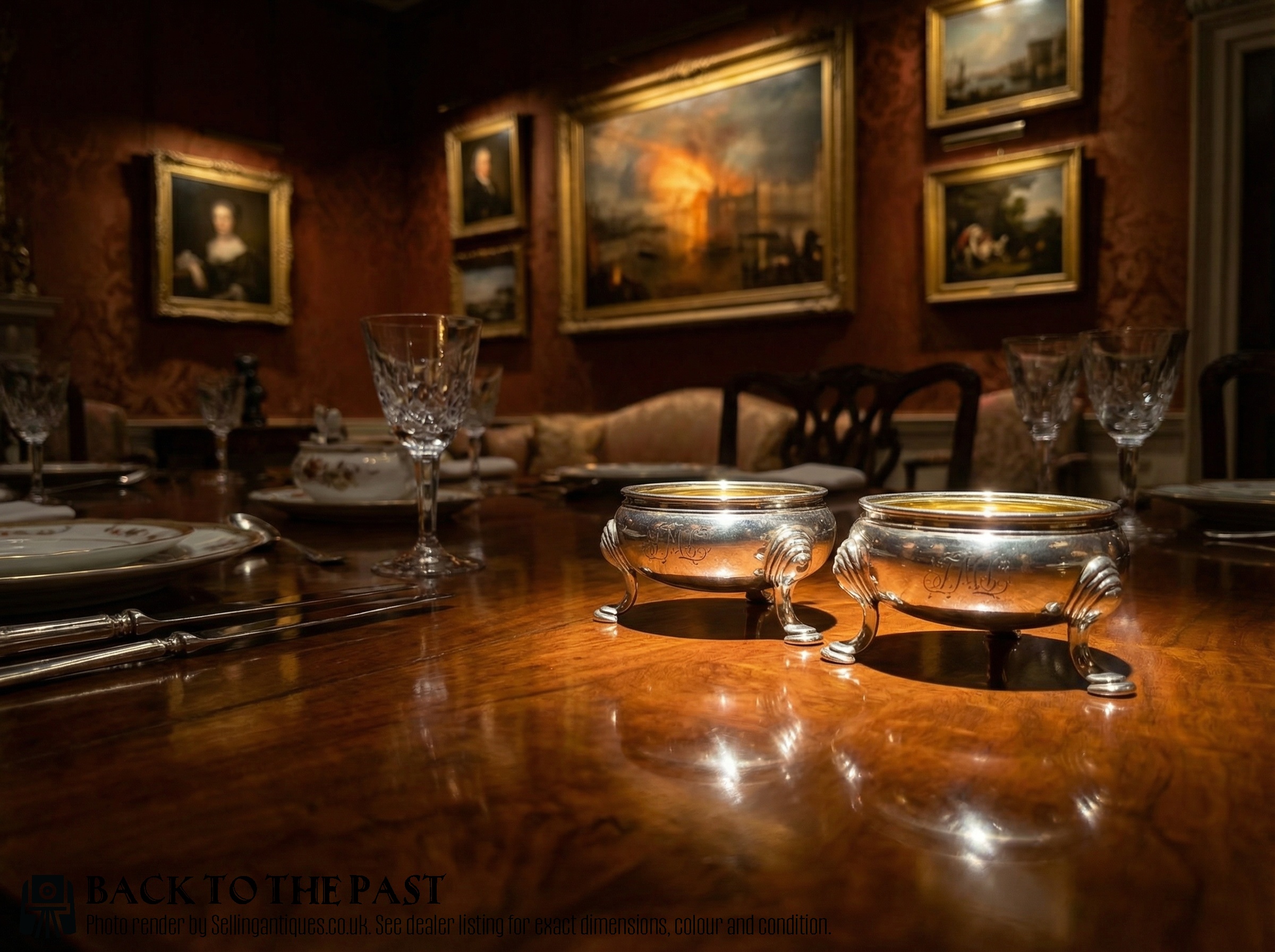
Sterling Silver Salt Dips
Sterling silver salt dips serve as small tableware vessels designed to hold granular salt at the formal dining table before modern shakers became common. When you search for sterling silver salt dips, you encounter forms ranging from simple George II trencher salts to elaborate Victorian cauldron cellars and Edwardian boat shapes.
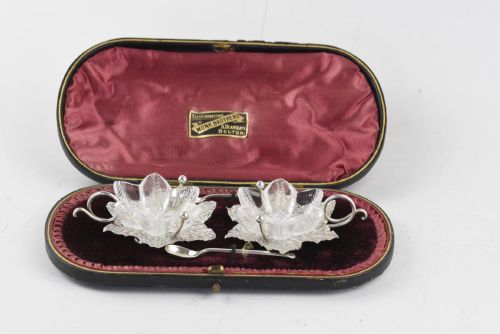
The pieces on this page span several centuries of British and European silversmithing, drawing heavily from Georgian, Victorian, and Edwardian periods. Collectors regularly find matched pairs or complete cased sets complete with their original spoons and coloured liners.
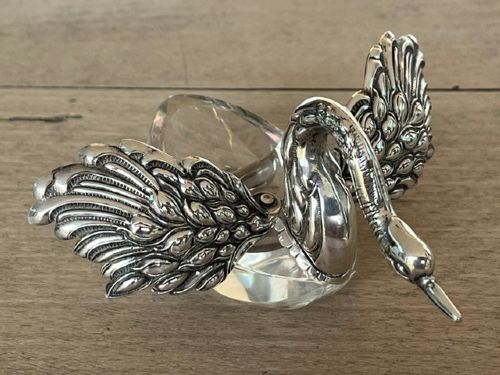
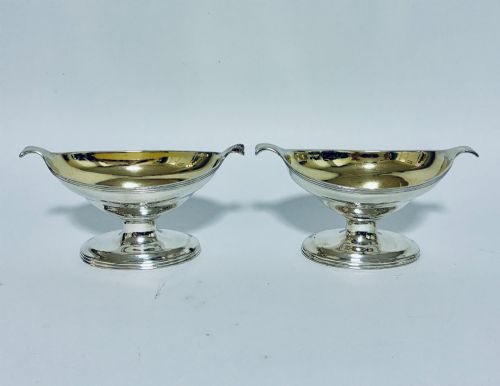
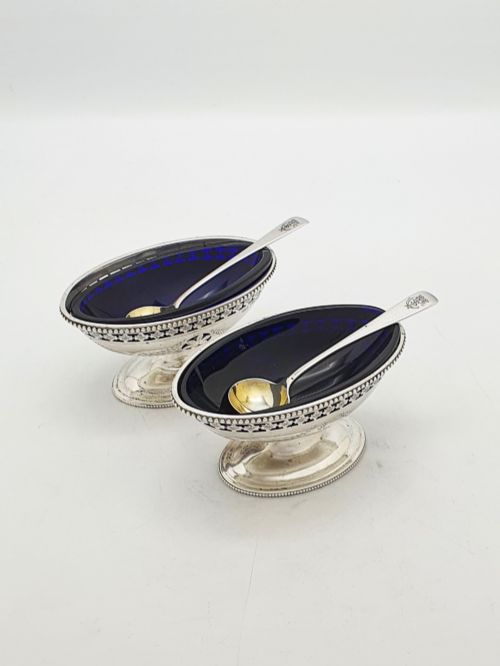
Common variations include open bowls resting on three feet, boat-shaped dishes, and novelty pieces shaped like birds, swans, or Scottish quaichs. Many examples incorporate contrasting inserts such as cobalt glass or crystal to protect the silver from the corrosive nature of salt.
Materials and construction methods
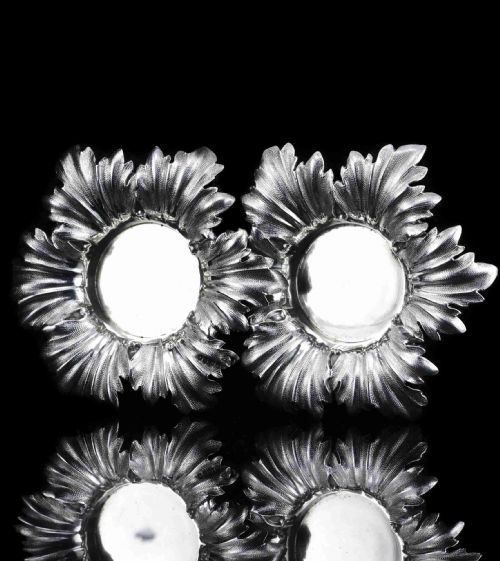
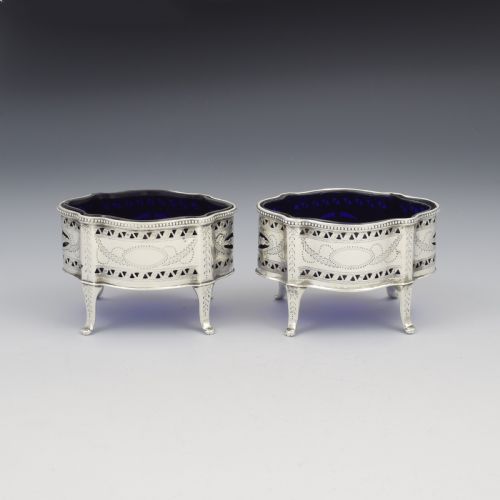
Silversmiths formed these salt dips using traditional techniques such as hand-raising, casting, and piercing. Artisans shaped sterling silver sheets into fluid serpentine outlines, lobed bowls, or classical boat forms, often applying detailed foliate chasing by hand.
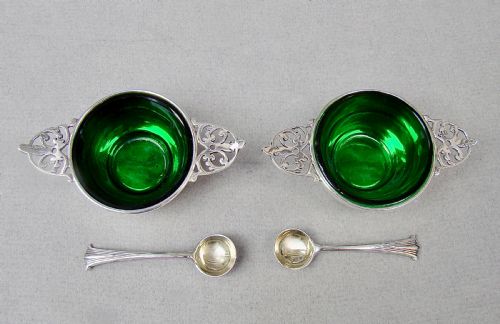
Interior protection relied on fitted glass liners, particularly vibrant cobalt glass or crystal, which dropped inside the open silver framework. Many interiors also featured gold gilt washes to prevent oxidisation, while fitted presentation cases utilised velvet, silk, and leather linings.
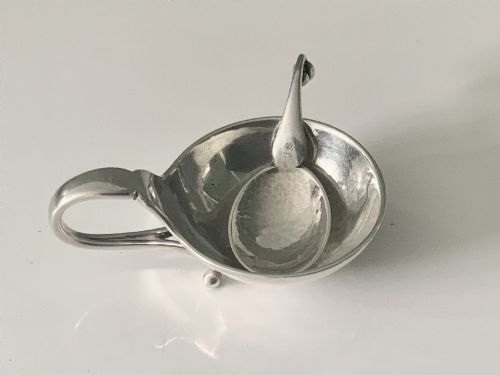
Some Victorian silversmiths fashioned salt cellars into miniature Scottish quaichs complete with tiny twin handles for formal dining novelty.
Factors determining quality
Quality rests significantly on the crispness of the chased decoration, the weight of the silver used in the body, and the presence of fully legible hallmarks. Superior examples retain their original matching spoons, undamaged glass liners, and fitted presentation cases in sound condition.
The reputation of the maker also dictates distinction, with pieces originating from notable workshops commanding greater attention from collectors. Balance in design, structural integrity in the feet or bases, and the retention of pristine gilding further separate standard utility pieces from exceptional collector items.
David Hennell·John Edmonstone·Josiah Williams and Co·Paul Storr·Thomas Smily·Vale Brothers and Sermon
The Sterling Silver Salt Dips Glossary
- Trencher salt
- A heavy, often multi-sided salt cellar placed directly on the dining table during the seventeenth and eighteenth centuries. These early forms sat flat without raised feet.
- Cauldron salt
- A small, round salt cellar raised on three distinct legs, frequently styled in the Georgian and Victorian periods. They often feature embossed or chased floral decoration around the bulbous body.
- Cobalt glass
- A deep blue, potassium-rich glass used extensively for removable liners inside open salt cellars. The dark colour contrasts sharply with polished sterling silver.
- Pierced work
- A decorative technique where metal is cut through to create openwork lattice designs or geometric patterns. Silversmiths utilised this method on Victorian and Edwardian salt galleries.
- Gilt wash
- A thin layer of gold applied to the interior surface of a silver salt dip to protect the metal from chemical corrosion caused by salt. This technique adds a warm, golden glow to the bowl.
Sterling Silver Salt Dips: Frequently Asked Questions
How were salt dips used historically?
Diners used these small vessels at the table before shaker tops were invented. A pinch of salt was lifted from the dip using a tiny matching spoon or the tip of a knife.
Wealthier households placed individual salts beside each guest, while larger trencher salts were shared between multiple diners along the length of the table.
Do salt dips require glass liners?
Many open salt cellars incorporate removable glass liners to prevent the salt from coming into direct contact with the silver. Salt is corrosive over long periods and can pit the metal if left unprotected.
While numerous period pieces survive with their original cobalt or clear glass inserts, replacement liners are common in older tableware.
How do I date an antique salt dip?
Dating relies heavily upon the hallmarks stamped into the silver, which record the assay office, the date letter, and the sterling standard. Style cues also help, as Georgian pieces tend toward classical simplicity while Victorian examples favour heavier chased flora.
Comparing the shape and construction methods against documented workshop timelines narrows the manufacturing period further.
How should I clean silver salt dips?
Maintenance requires gentle washing in warm, soapy water, particularly if glass liners are present, to remove any residual salt crystals. Harsh abrasive dips should be avoided to protect antique patinas and delicate gilding.
Soft microfiber cloths and specialised silver polishes applied sparingly keep the exterior bright without wearing away crisp hallmarks or chased details.