


Silver Salt Cellar Feet
These silver salt cellar feet anchor small vessels of sterling silver, glass and gold gilt across Georgian and Victorian dining tables.
Silver Salt Cellar Feet
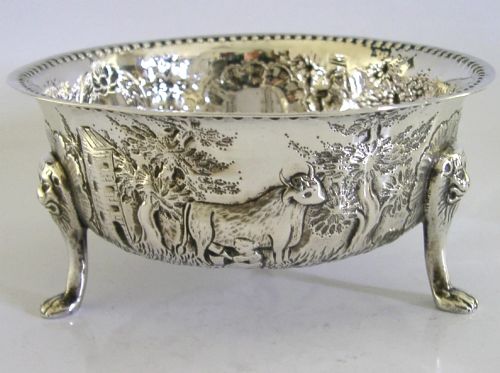
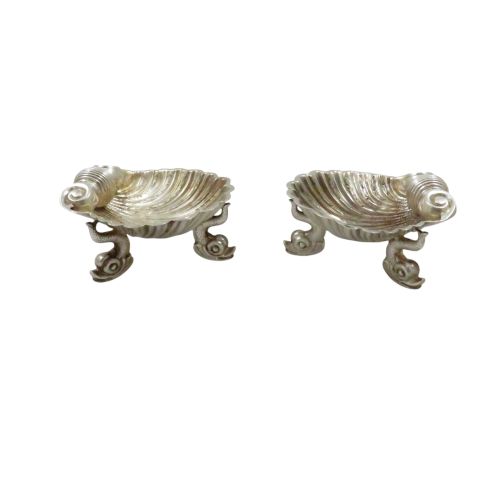
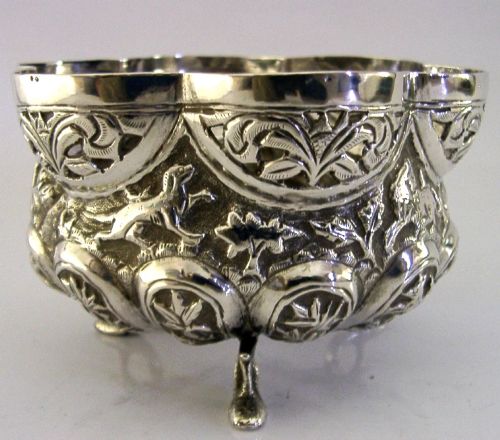
When you search for silver salt cellar feet, you are looking at the small supports beneath salt cellars, decorative bowls and condiment sets. The pieces on this page span Georgian, Victorian and Edwardian periods, featuring forms like cauldron cellars, shell basins and animal-decorated bowls.
You are most likely to meet sterling silver and solid silver examples, often paired with cobalt glass liners or finished in gold gilt and vermeil. These small supports lift the body of the salt above the dining surface, whether cast as simple pads, scrollwork or dolphin feet.
How they were made
Silversmiths formed these small supports and bowls using traditional hammering, casting and chasing techniques in sterling silver. Many examples incorporate deep blue cobalt glass liners held securely within pierced or solid silver frames.
Makers applied gold gilt and vermeil finishes to the interior surfaces to protect the silver from the corrosive nature of salt. Details like animal motifs and shell designs were hand-worked or cast separately before being attached to the base of the vessel.
What varies in quality
Quality rests in the crispness of the casting on the feet and the weight of the silver relative to the size of the bowl. Early Georgian cauldron cellars display sharp definition in their supporting legs, whereas lesser examples show softness in hand-chased details.
The presence of original components, such as matching cobalt glass liners and provenance, separates standard production from exceptional maker-attributed pieces. Maker marks from prominent silversmiths further elevate the standing of an individual salt.
John Edmonstone·Bateman·Michael Alexandrovich Romanov·Edward Wood
The Silver Salt Cellar Feet Glossary
- Sterling silver
- A silver alloy containing 92.5 percent pure silver by mass and 7.5 percent other metals, usually copper. This standard alloy provides the durability required for functional tableware.
- Vermeil
- Sterling silver plated with a thin layer of gold. This finish prevents the salt from tarnishing and corroding the underlying silver.
- Cobalt glass
- Deep blue glass commonly used for the removable liners inside open salt cellars. It provides a striking visual contrast against polished sterling silver.
- Cauldron cellar
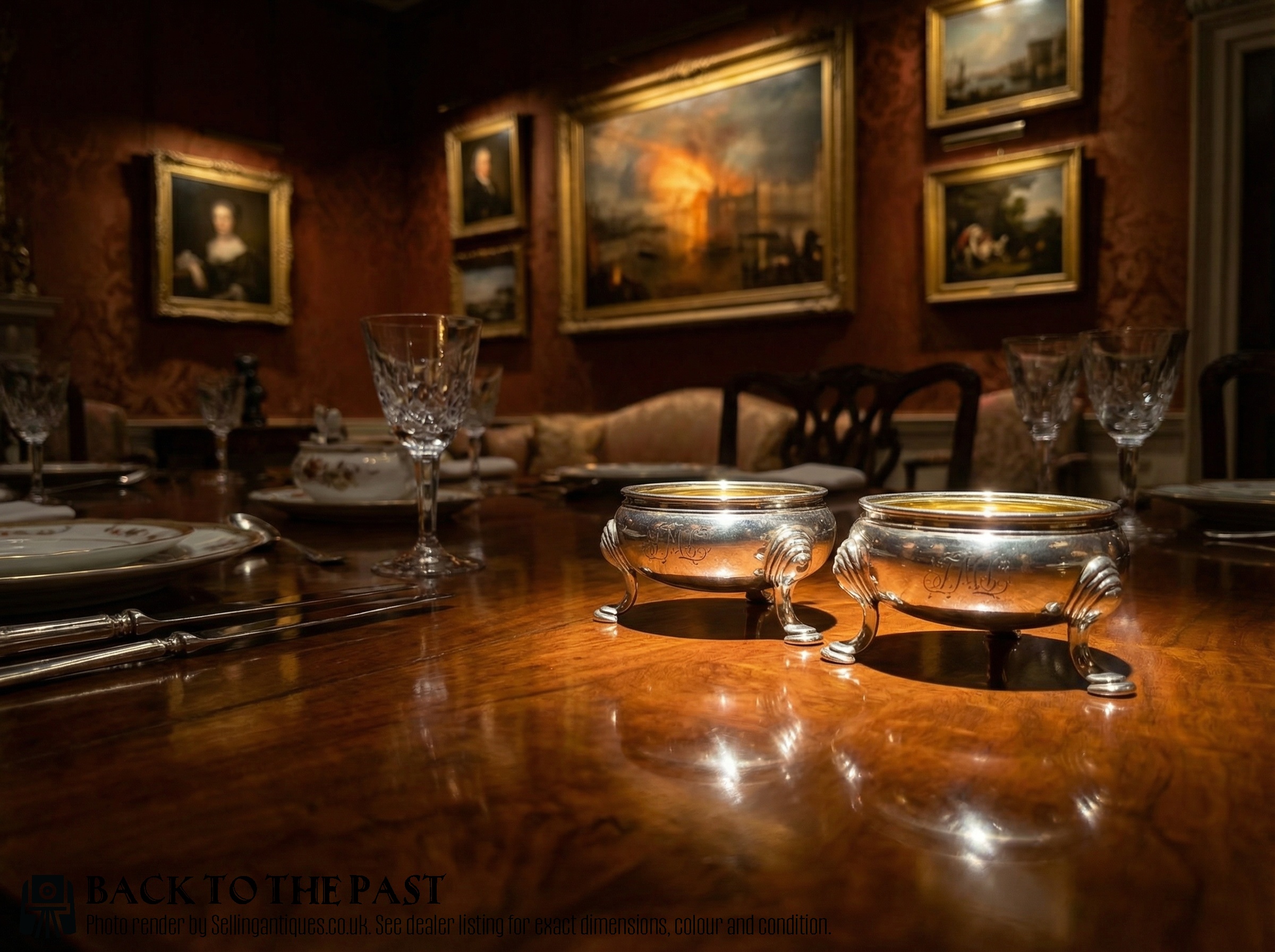
- A small, round bowl supported on three or four small feet, resembling a miniature cooking pot. This form is particularly common in Georgian silver tableware.
Silver Salt Cellar Feet: Frequently Asked Questions
What were silver salt cellars used for?
These vessels held loose salt on formal dining tables before the invention of free-flowing table salt. Guests used small spoons or pinches of fingers to take salt from the open bowl.
They sat near each place setting or were shared between diners, often paired with glass liners to protect the metal from corrosion.
How do I date an antique silver salt?
Dating relies on hallmarks stamped into the silver, which record the assay office, the year letter and the maker's mark. Stylistic clues like Georgian cabriole legs or Victorian shell motifs also point to specific decades.
Comparing the form and weight against documented pieces from makers like Bateman helps narrow the period further.
Why do some salts have blue glass liners?
Salt is highly corrosive and reacts chemically with silver over extended periods. Cobalt glass liners created a protective barrier between the condiment and the metal body.
This design allowed the salt to sit safely inside the silver frame without pitting or staining the precious metal.
How do I care for antique silver salts?
Clean the silver gently using a soft cloth and specialised silver polish, avoiding harsh abrasives that remove fine details. Rinse and dry the pieces thoroughly after any cleaning.
Remove glass liners before polishing the silver frame to prevent moisture damage to the inner surfaces.