


Solid Silver Salt Cellar
Solid silver salt cellar designs span the Georgian and Victorian eras into the twentieth century, offering functional dining elegance.
Solid Silver Salt Cellar
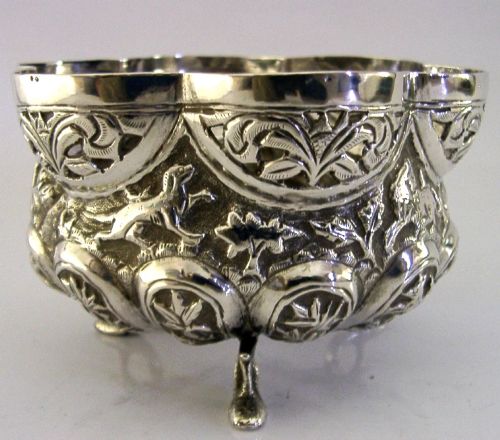
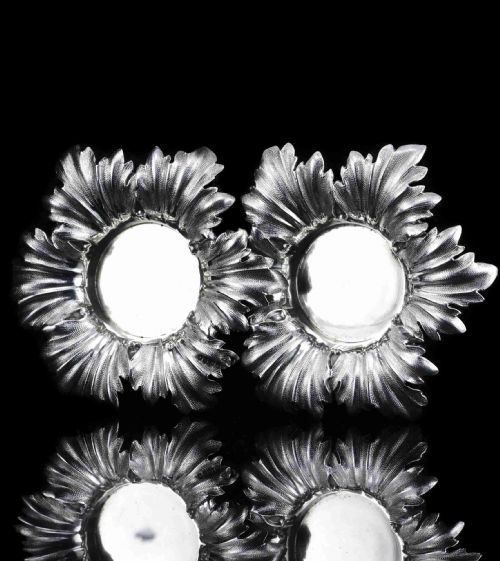
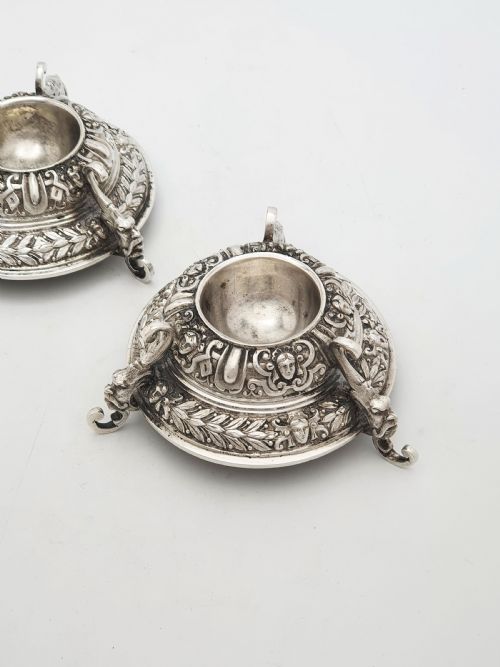
A solid silver salt cellar is a traditional dining table accessory designed to hold loose salt before the invention of the shaker. When searching for this phrase, a buyer encounters diverse forms ranging from simple Georgian trencher salts to elaborate Victorian boat-shaped vessels and novelty designs.
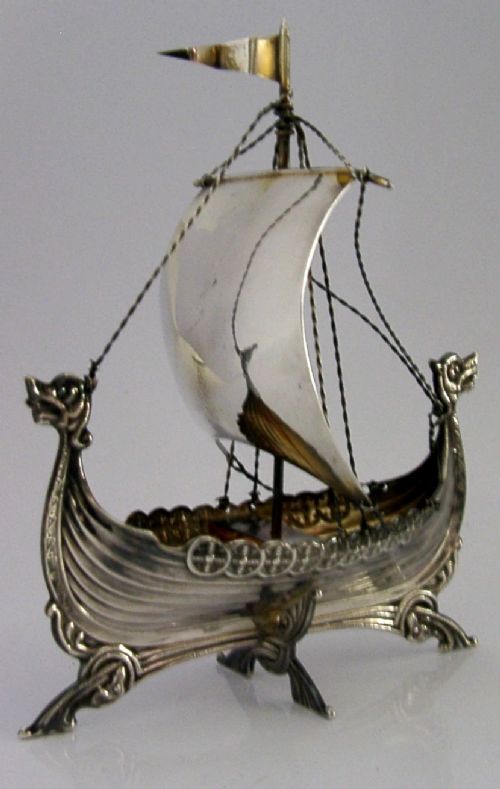
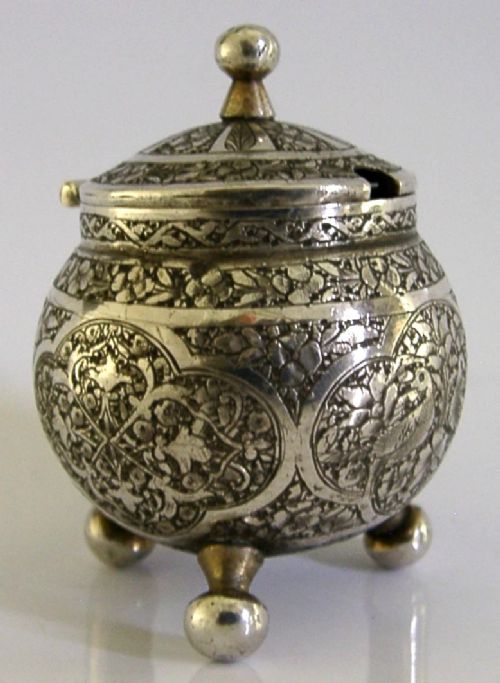
The pieces appearing here cross multiple periods including Georgian, Victorian, Edwardian, and Art Deco, alongside regional variations such as Ottoman, Anglo-Indian, and Viking Revival styles. Open salt cellars frequently retain their original coloured glass liners or matching spoons.
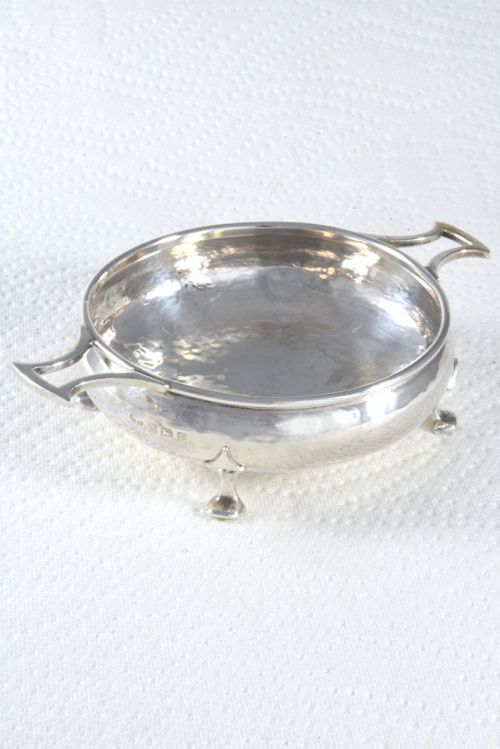
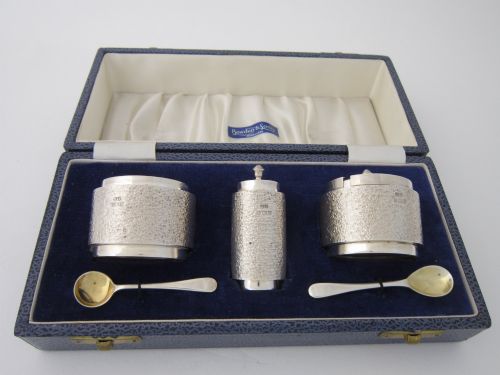
Beyond standard open bowls and pedestal designs, the selections include condiment sets, egg cruets, and mustard pots. These items reflect changing dining customs across centuries of British and international silversmithing.
Materials and technique
Makers utilised sterling silver and standard silver as primary structural metals, frequently enriching interiors with gold gilt, silver gilt, vermeil, or deep blue cobalt glass liners.
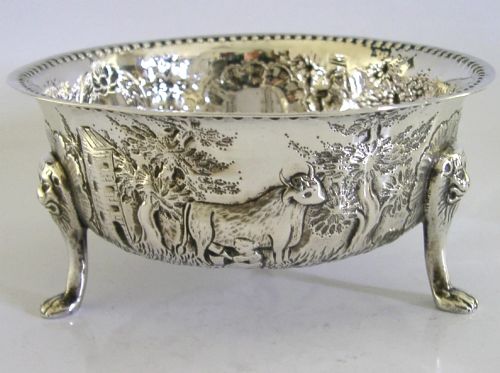
Decoration relied heavily on traditional handcrafting techniques, including detailed foliate chasing, rococo embossing, and naturalistic flower designs cast or shaped by specialist silversmiths.
Solid Silver Salt Cellar Retail Price Guide 2026
Typical asking prices for solid silver salt cellar among the pieces listed under this phrase on Sellingantiques today, from the lower quarter to the upper quarter. They describe what is for sale here now, not the wider market.
Listings feature sterling silver, silver gilt, and vermeil materials spanning the Georgian and Victorian periods.
Variations in quality
Quality rests in the crispness of the hand-chased ornamentation and the structural integrity of thin silver walls against heavy use. Pieces featuring distinct rococo or naturalistic detailing demand greater technical skill from the silversmith than plain geometric forms.
The presence of matching original components, such as blue glass liners or fitted spoons within a cased set, elevates the integrity of the piece. Maker marks and clear hallmarks also establish accountability and provenance.
Barnards·David Hennell·William Bateman·Edward Farrell·Viners·Heath and Middleton·Vale Brothers and Sermon·Louis Coignet·Wilson and Davis·Daniel and Charles Houle·F B Thomas and Co·Daniel and John Wellby·Joseph Felix Podio
The Solid Silver Salt Cellar Glossary
- Trencher salt
- A small, usually geometric salt cellar designed to sit beside a diner's plate on the table. These early forms are often heavy and undecorated.
- Silver gilt
- Silver covered with a thin layer of gold on the interior or exterior surface. This technique protected the silver from the corrosive effects of salt.
- Vermeil
- A high-quality layer of gold plated over sterling silver. It provides a rich golden appearance while maintaining a solid silver core.
- Cobalt glass
- Deep blue glass used for decorative liners inside open salt cellars. The intense colour contrasts sharply with the surrounding polished silver.
- Chasing
- A metalworking technique where the silversmith hammers patterns from the front to create raised designs. This method defines the decorative surface of Victorian examples.
Solid Silver Salt Cellar: Frequently Asked Questions
What is a solid silver salt cellar?
A solid silver salt cellar is an open vessel used on dining tables to hold loose salt before modern salt shakers became common. They often feature intricate chasing or resting feet.
Many examples include coloured glass liners to protect the silver from corrosion caused by salt.
How do I use a salt cellar?
Salt is placed in the open bowl and transferred to the plate using a small matching salt spoon or clean fingers. They add traditional decorative character to a formal dining setting.
Care should be taken to clean the interior promptly after use to prevent tarnishing.
How do I date a silver salt cellar?
Dating relies primarily on the hallmarks stamped into the metal, which indicate the assay office, year letter, and maker's mark. Stylistic clues such as Georgian rococo curves or Art Deco geometry also help determine the period.
Consulting recorded silversmith registries provides exact manufacturing years.
Why do some salts have glass liners?
Glass liners prevent direct contact between corrosive salt and the silver metal, protecting the piece from pitting and damage over time. Cobalt blue liners are particularly common in Victorian designs.
Original liners add significant historical completeness to the set.