


Georgian Silver Open Salts
Georgian silver open salts are small, open-topped table vessels designed to hold loose salt, bringing period craftsmanship and utility directly to the dining table.
Georgian Silver Open Salts
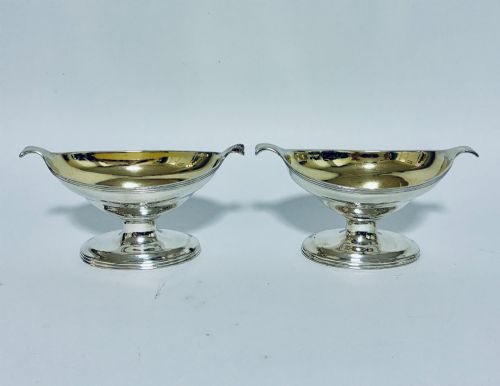
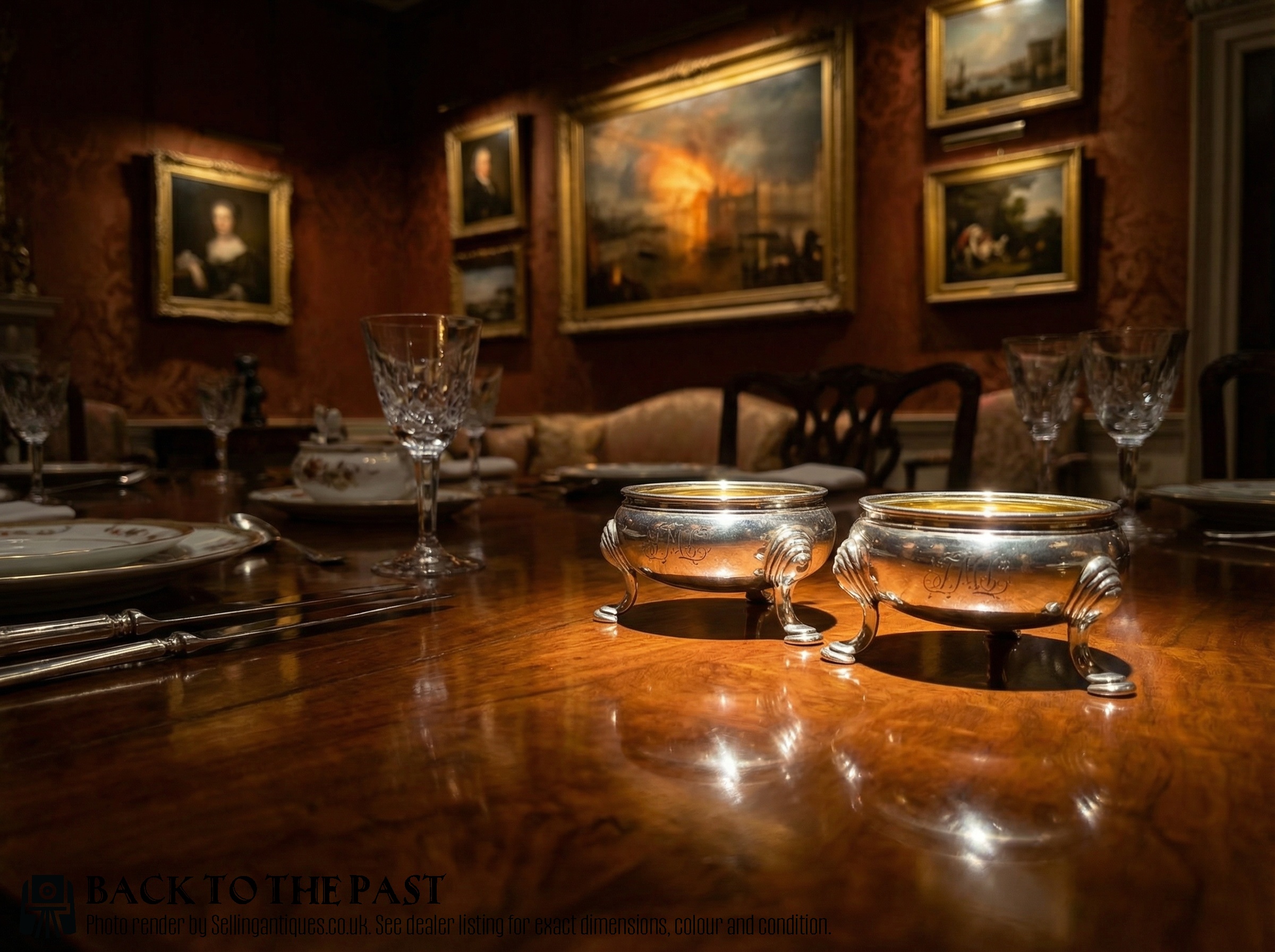
When you search for georgian silver open salts, you are looking at small vessels designed to hold granular salt at the dining table before the invention of free-flowing table salt. These table accessories range from early eighteenth-century trencher salts to boat-shaped cellars and cauldron designs resting on feet.
On this page, you are most likely to meet pieces spanning the Georgian period alongside later revivals such as Edwardian interpretations and Regency styles. Makers created these cellars to be placed individually or in matched pairs and sets across the dining surface.
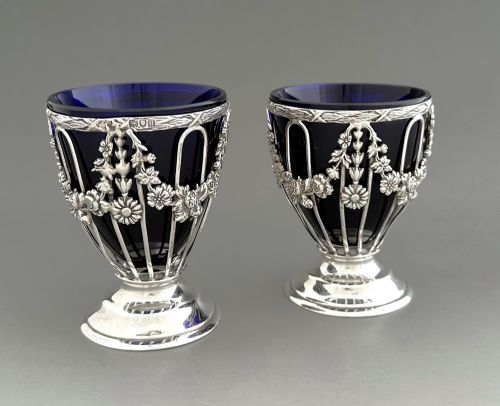
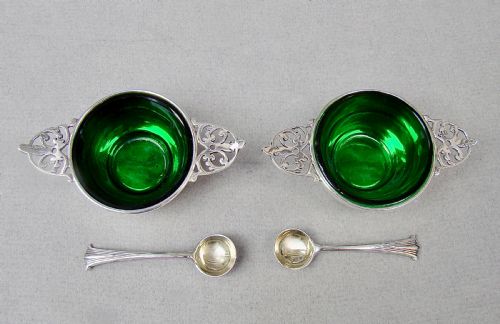
The forms vary from simple circular bowls to elaborate naturalistic flower designs, wirework condiment tubs, and novelty shapes like quaichs. Many examples retain their original coloured glass liners, usually in shades of blue or green, which protected the silver from the corrosive nature of salt.
How they were made
Silversmiths constructed these open salts primarily from sterling silver, employing techniques such as casting, hammering, and wirework to form the bodies. Many interiors feature gold gilt or vermeil applied to the silver surface to prevent the salt from tarnishing the metal.
Where glass liners are present, they were blown and shaped to fit snugly inside the silver framework, providing a protective barrier. Master craftsmen also utilised chased and engraved details to decorate the outer surfaces with floral motifs and crests.
The listings show forms ranging from boat-shaped table salts and wirework condiment tubs to naturalistic flower designs and quaich novelty salts.
What varies in quality
The distinction between standard examples and the finest work lies in the crispness of the chasing and the weight of the silver used in construction. Substantial metal thickness and well-defined maker marks indicate higher workshop standards.
The survival of original components, such as matching glass liners and intact gilding on the interior, elevates the standing of a piece. Execution of decorative elements, from naturalistic flower designs to cast lion paw feet, separates routine production from master silversmith output.
Josiah Williams & Co·David Hennell·John Edmonstone·William Bateman·Paul Storr·Edward Wood·Joseph Angell I
The Georgian Silver Open Salts Glossary
- Trencher salt
- An early form of salt cellar, typically flat-bottomed and placed directly on the dining table for individual or shared use. These pieces often date from the early eighteenth century.
- Salt boat
- A salt cellar shaped in the form of a miniature vessel or boat, frequently featuring handles and resting on a pedestal base or feet. This form became particularly popular during the Georgian era.
- Vermeil
- Silver gilt, comprising a layer of gold applied over a sterling silver base. This technique protected the silver from the corrosive effects of salt.
- Glass liner
- A removable glass insert placed inside an open salt cellar to contain the salt. They are commonly found in blue or green glass.
- Cauldron salt
- A small, bowl-shaped salt cellar resembling a cooking cauldron, usually supported by three small feet. These often date from the George III period.
Georgian Silver Open Salts: Frequently Asked Questions
What are open salts used for?
Georgian silver open salts were designed to hold dry table salt for diners to spoon onto their plates during meals. They predate modern shakers and required diners to pinch or ladle the salt.
The open design meant the salt was presented decoratively on the dining table, often as part of a matched pair or larger set accompanying different guests.
How do I clean silver salt cellars?
Cleaning requires gentle care to preserve both the sterling silver and any interior gold gilt or vermeil. Harsh abrasives can damage delicate chased details and historic finishes.
If the piece contains a removable glass liner, take it out before cleaning the metal. Ensure the silver is thoroughly dried after washing to prevent moisture damage.
Why do some salts have glass liners?
Salt is highly corrosive and can pit or stain silver over extended periods of contact. Glass liners acted as a protective barrier between the corrosive contents and the metal body.
Finding a salt cellar with its original blue or green glass liner adds significantly to the historical completeness of the object.
How can I tell the period of a salt?
Dating relies on examining the hallmarks stamped on the silver, which indicate the assay office, date letter, and maker's mark. Stylistic clues such as wirework, boat shapes, or cauldron forms also point to specific eras.
The evidence shows pieces ranging from early eighteenth-century trencher salts to Edwardian and later revival styles.