


English Sterling Silver Salts
English sterling silver salts are functional table wares holding salt, prized for their gleaming metalwork and history.
English Sterling Silver Salts
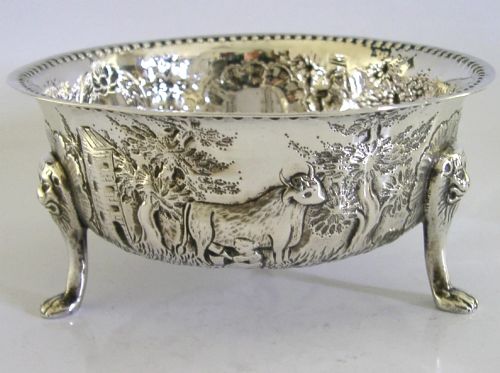
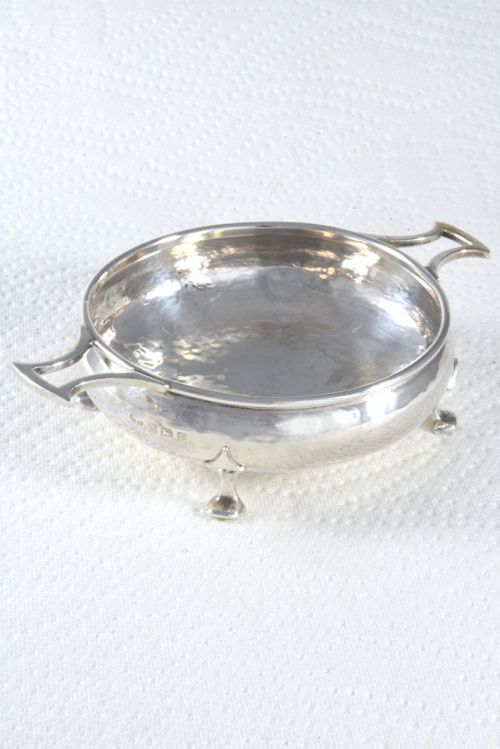
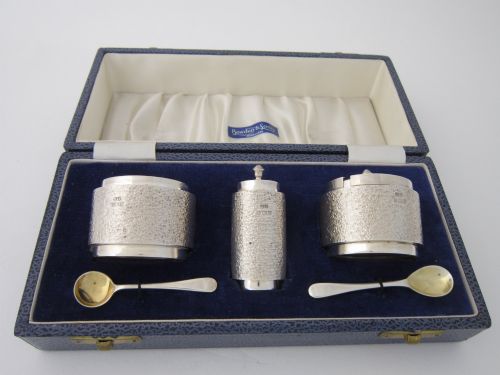
English sterling silver salts encompass open salt cellars, condiment sets, and cruet stands designed for domestic dining tables. The pieces on this page span several eras, bringing together Victorian, Georgian, and twentieth-century examples.
The selection ranges from naturalistic floral designs of the early nineteenth century to clean-lined mid-century condiment sets. Open salt cellars frequently appear alongside complete sets intended for formal dining arrangements.
Materials and construction
Makers utilised sterling silver as the primary metal, frequently applying silver-gilt or vermeil to the interior surfaces to protect the metal from corrosive salt. Stoneware and glass also appear, paired with silver mounts or collars.
Techniques range from cast naturalistic flower designs to hand-beaten bowls and fitted leather cases lined with silk. Individual components like spoons and liners complete the construction.
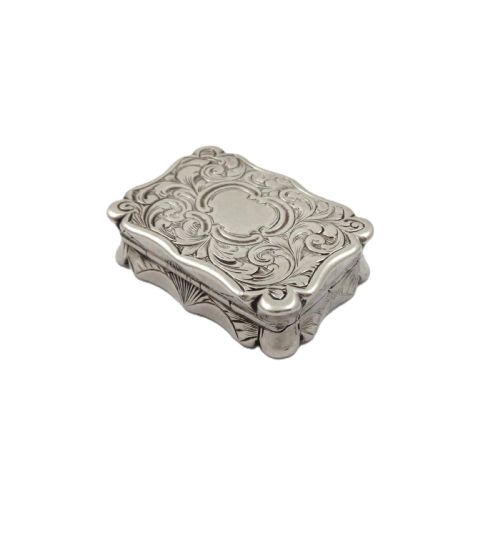
Some nineteenth-century vinaigrettes include their original tiny sponges tucked inside leather cases, ready for scented relief.
Assessing quality and workmanship
Quality rests in the crispness of the chasing, the weight of the sterling silver, and the preservation of original elements like gilt interiors and fitted leather cases. Maker attribution, such as work by Paul Storr or Nathaniel Mills, elevates a piece.
The integrity of matching sets and the inclusion of original spoons or glass liners distinguish finer examples from assembled groups or altered items.
Nathaniel Mills·William Bateman·Paul Storr·Bricks And Sons·Wilmot Manufacturing Co·William Hutton And Sons·HJ Lias And Son
The English Sterling Silver Salts Glossary
- Sterling silver
- A silver alloy containing 92.5 percent pure silver and 7.5 percent other metals, usually copper, ensuring durability.
- Salt cellar
- A small vessel used to hold table salt before the invention of free-flowing shakers.
- Vermeil
- Sterling silver plated with a thin layer of gold, providing a rich interior finish that resists salt corrosion.
- Cruet set
- A collection of small bottles or containers for condiments, held together in a stand.
- Hallmark
- An official stamp applied to precious metals indicating the standard of purity, maker, and year of assay.
English Sterling Silver Salts: Frequently Asked Questions
What is an open salt cellar?
An open salt cellar is a small bowl or vessel placed on the dining table to hold loose salt, used before modern salt shakers.
Dinners would take a pinch of salt using their fingers or a tiny dedicated spoon provided with the set.
How do I clean silver salt cellars?
Silver salt cellars require gentle cleaning with a specialised silver cloth to remove tarnish without damaging the underlying metal or gilt interior.
Harsh dips can strip away desirable patination and harm delicate glass or leather components associated with the piece.
Why do some salts have gold inside?
The gold interior finish, known as silver-gilt or vermeil, protects the reactive sterling silver from being corroded by the salt.
This layer also adds a decorative contrast when the salt cellar is filled on the dining table.
How do I date a silver salt?
Dating relies on the set of hallmarks stamped into the silver, which record the assay office, standard, and date letter.
Stylistic clues like naturalistic floral motifs or mid-century geometric shapes also help narrow down the period of manufacture.