



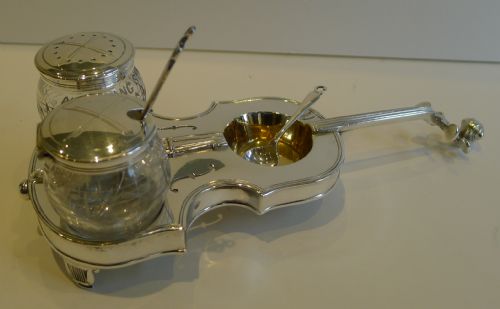


Novelty Silver Cruet
These novelty silver cruet pieces bring whimsy to the dining table through sculptural forms crafted in sterling silver, silver plate, and cut glass.
Novelty Silver Cruet
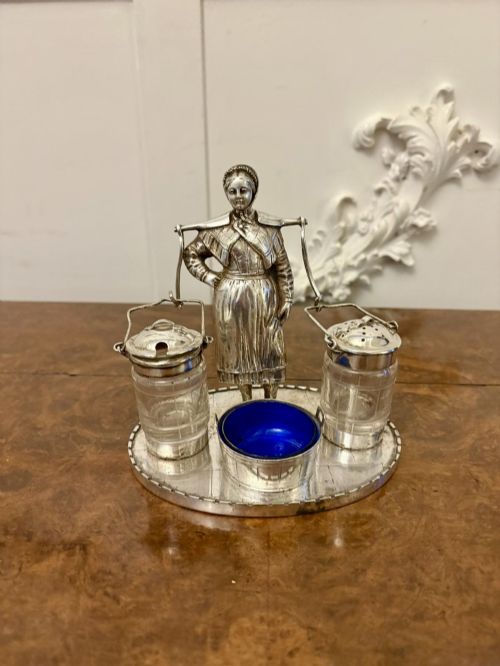
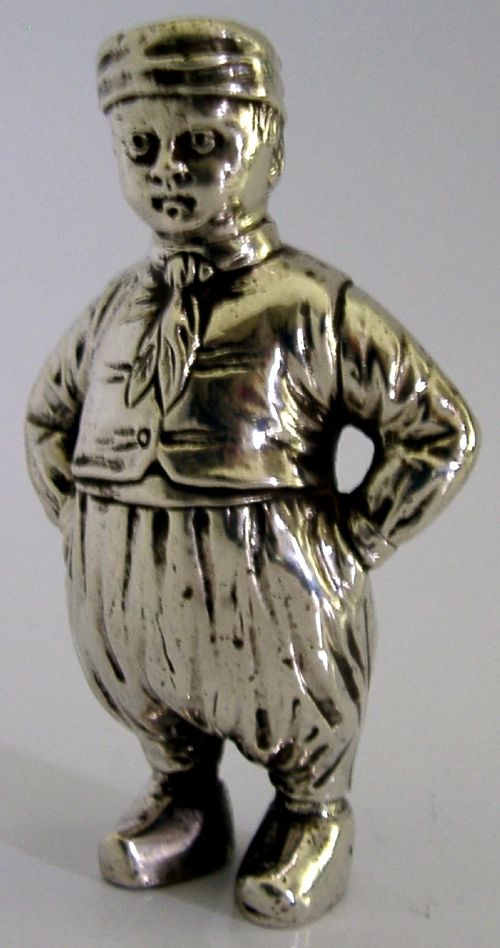
When you search for novelty silver cruet, you encounter a specialised category of condiment containers shaped as animals, vehicles, and everyday objects. These pieces range from individual salt and pepper shakers to complete sets featuring multiple vessels.
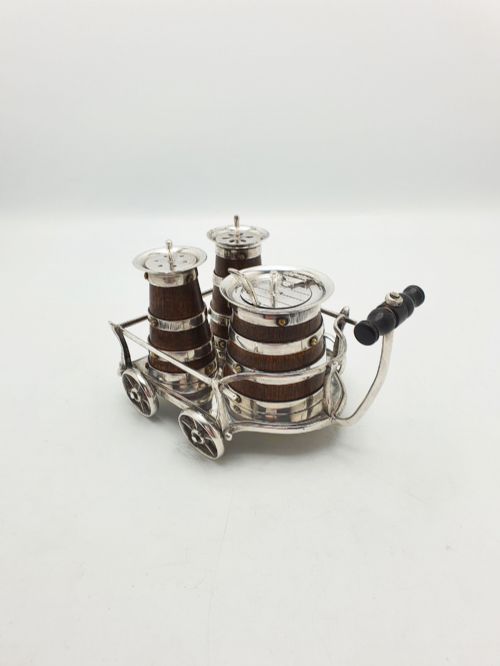
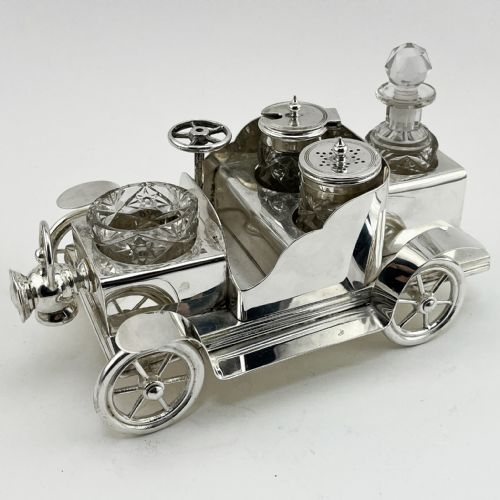
The selections available here span the Victorian, Edwardian, and mid-century periods, showcasing forms such as carriages, birds, barns, and musical instruments. Most examples combine figural silver or silver-plated framing with glass liners.
Victorian and Edwardian versions dominate the selection, often taking the form of farmyard animals, birds, or transport items like cars and butler trays. Later mid-century British pieces also appear, maintaining the tradition of playful condiment storage.
What varies in quality
Quality in these items rests upon the crispness of the modelling and the realism achieved in the figural representation. Superior examples display intricate feather, fur, or mechanical detail that remains sharp across the entire surface.
The integration of materials also defines the standard, particularly where silver plate meets glass or oak. Better pieces maintain secure fittings and retain their original glass inserts without replacement.
Novelty Silver Cruet Retail Price Guide 2026
Typical asking prices for novelty silver cruet among the pieces listed under this phrase on Sellingantiques today, from the lower quarter to the upper quarter. They describe what is for sale here now, not the wider market.
Listings span the Victorian, Edwardian, and mid-century periods, incorporating materials such as silver plate, sterling silver, cut glass, cobalt glass, and oak.
Sampson Mordan
The Novelty Silver Cruet Glossary
- Cruet Set
- A matched collection of small containers for holding table condiments such as salt, pepper, mustard, and vinegar. These are usually mounted on a stand or tray.
- Silver Plate
- A manufacturing technique where a thin layer of silver is bonded to a base metal core. This method allowed makers to produce elaborate sculptural shapes at a lower cost than solid silver.
- Cobalt Glass
- A deep blue glass frequently used for interior liners in condiment sets. It provides a striking visual contrast against silver framework.
- Solid Silver
- Items constructed entirely from silver rather than plated over a base metal. In these listings, it often describes smaller individual pepper pots.
- Gilt
- A thin application of gold wash applied to the interior or surface of silver objects. This protected the metal from corrosive condiment contents.
Novelty Silver Cruet: Frequently Asked Questions
What is a novelty silver cruet?
A novelty silver cruet is a functional dining table accessory shaped into an imaginative form such as an animal, vehicle, or musical instrument. These pieces served to hold condiments while acting as conversation pieces during meals.
They combine practical salt, pepper, or mustard containers with sculptural artistry, predominantly from the Victorian and Edwardian eras.
How were these condiment sets used?
These sets were placed on the dining table to dispense seasonings during formal meals. Guests or servants accessed the salt, pepper, or mustard through removable sections or shaker holes integrated into the design.
Many pieces were designed to be portable via miniature trays, carts, or handles, allowing them to be passed easily along the table.
How do I care for silver plated cruets?
Care requires gentle cleaning with non-abrasive silver polish to preserve the plated surface without wearing it down to the base metal. Glass liners should be washed separately in warm soapy water and dried thoroughly before reinsertion.
Preventing moisture from lingering inside enclosed figural bodies protects the interior structure from tarnishing or corrosion.
How do I identify Victorian pieces?
Victorian examples often feature heavier silver plating over elaborate cast frames shaped as animals, carriages, or rustic barrels. Registration marks or specific aesthetic styles point towards the nineteenth-century origins of the manufacture.
Design motifs from this period frequently lean towards naturalistic farmyard themes or whimsical transport objects.