


Victorian Silver Cruet
A victorian silver cruet brings dining table organisation into focus, combining functional glassware with decorative metalwork.
Victorian Silver Cruet
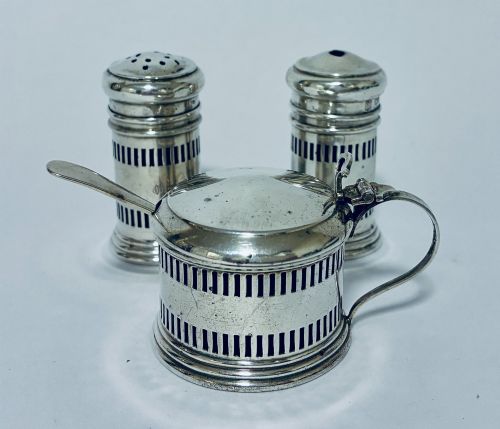
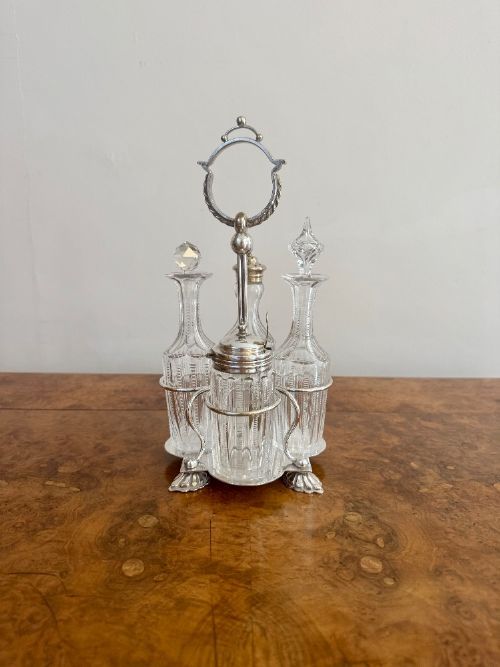
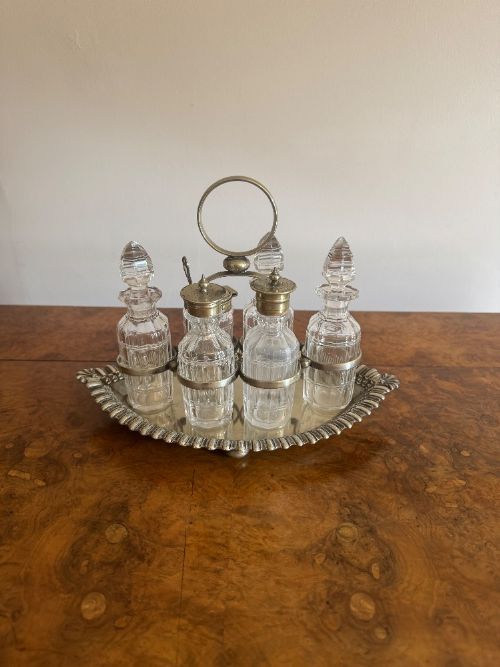
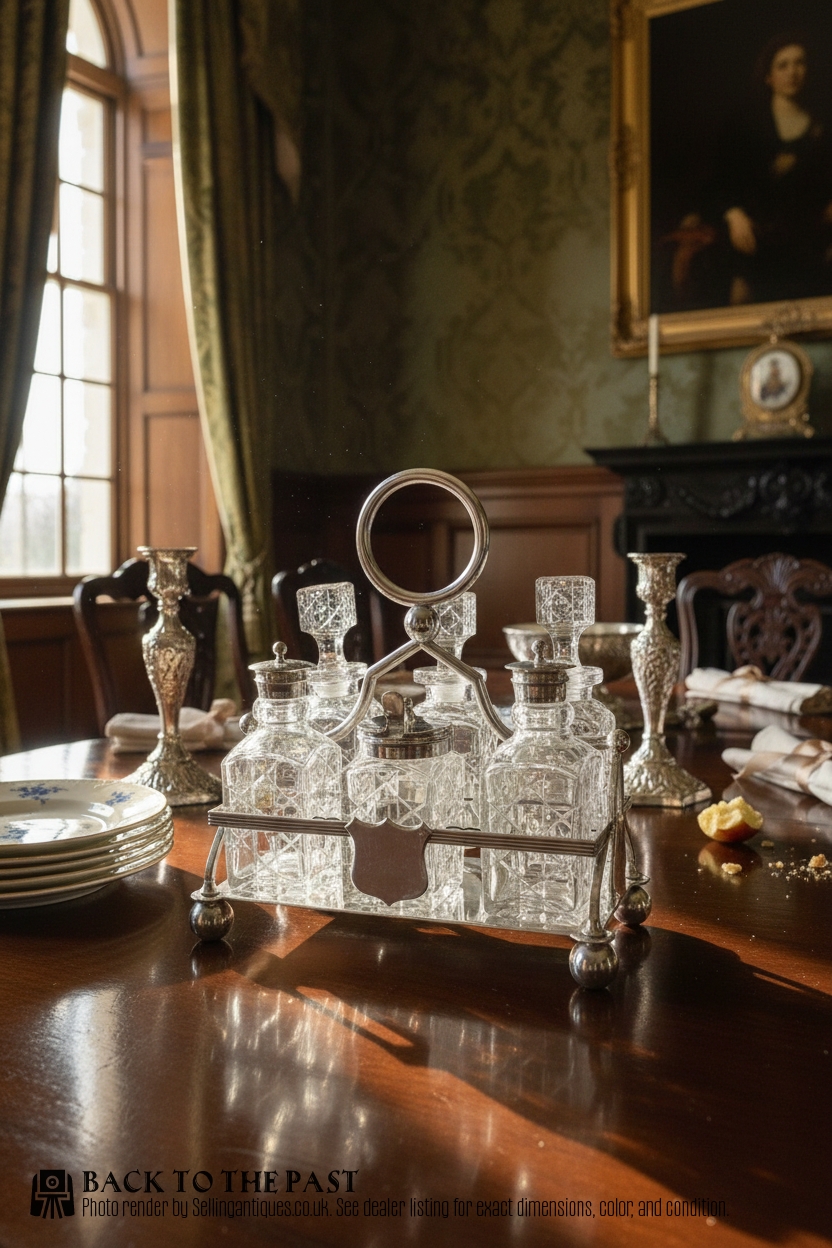
A victorian silver cruet encompasses multi-bottle stands, condiment sets, and breakfast egg frames designed for table service. The options span standard multi-bottle frames holding oil, vinegar, and sauces alongside specialised pieces like egg cruets and single condiment sets.
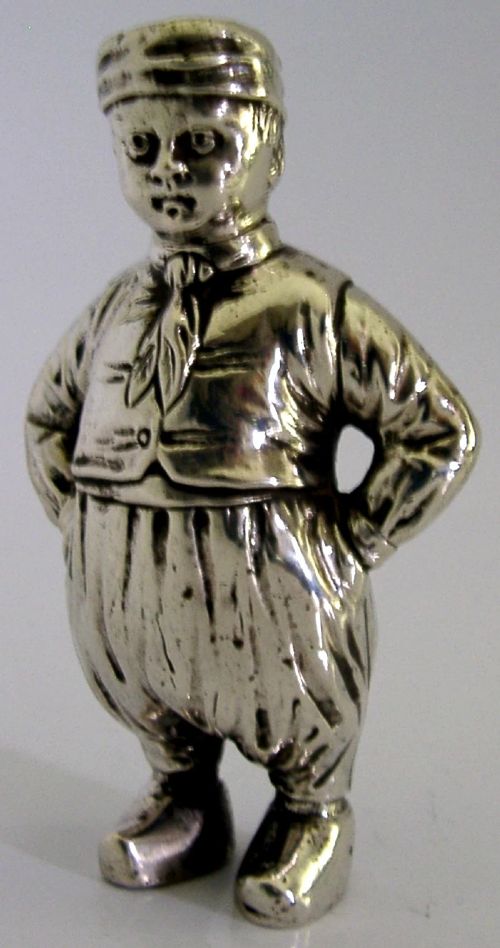
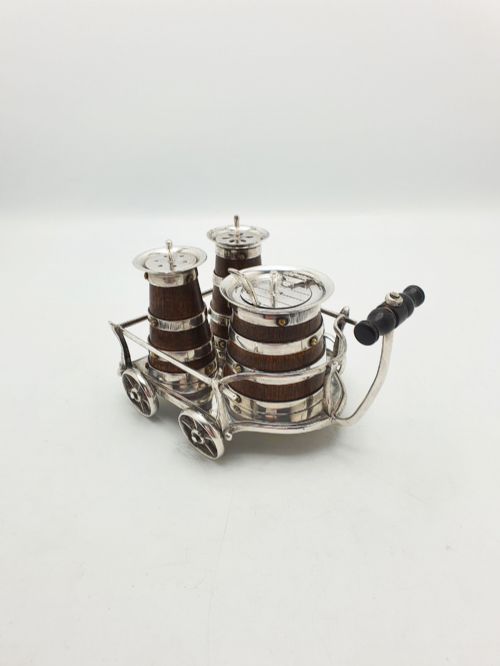
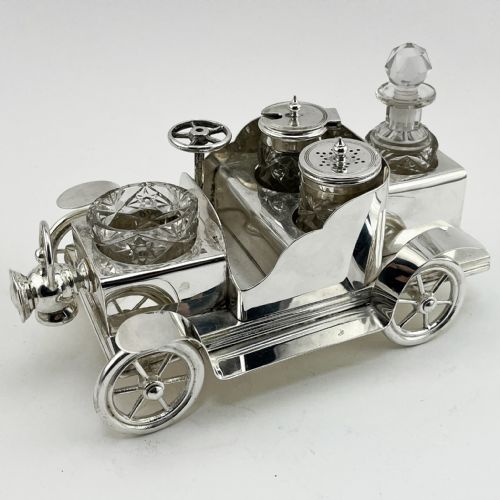
Silver plate forms the basis of many examples encountered here, accompanied by sterling silver sets and combinations incorporating oak bases or cut glass bottles. Pieces range from straightforward utilitarian frames to elaborate novelty designs shaped as animals or vehicles.
Origins stretch across the Victorian and Edwardian eras, with additional examples from the late nineteenth and early twentieth centuries. Surviving items frequently retain their original cut glass bottles or matching salt and pepper pots.
Assessing the Standard
Quality rests upon the crispness of the casting in the frame and the retention of the matching original glass bottles. Elaborate figural novelty pieces and multi-bottle stands with intact, undamaged glassware represent the higher tier of production.
The integrity of the silver plating relative to the underlying base metal dictates durability and visual appeal in plated examples. Hallmarks on sterling silver versions and named maker marks offer clear indicators of workshop origin and standard.
Victorian Silver Cruet Retail Price Guide 2026
Typical asking prices for victorian silver cruet among the pieces listed under this phrase on Sellingantiques today, from the lower quarter to the upper quarter. They describe what is for sale here now, not the wider market.
Nineteenth-century dining tables featured silver cruets shaped as camels, donkeys, and rowing boats to amuse guests between courses.
Elkington & Co·Mappin & Webb·Walker & Hall·Sampson Mordan·William Hutton & Sons·John Grinsell & Son
The Victorian Silver Cruet Glossary
- Cruet stand
- A metal frame designed to hold multiple condiment bottles, oil flasks, or vinegar cruets securely on the dining table. These frames often feature a central carry handle.
- Cut glass
- Glassware shaped and patterned by abrasive wheels, creating deep facets and geometric designs on cruet bottles. This material reflects light and adds weight to the table service.
- Silver plate
- A layer of pure silver fused to a base metal core, commonly used for Victorian frames and stands. This technique provided the appearance of solid silver at a lower production cost.
- Condiment set
- A matched collection of vessels for holding salt, pepper, mustard, and other table seasonings. They appear as standalone boxed sets or as components within larger cruet frames.
- Bachelor cruet
- A smaller scaled cruet set designed for single occupancy or smaller dining arrangements, typically holding fewer bottles than a standard family frame.
Victorian Silver Cruet: Frequently Asked Questions
What is a silver cruet set used for?
A cruet set holds condiments, oils, and vinegars for convenient access during meals. Diners used the individual bottles to season food directly at the table.
Smaller configurations specialised in breakfast service, holding boiled eggs, toast racks, and salt cellars. The stands kept the table organised while displaying decorative glass and metalwork.
How do I identify a Victorian cruet?
Victorian examples often feature ornate cast frames, figural novelty designs, or combinations of oak and silver plate. Examining the styling and accompanying hallmarks helps pinpoint the manufacturing era.
Later Edwardian versions tended toward lighter wirework frames, while earlier Georgian pieces displayed heavier proportions and simpler cut glass.
Are the glass bottles usually original?
Many surviving cruet sets retain their original cut glass bottles, though replacements do occur due to accidental breakage over time. Original bottles fit snugly into the designated frame rings and share matching wear patterns.
Checking the glass for consistency in colour, weight, and cut pattern helps determine if the set remains complete and as originally assembled.
How should I clean a silver plated cruet?
Silver plated surfaces require gentle cleaning with a specialised silver polish and a soft cloth to avoid damaging the thin metal layer. Avoid abrasive cleaners that strip the plating from the underlying base metal.
Glass components can be washed separately in warm soapy water, ensuring all dried condiment residue is removed from the interior of the bottles.