


Wooden Base Coasters
These wooden base coasters combine timber and silver or plate to protect dining tables with traditional style.

Wooden Base Coasters
When you search for wooden base coasters, you are looking at functional table accessories designed to hold wine bottles, decanters, or champagne. The pieces on this page span several periods, including Victorian, Edwardian, and Georgian, alongside later 20th-century examples.
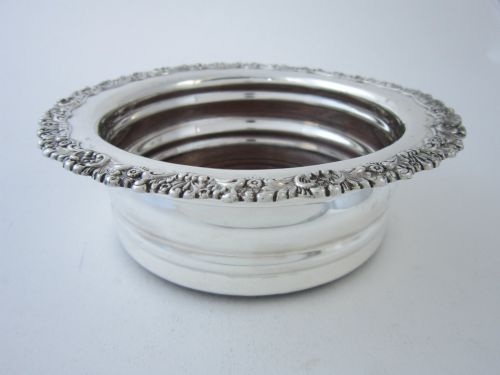
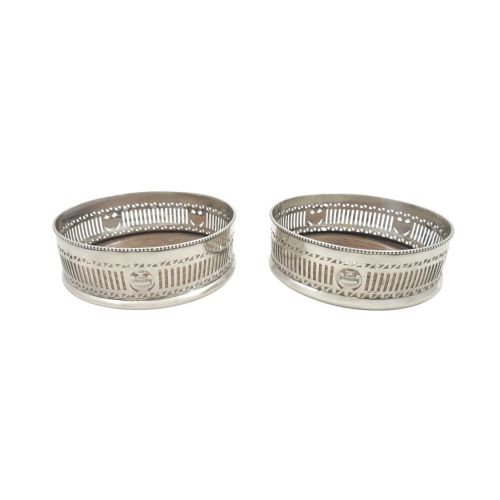
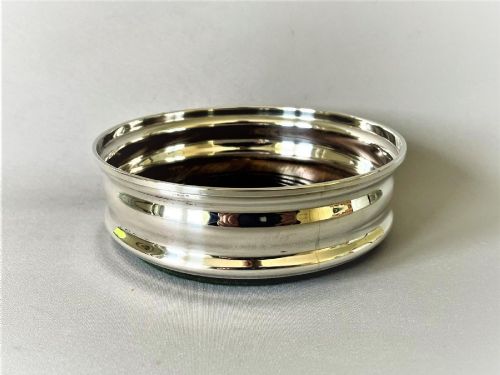
The form typically combines a turned or fitted wooden base with a gallery made from sterling silver, silver plate, or Old Sheffield plate. You will encounter both single coasters and matched pairs designed to hold bottles securely during dinner service.
Originating largely from traditional British workshops, these items serve both a protective purpose for dining furniture and a decorative role on the sideboard or table. The combination of warm timber and polished metal defines the category across all recorded eras.
How they were made
Makers utilised dense timbers for the turned bases, often fitted with a central button or boss to receive the silver mount. This wooden foundation provides weight and stability while protecting the polished surface of the dining table.
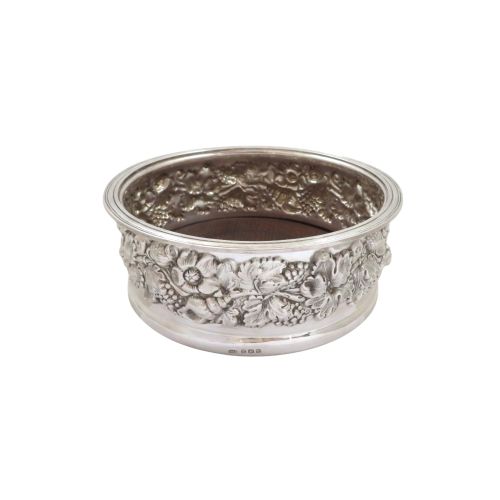
Metal galleries were fashioned from sterling silver or silver plate, sometimes shaped into openwork frames, pierced borders, or decorated with grape and vine motifs. These metal rims were then securely attached to the wooden bases using traditional joinery and fixings.
Some heavier Edwardian sets come equipped with built-in cork pullers for the ultimate wine-pairing convenience at the table.
What varies in quality
Quality in these table pieces rests primarily on the crispness of the metalwork and the craftsmanship of the wooden turning. Finer examples display detailed chasing, clear hallmarks or plating marks, and tightly fitted timber bases.
Weight and balance also separate standard examples from superior pieces, with better items offering a substantial feel in the hand. The integration between the silver gallery and the wooden base determines the overall durability and finish.
John and Thomas Settle
The Wooden Base Coasters Glossary
- Silver plate
- A layer of silver fused or electroplated onto a base metal such as copper or steel. This technique allowed makers to produce decorative items at a lower cost than solid sterling silver.
- Old Sheffield plated
- An early form of plating where a sheet of silver was fused to a copper ingot before rolling. This method predates modern electroplating and is identifiable by thin lines of exposed copper near edges.
- Gallery
- The decorative upright rim surrounding the base of the coaster. Galleries are often pierced, pierced and engraved, or cast with floral and vine patterns.
- Armorial
- A design featuring a coat of arms or crest engraved onto the metal surface. These personalized markings often indicate the original aristocratic or gentry commissioning owner.
Wooden Base Coasters: Frequently Asked Questions
What are wooden base coasters?
These items are traditional table accessories featuring a wooden bottom fitted with a metal rim, designed to hold wine bottles and decanters.
They protect polished dining tables from moisture rings and scratches while adding a decorative element to the table setting.
How do I clean the wooden base?
The wooden portions require gentle dusting and occasional treatment with suitable furniture wax to maintain the grain and finish.
Moisture should be kept away from the timber to prevent warping, and metal polish must be applied carefully to avoid staining the wood.
Can I use them for modern wine bottles?
Most standard wine and champagne bottles fit comfortably within the internal diameter of these traditional coasters.
Larger magnum bottles require specific oversized versions, which also appear in the category for bigger gatherings.
How do I tell periods apart?
Georgian and Victorian examples often feature hand-engraved details, heavy mounts, and distinct silver hallmarks where applicable.
Later Edwardian and mid-century pieces tend to show lighter construction, alternative plating methods, and simpler geometric or classical motifs.