


Vintage Wine Coasters
Vintage wine coasters protect dining tables and hold bottles steady, moving from Georgian silver to mid-century modern designs.
Vintage Wine Coasters
Vintage wine coasters are circular stands designed to hold bottles of wine, champagne, or decanters while protecting polished dining table surfaces. Buyers seeking these items will encounter various forms, including single bottle holders, pairs, and multi-bottle carts from periods spanning the Georgian era to the mid-twentieth century.
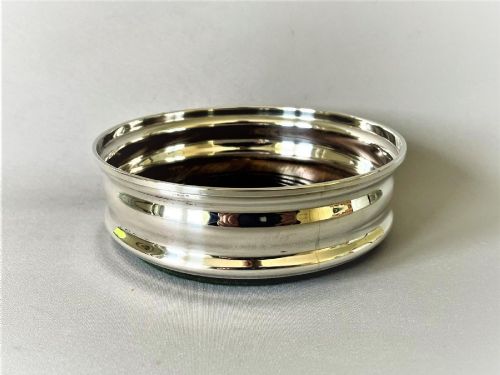
The most common examples on this page combine silver plate with turned mahogany or oak, alongside solid sterling silver pieces bearing traditional hallmarks. These objects function equally as practical barware and decorative table centrepieces for dining rooms.
How they were made
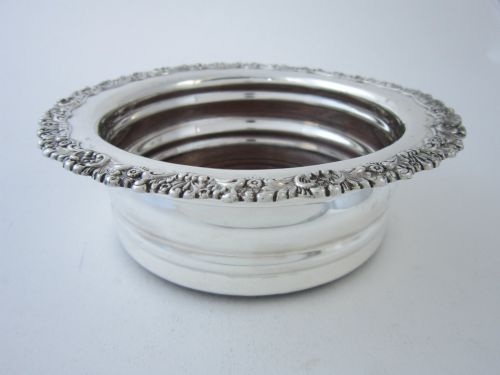
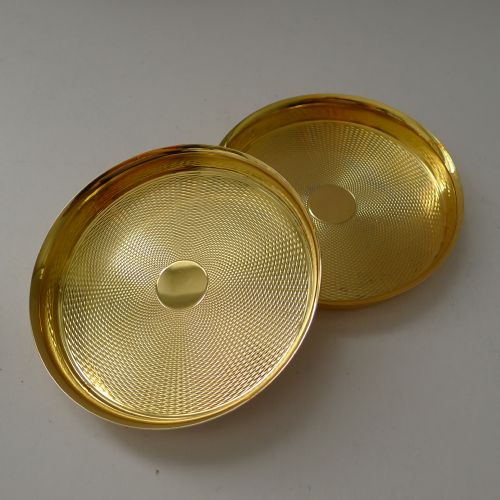
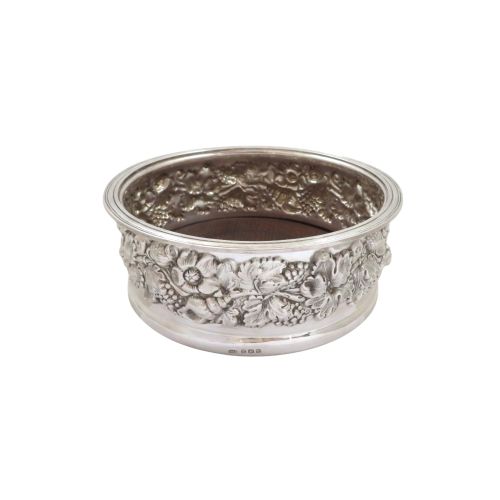
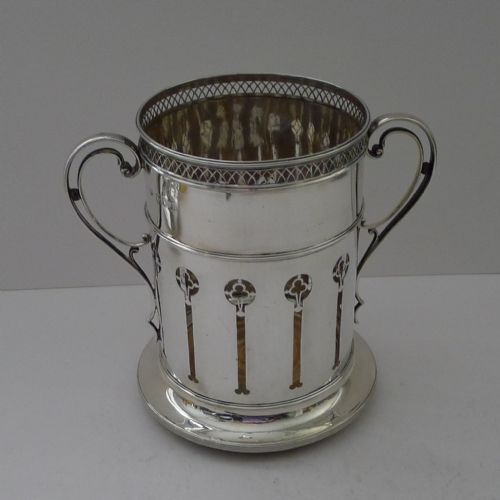
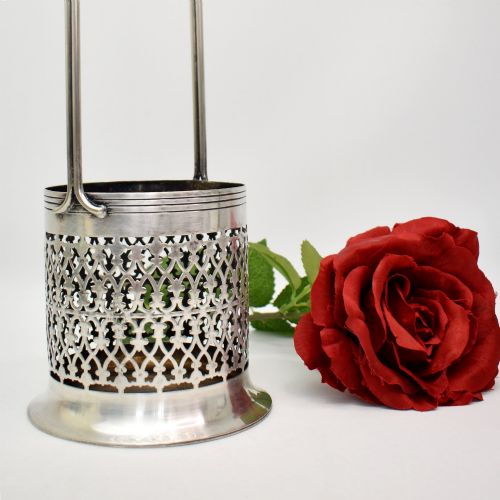
Silversmiths utilised sterling silver and silver plate, often employing Old Sheffield plating techniques or applying gilt finishes such as vermeil to copper bases. Pierced galleries, embossed grape and vine motifs, and cast beaded borders demonstrate the dominant metalworking methods of the eighteenth, nineteenth, and twentieth centuries.
Woodworkers turned dense timbers like mahogany, rosewood, oak, and treen to form the sturdy bases required to support heavy glass decanters. These wooden interiors frequently feature baize linings on the underside to prevent scratching furniture and cushion the glass.
Periods represented across the inventory include the Georgian era, Victorian period, Edwardian era, and mid-century modern designs.
What varies in quality
The distinction between tiers rests upon the crispness of chased or pierced metalwork and the weight of the base material. Heavy solid sterling silver and early Old Sheffield plate display sharper detail in decorative borders than later, thinner plated alternatives.
Joinery and metal mounting define the craftsmanship of wooden and multi-bottle pieces. Tightly fitted timber turned cleanly with well-secured silver shields or handle fittings represent superior manufacturing standards.
Hermes, Paris·Brook & Son, Edinburgh·Christofle·Asprey·Rupert Favell & Co.·Matthew Boulton·Mein of Kelso·Barker-Ellis
The Vintage Wine Coasters Glossary
- Old Sheffield Plate
- A fused composite material made by melting a sheet of silver onto a heavier copper ingot, characteristic of Georgian and early nineteenth-century manufacturing.
- Vermeil
- Sterling silver coated with a layer of gold, providing a rich yellow metallic appearance seen on mid-century pieces.
- Treen
- Small handmade wooden household objects and tableware turned on a lathe from timbers such as mahogany or oak.
- Baize
- A coarse woollen material resembling felt, glued to the underside of coasters to protect polished dining tables.
- Decanter Stand
- An alternative term for a coaster, describing a low tray designed to hold wine bottles or decanters in place during meals.
Vintage Wine Coasters: Frequently Asked Questions
What is the difference between a coaster and a bottle holder?
Coasters are generally low, flat-bottomed trays designed to slide across dining tables, while bottle holders feature higher sides or sleeves that encase the lower portion of a wine bottle.
Both serve the primary function of catching drips and protecting table surfaces during dinner parties.
How do I identify Georgian silver coasters?
Georgian examples often feature hand-pierced silver galleries, gadroon or bead borders, and turned wooden bases fitted with a central silver button.
Authentic pieces from this period frequently display clear hallmarks indicating London or provincial assay offices.
Can these coasters hold modern champagne bottles?
Many standard coasters fit traditional wine bottles, but larger magnum sizes require specific wider holders designed for champagne.
Listings often specify magnum or multiple bottle carts if the diameter exceeds standard wine bottle dimensions.
Why do some coasters have wooden bases instead of silver?
Turned wood provided a stable, heavy foundation that absorbed moisture and cushioned heavy glass decanters without rattling.
Craftsmen combined timber with silver rims to blend the warmth of mahogany or oak with decorative metalwork.