


Antique Silver Bottle Tray
These antique silver bottle tray pieces are sturdy domestic vessels and stands designed to protect surfaces, and you want one for practical service or formal display.

Antique Silver Bottle Tray
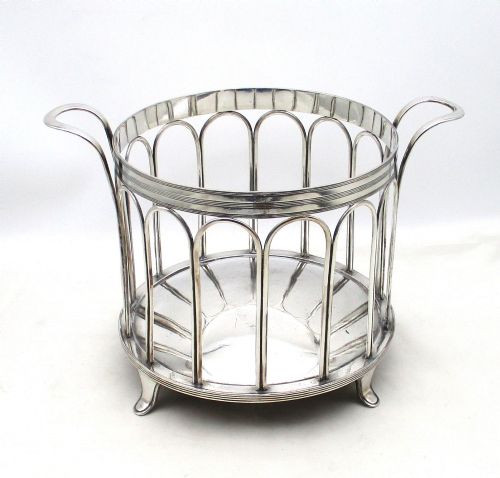
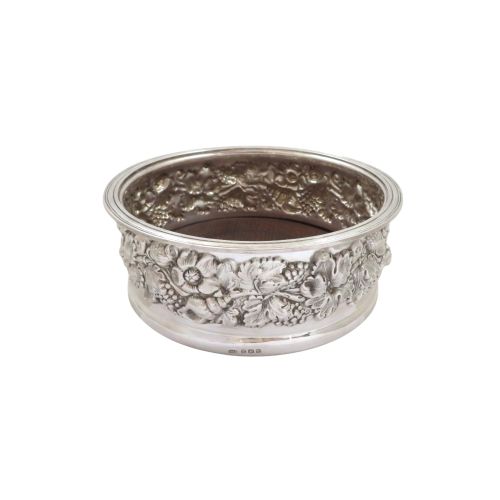
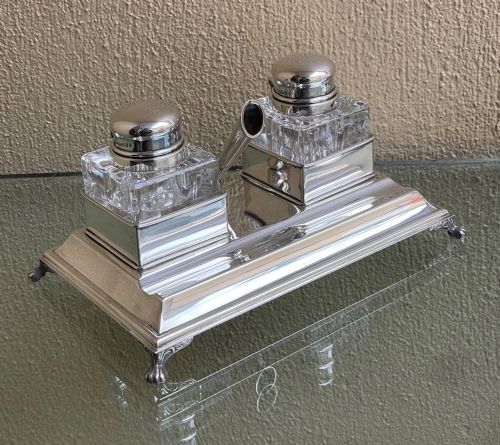
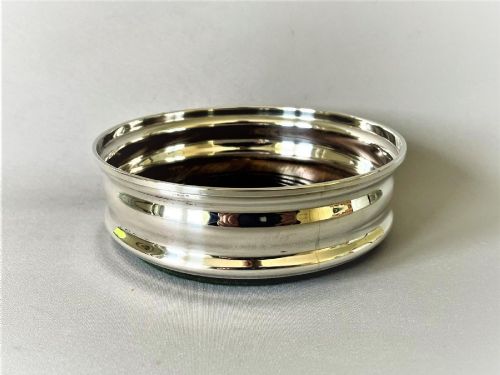
An antique silver bottle tray or related coaster brings together functional tabletop accessories and desk items from various British eras. You will encounter wine coasters, decanter stands, inkstands, inkwells, and mirror plateaus spanning the nineteenth and twentieth centuries.
The selection here encompasses forms from the Georgian style, Regency period, Victorian era, Edwardian years, and the Elizabeth II era. These pieces served practical roles in dining rooms and studies, holding bottles or writing equipment.
Wine coasters and bottle trays appear most frequently alongside desk accessories like inkwells and vanity cases. Many items combine precious metal with contrasting bases or fitted glass components.
Materials and construction
Maker workshops utilised sterling silver and silver plate alongside traditional structural elements such as mahogany and wood. Copper forms the base metal in older plated examples, while cut glass provides fitted inserts for inkwells and bottles.
Craftsmen shaped these items through metalworking techniques, combining turned wooden bases with raised silver rims. Etching decorates glass surfaces, and some pieces incorporate mirror plateaus or coromandel timber.
One luxury vanity case from the eighteen sixties comes complete with crystal cut bottles for travelling Victorian toiletries.
Distinctions in quality
Quality rests in the weight of the metal, the crispness of chased or etched ornamentation, and the integration of secondary materials like wood and glass. Heavier gauges of silver and solid timber indicate superior workshop standards.
The clarity of cut glass bottles and the precision of fitted compartments separate standard production items from finer studio or retailer pieces. Original components remaining together demonstrate higher integrity.
Asprey
The Antique Silver Bottle Tray Glossary
- Sterling Silver
- A standard of silver purity consisting of ninety-two point five percent pure silver. This alloy provides durability for domestic hollowware.
- Silver Plate
- A thin layer of silver bonded to a base metal such as copper or a white metal alloy. Old Sheffield plate employs a fused sheet method.
- Inkstand
- A desk accessory holding one or more inkwells along with space for pens. These pieces often feature a silver tray base.
- Wine Coaster
- A small tray or stand with a raised rim, designed to hold a bottle on a dining table. They frequently incorporate wooden bases to protect polished surfaces.
- Mirror Plateau
- A mirrored glass tray placed in the centre of a table to reflect light and display tableware or ornaments. Silver mounts usually enclose the glass edge.
Antique Silver Bottle Tray: Frequently Asked Questions
What is an antique bottle tray used for?
These pieces served to hold wine bottles or decanters on dining tables, protecting polished wood from moisture and drips. Desk variants held inkwells and writing implements.
They function equally well today for holding bottles during dinner service or organising small items on a desk.
How do I identify a silver plate coaster?
Silver plate items often reveal the base metal beneath the silver layer where wear occurs, particularly on undersides and edges. Examination of hallmarks or maker stamps clarifies the manufacturing method.
Older plated pieces utilise copper as the underlying substrate, which shows reddish tones through the silver.
Are wooden bases common on bottle trays?
Many wine coasters feature turned mahogany or other wood bases fitted into the metal frame. This construction provided weight and protected the table surface.
Inspecting the underside reveals the method used to secure the timber insert to the silver or plated rim.
How do I care for silver and glass trays?
Regular dusting and careful polishing with appropriate silver cloths maintain the metal surface without abrasive wear. Glass inserts wash safely in warm soapy water.
Avoiding harsh chemical dips preserves the character and any applied patination on older metalwork.