


Sheffield Plate Wine Coasters
Sheffield plate wine coasters bring the genuine warmth of Georgian and Victorian dining tables directly to your sideboard.
Sheffield Plate Wine Coasters
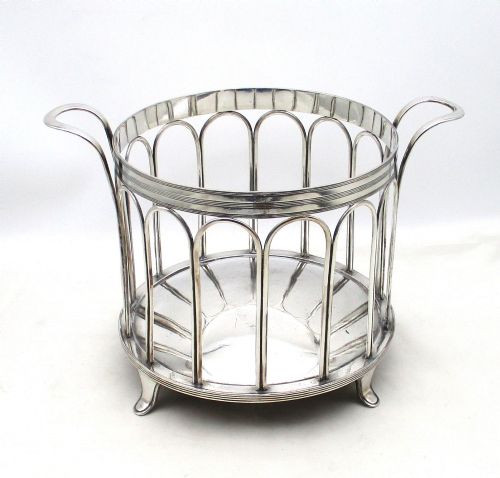
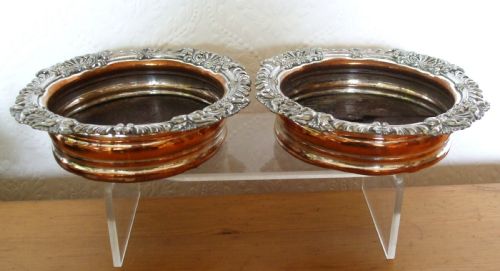
Sheffield plate wine coasters are circular tabletop accessories designed to hold wine bottles and decanters safely while protecting polished mahogany and timber surfaces. When searching this phrase, a buyer encounters circular holders formed in matched pairs or sets, originating across the Georgian, Regency, William IV and Victorian periods.
The specimens met most frequently on this page belong to the nineteenth century, spanning George III iterations through to early Victorian examples. These pieces appear primarily as standalone bottle stands or paired decanter trolleys, frequently displaying pierced galleries or grape vine motifs along the rim.
Makers shaped these utilitarian dining items to coordinate with formal table settings, producing forms that vary from simple turned wood bases to large, deeply sided vessels. Collectors find single coasters, pairs, and rarer sets of three or four sharing matching decorative borders and proportions.
Materials and construction methods
Old Sheffield plate involves fusing a thin layer of silver to a thicker copper core through heat and pressure, creating a durable composite material. Makers then worked this sheet metal into circular galleries, often incorporating turned wood bases made from mahogany to support the bottles.
Craftsmen utilised techniques such as piercing, wirework, and applied repoussé borders featuring grape vine motifs to decorate the rims. Many examples integrated hallmarked solid silver centres into pale turned wood bases, combining the rich contrast of silver, copper, and timber.
Wheeled trolleys allowed port bottles to navigate bumpy dining tables without spilling a drop.
Evaluating quality and execution
Quality rests in the crispness of the applied border decoration and the retention of the silver layer over the underlying copper body. Pieces displaying sharp casting in grape vine motifs or intricate wirework demonstrate superior workmanship compared to worn or softly cast alternatives.
The integrity of the turned wood base and the seamless integration of the silver centre with the metal gallery distinguish finer examples. Proportion, scale, and the survival of matching pairs or larger sets elevate certain pieces above standard single items.
Matthew Boulton·Hawksworth, Eyre & Co·Padley, Parkin & Co·James Dixon and Son
The Sheffield Plate Wine Coasters Glossary
- Old Sheffield Plate
- A composite material made by fusing silver and copper together before rolling it into sheets, invented in the eighteenth century. This technique precedes modern electroplating methods.
- Wine Trolley
- A wheeled coaster or set of coasters designed to be glided across the dining table from guest to guest. They often feature multiple bottle holders connected together.
- Wirework
- An open framework style constructed from shaped metal wires soldered into geometric or linear patterns. This technique creates a lighter gallery than solid sheet metal.
- Pierced Edge
- A decorative border pattern created by cutting or punching openwork designs through the metal gallery. It allows light to pass through the upper rim of the coaster.
- Turned Wood
- Timber shaped on a lathe to form the circular flat base fitted inside the metal gallery. Mahogany is frequently utilised for this component.
Sheffield Plate Wine Coasters: Frequently Asked Questions
What are sheffield plate wine coasters used for?
These pieces protect dining tables from condensation rings and drips caused by wine bottles and decanters. They also allow bottles to be passed smoothly across polished timber surfaces during dinner parties.
Historically, they formed an essential part of Georgian and Victorian tablescape accessories, keeping the wine close at hand while preventing damage to expensive furniture.
How do I care for old sheffield plate?
Maintenance requires gentle cleaning with appropriate silver care products designed for plated items. Avoid harsh abrasive cloths that might wear through the thin silver layer to expose the underlying copper.
Keeping the turned wood bases dry and storing the pieces in stable humidity conditions preserves both the metal surface and the wooden components.
How can I tell the period of a coaster?
Dating relies on stylistic details such as the Georgian preference for wirework or delicate piercing, compared to heavier Victorian cast grape vine motifs. Construction methods and documentary evidence from makers also help determine the era.
Examining the edge decoration and the interaction between the silver plate and copper core provides further clues regarding manufacture dates.
Are pairs and sets common?
Many examples survive as pairs designed to sit symmetrically on either side of a centerpiece or host. Larger sets of three or four pieces occasionally appear in the record.
Finding matched sets from the Regency and Victorian periods is less common than discovering individual items or pairs.