
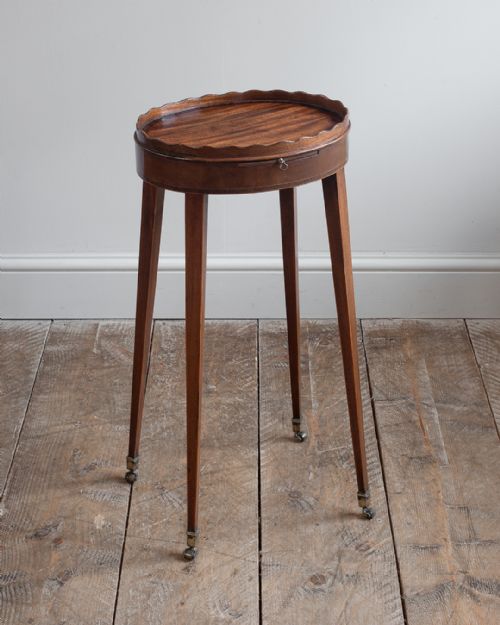
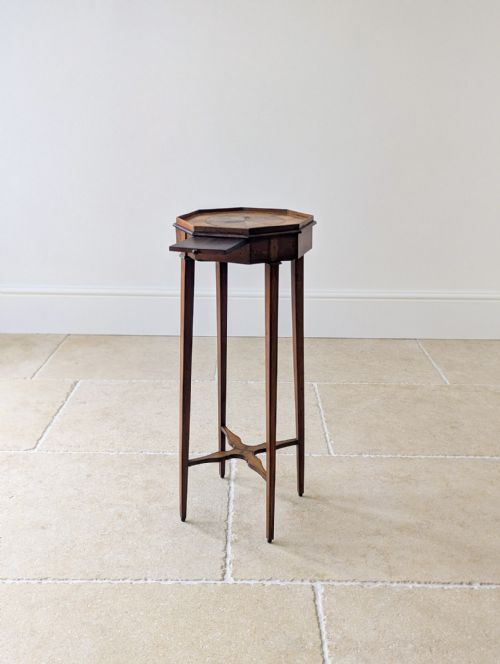



Antique Wine Slides
Antique wine slides protect the polished surface of your dining table while carrying bottles safely from guest to guest.
Antique Wine Slides
Antique wine slides are circular bottle holders designed to sit upon the dining table during and after dinner. When you search for antique wine slides, you encounter pieces that often share categories with wine coasters and decanter coasters.
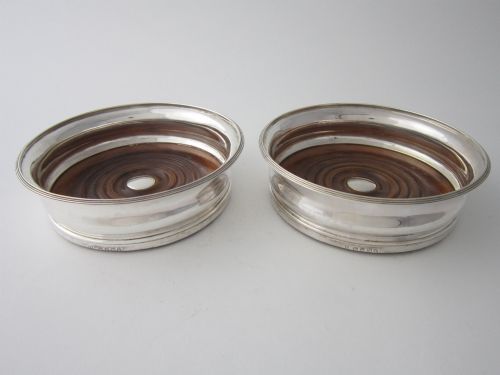
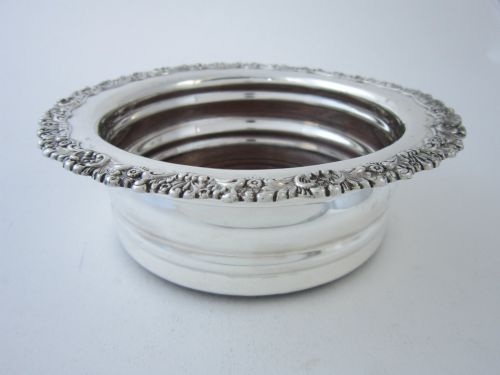
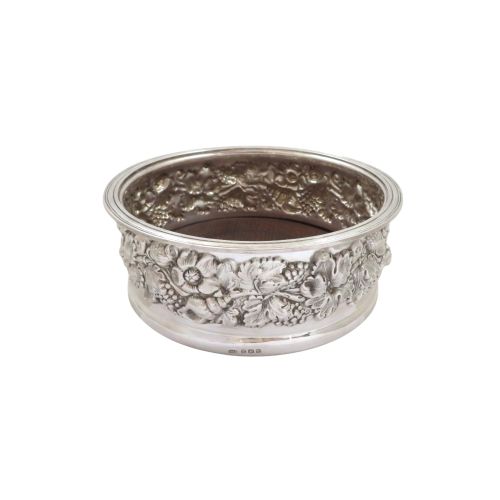
The examples on this page span the Georgian, Regency, and Victorian periods, alongside later twentieth-century iterations. You find silver, silver plate, Old Sheffield Plate, and timber constructions.
Wooden versions frequently incorporate turned mahogany or rosewood, sometimes featuring central buttons or silver mounts. Metal variants display pierced galleries, beaded rims, and turned wooden bases.
How they were made
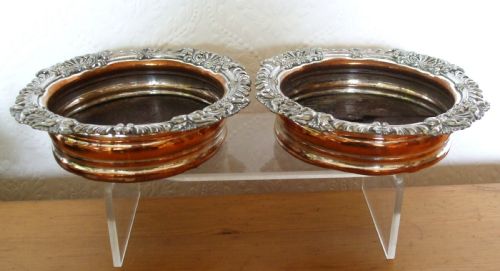
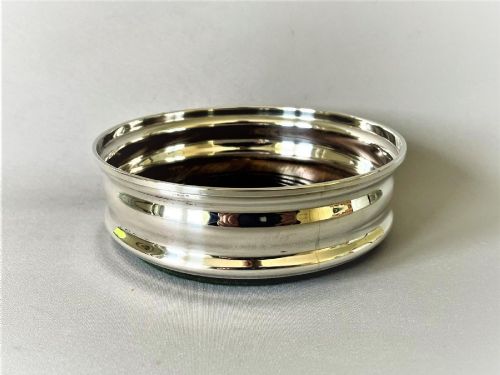
Silversmiths and plate workers constructed metal slides using sterling silver or fused silver plate over copper, known as Old Sheffield Plate. They often pierced the gallery walls with geometric or floral patterns and soldered heavy turned wooden bases inside.
Cabinet makers turned solid mahogany, rosewood, and oak on lathes to form the circular wooden bodies. They occasionally added brass or silver shields to the centre and lined the undersides with baize or felt to protect furniture.
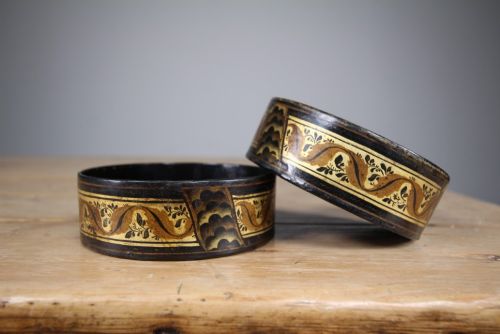
The listings on this page include mahogany, sterling silver, Old Sheffield Plate, and papier-mâché.
What varies in quality
Quality rests upon the weight of the metal, the crispness of the piercing, and the integrity of the turned wooden base. Early Old Sheffield Plate shows a rich copper bleed at the seams, which indicates traditional manufacture.
Finer examples retain their original baize linings and matching hallmarks or maker marks on the metal rims. Thicker timber bases and substantial silver gauge distinguish superior pieces from lighter utilitarian versions.
James Mein of Kelso·William Padley
The Antique Wine Slides Glossary
- Old Sheffield Plate
- A method of fusing a thin sheet of silver to a thicker copper core before rolling them together into sheets. This technique predates modern electroplating and leaves characteristic copper edges.
- Decanter Coaster
- An alternative term for a bottle holder designed to hold a decanter rather than a standard wine bottle. These items share the same circular form and protective function.
- Gallery
- The pierced or solid upright rim surrounding the outer edge of a coaster. It prevents the bottle from sliding off when the piece moves across the table.
- Baize
- A coarse woollen material glued to the underside of the wooden base. It prevents scratching when the slide moves across polished mahogany dining tables.
Antique Wine Slides: Frequently Asked Questions
How were wine slides used at the table?
Hosts used wine slides to pass bottles around the dining table after the servants withdrew for the evening. The low profile allowed guests to glide the bottles smoothly from person to person along the mahogany surface.
They kept the condensation and red wine rings off the polished wood. Placing the bottles in slides also prevented tipping when tables were uneven or crowded with glassware.
Are wine slides and coasters the same thing?
Makers and dealers often use wine slides and wine coasters interchangeably. Both terms describe low circular trays built to hold individual bottles or decanters.
Historically, slides sometimes implied a set meant to link together or travel along the table in a train. In modern terminology, they cover the same domestic objects.
How do I clean silver plated wine slides?
Clean silver and silver-plated slides with a soft cloth and a reputable silver cream. Avoid abrasive pads that wear through thin silver plate or Old Sheffield Plate surfaces.
Take care near the baize lining on the base to keep moisture away from the glue and wood. Regular gentle polishing preserves the highlights on the chased or pierced galleries.
How can I tell Georgian slides from later pieces?
Georgian slides generally feature hand-beaded rims, thick Old Sheffield Plate over copper, or dense turned mahogany with heavy proportions. Maker marks, where present, help confirm the period through assay office date letters.
Later Victorian and twentieth-century examples often use modern electroplate on a base metal like nickel brass. They frequently display machine-stamped galleries rather than hand-pierced work.