


Sheffield Plate Coasters
Sheffield plate coasters are silver-plated table accessories designed to protect mahogany dining surfaces from bottle rings and moisture during Georgian and Victorian dining.
Sheffield Plate Coasters
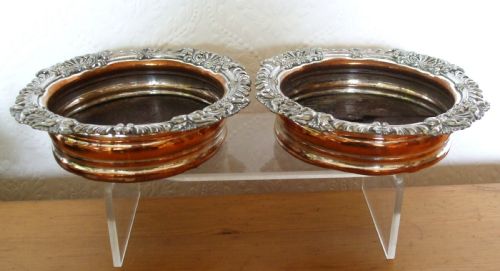
Sheffield plate coasters are traditional dining table accessories designed to hold wine bottles and decanters securely while moving them around the table. The most common format met here is the paired set or single piece originating from the Georgian, Regency, and Victorian periods.
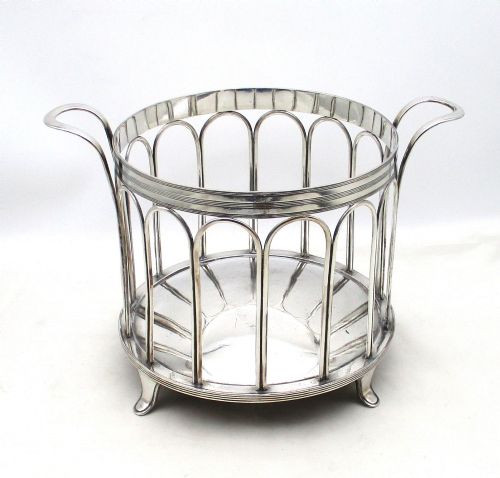
These items take the form of circular trays or baskets, often constructed with deep sides to contain the bottle during service. Many examples appear as wine trolleys or larger stands intended for substantial decanters and multiple bottles.
The materials span silver plate, copper, wood, and mahogany inserts, reflecting the original domestic requirements of 18th- and 19th-century dining rooms. Workshops in Sheffield produced these pieces using fused metal techniques that predated modern electroplating.
Materials and technique
Old Sheffield plate is produced by fusing a layer of silver to a thick copper ingot under heat and rolling them together into sheets. This fused sheet is then shaped into coaster rims, revealing the underlying copper at exposed edges or seams upon close inspection.
Turned wood bases, particularly mahogany, are frequently fitted into the centre of the metal frames to provide a stable platform for glass decanters. Wirework constructions also appear, demonstrating alternative methods of forming open-sided baskets from plated metal strands.
Some miniature coasters were originally designed to hold delicate glassware securely during turbulent carriage rides.
Quality variations
The standard of execution in Sheffield plate coasters depends heavily on the crispness of the applied border decoration and the thickness of the original silver fusion. Pieces with deeply chased grape vine motifs or gadroon borders demonstrate superior workmanship compared to plain or heavily worn examples.
The integrity of the turned wooden base and the subtlety of the copper bleed along exposed edges also distinguish finer productions. Master makers applied silver wire to conceal raw copper seams, whereas simpler items left these joins visible.
Matthew Boulton·Hawksworth, Eyre & Co·T & J Creswick
The Sheffield Plate Coasters Glossary
- Old Sheffield Plate
- A composite material made by fusing silver and copper together through heat and rolling. This technique was largely superseded by electroplating in the mid-19th century.
- Wine Trolley
- A wheeled coaster or small carriage designed to transport decanters along the dining table. They often run on small metal or wooden wheels fitted to the underside.
- Gadroon Border
- A decorative, embossed ornamental band featuring convex curves, frequently applied to the rim of Georgian and Regency coasters. It provides a textured edge to the metalwork.
- Wirework
- An open lattice construction formed from twisted or soldered metal wires. This technique produced lighter, basket-style frames during the late 18th and early 19th centuries.
- Decanter Coaster
- A circular holder sized specifically for wine decanters rather than standard bottles. They often incorporate a turned wooden insert to protect the base of the glass vessel.
Sheffield Plate Coasters: Frequently Asked Questions
What is Old Sheffield plate?
Old Sheffield plate is an early form of silver plating created by thermally fusing a sheet of silver onto a heavier copper base before rolling them into workable metal sheets. This method creates a distinct material structure quite different from later electroplated wares.
Items made this way often reveal thin lines of copper along exposed edges or cut seams, which serves as a helpful indicator of the original manufacturing period for collectors.
How were wine coasters used?
Wine coasters were placed on dining tables to hold bottles and decanters, allowing guests to slide them smoothly from person to person after the servants withdrew. This protected polished wood surfaces from ring marks and spills during long meals.
Some larger versions were fitted with wheels to form small trolleys that traversed the length of the table along tracks or across the polished boards.
How do I date these coasters?
Dating relies on stylistic clues such as the profile of the rim, the presence of wirework construction, and the form of the decorative borders. Georgian and Regency examples often feature neat gadroon or shell motifs, while Victorian pieces can display heavier cast ornamentation.
The materials of the base also help, as turned mahogany inserts are characteristic of late 18th- and early 19th-century productions.
How should I care for them?
Maintenance requires gentle cleaning with non-abrasive silver polishes to preserve the thin layer of silver fused over the copper substrate. Excessive rubbing can wear through the surface and expose the base metal underneath.
Wooden bases should be kept dry and treated with appropriate furniture wax to prevent the wood from drying out or shrinking within the metal mount.