




Silver Wine Stands
Silver wine stands hold bottles securely at the dining table, protecting polished surfaces from moisture and offering a practical way to pass port or claret.
Silver Wine Stands
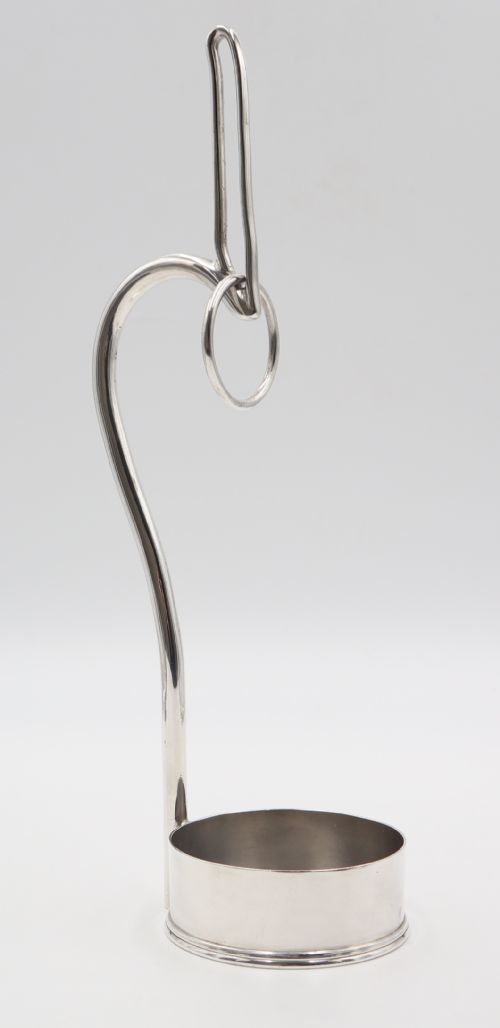
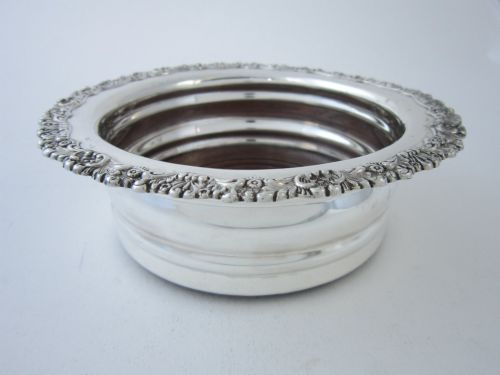
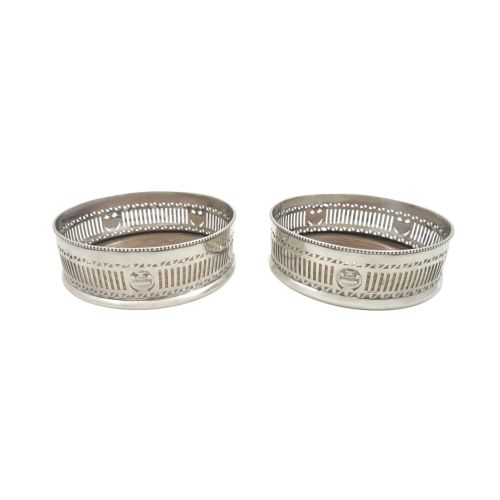
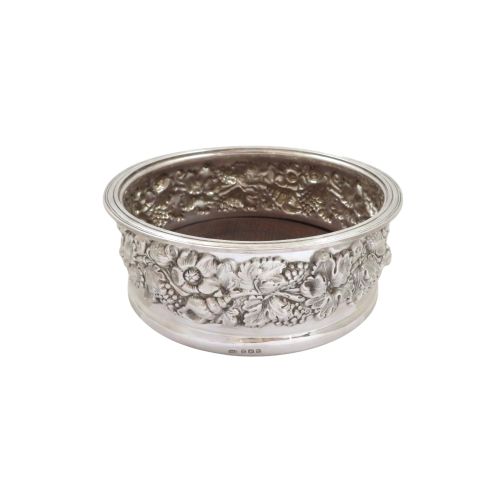
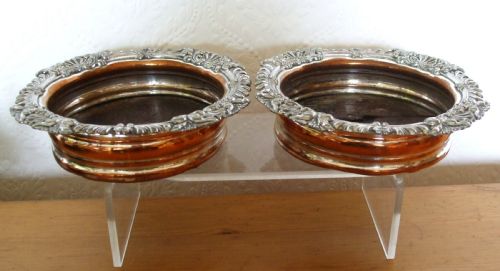
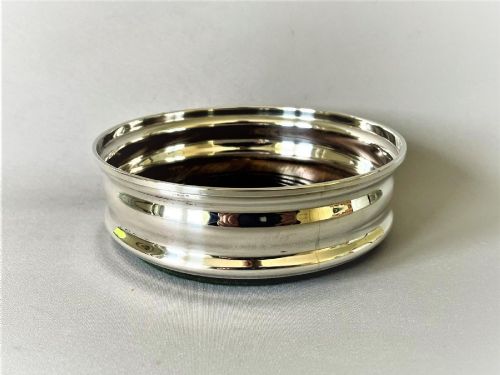
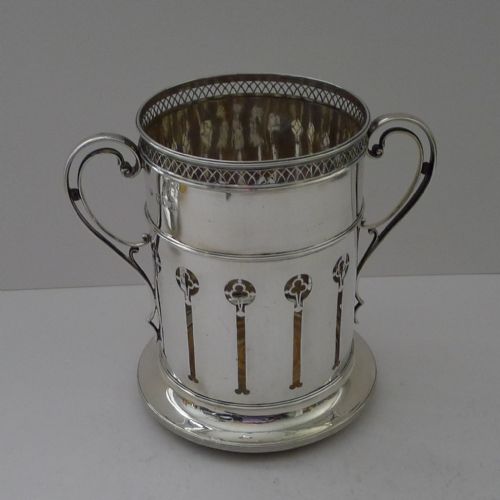
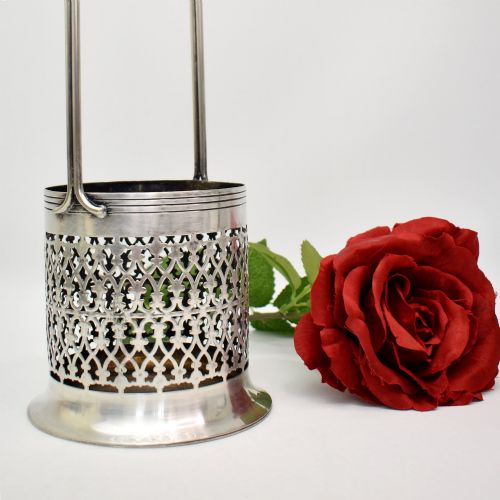
Silver wine stands encompass bottle coasters, decanter rests, and larger stands designed to hold glassware securely. These dining table accessories appear frequently in forms intended for single bottles, pairs, or multiple decanters.
The pieces on this page span the Georgian, Victorian, and Edwardian periods, alongside later twentieth-century examples. Makers utilised sterling silver, Old Sheffield plate, and silver plate over base metals, often incorporating turned wooden bases.
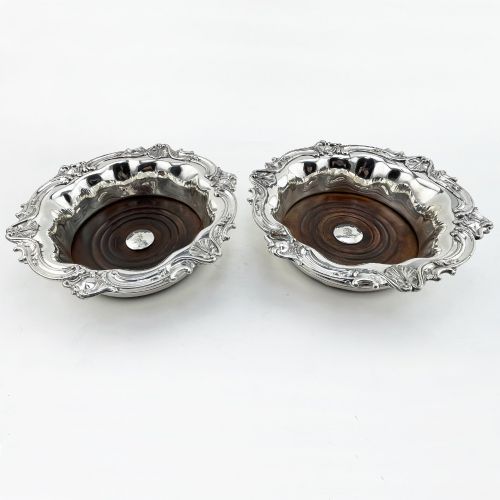
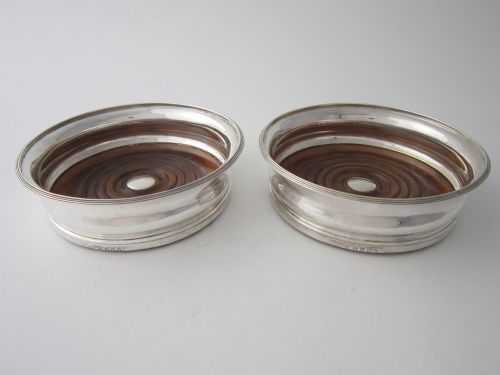
Round coasters dominate the selection, though variations include wine wagons on wheels, double bottle holders, and larger stands designed for magnums or presentation use.
Materials and construction methods
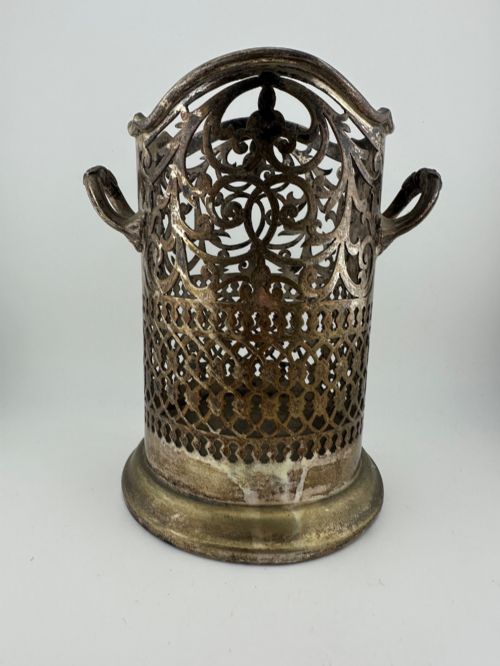
Silversmiths constructed solid sterling examples using traditional raising and casting techniques, applying hallmarks to certify metal purity. Pierced galleries, embossed vine leaves, and beaded rims required skilled hand-working with chisels and punches.
Old Sheffield plate relied on fusing a thin sheet of silver to a thicker copper ingot before rolling them into sheets. Silver plate later superseded this method through electroplating, applying a silver coating directly onto white metal or copper bases.
Many coasters integrate turned wooden bases, typically mahogany or oak, fitted with a central silver boss or shield. A baize lining underneath protected polished dining tables from friction and scratches.
Silver Wine Stands Retail Price Guide 2026
Typical asking prices for silver wine stands among the pieces listed under this phrase on Sellingantiques today, from the lower quarter to the upper quarter. They describe what is for sale here now, not the wider market.
Materials across the selection include sterling silver, silver plate, Old Sheffield plate, mahogany, oak, and copper.
Assessing quality and craftsmanship
The crispness of chased and pierced decoration distinguishes superior examples from mass-produced wares. Sharp relief work on grape and vine motifs indicates a skilled hand, whereas worn or shallow stamping suggests lower grade production.
Weight and structural rigidity reveal much about a stand's construction. Thicker gauge silver and robust base mounts resist bending and maintain stability when holding heavy glass decanters.
The integration of materials matters greatly, particularly how securely the metal gallery joins the turned wooden base. Well-fitted wooden inserts and intact original baize linings point to careful manufacture.
Brook and Son·Christofle·WMF·Matthew Boulton·John and Thomas Settle
The Silver Wine Stands Glossary
- Old Sheffield Plate
- A method of fusing silver to a copper base before rolling, common in Georgian pieces. This technique often reveals a faint copper line along cut edges.
- Bottle Coaster
- A small circular stand designed to hold a wine bottle on the dining table. They frequently feature low pierced galleries and turned wooden bases.
- Wine Wagon
- A trolley-like bottle holder mounted on small wheels or castors. These allowed diners to roll bottles smoothly across mahogany tables.
- Hallmark
- Official stamps applied to precious metal items indicating the maker, assay office, and year of testing. Sterling silver pieces carry these marks to guarantee purity.
- Gallery
- The decorative upright rim surrounding a tray or coaster. These rims often feature pierced fretwork, fluting, or cast vine ornamentation.
Silver Wine Stands: Frequently Asked Questions
How do I clean antique silver wine stands?
Use a soft cloth and a gentle, non-abrasive silver polish to maintain the shine without removing thin plating. Avoid getting moisture onto the wooden bases of coasters.
Buff gently around embossed details and piercing to prevent polish from building up in recessed areas.
What is the difference between a coaster and a wine wagon?
Coasters sit flat on the table and are lifted to pass around the guests. Wine wagons feature small wheels or castors designed to roll along the surface.
Wagons often hold two or more bottles, allowing diners to move multiple decanters simultaneously.
How can I date my silver wine stand?
Look for hallmarks on sterling silver pieces, which provide specific assay office letters and date cyphers. Stylistic cues such as Edwardian pierced work or Georgian silver mounts also help narrow the period.
Unmarked silver plated items rely on manufacturing techniques and design motifs to establish an approximate decade.
Are these stands suitable for modern wine bottles?
Most standard wine and champagne bottles fit comfortably within traditional coaster dimensions. Magnum stands accommodate wider bottles, while standard coasters suit typical bordeaux and burgundy shapes.
Check the internal diameter of the gallery if you intend to use unusual bottle formats.