
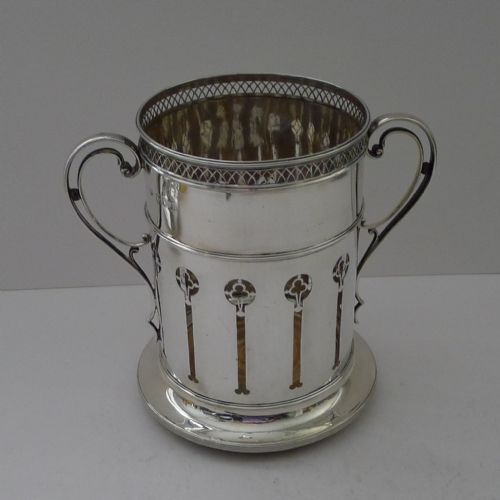


Sterling Silver Wine Coaster
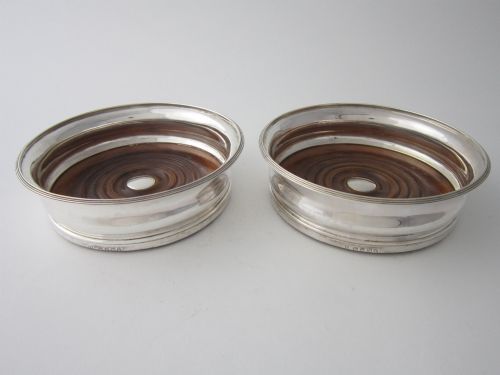
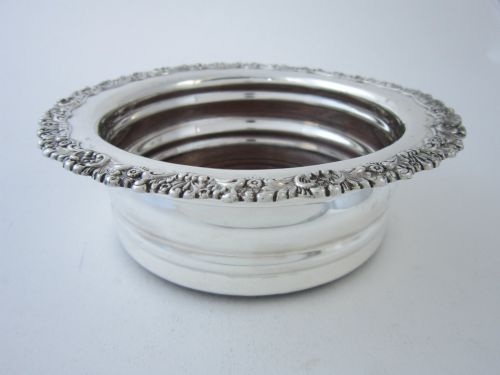
These sterling silver wine coaster examples combine polished precious metal with turned wood bases to slide bottles smoothly across dining tables.
Sterling Silver Wine Coaster
A sterling silver wine coaster is a circular barware accessory designed to protect polished dining surfaces from condensation rings and spills while holding bottles securely. The pieces gathered here range from early Georgian forms through Edwardian examples to later twentieth century items.
The version most commonly met on this page is the traditional silver frame fitted with a turned wooden base. Collectors encounter single stands alongside matching pairs and occasional sets intended for multiple guests.
Materials and construction methods
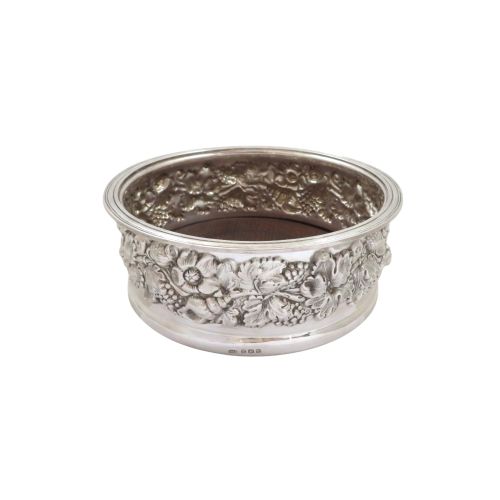
Silversmiths constructed the outer galleries using sterling silver sheet, often pierced, chased, or cast with decorative motifs like grape and vine patterns. These metal walls were then soldered to a weighted or unweighted inner lining.
Many examples incorporate turned mahogany or other hardwoods into the base, secured beneath a central silver button or bezel. Makers added green baize or felt to the underside to prevent scratching the mahogany dining table.
Georgian diners pushed these silver circles across polished mahogany so the port kept moving without ever dampening the linen.
Distinctions in craftsmanship and design
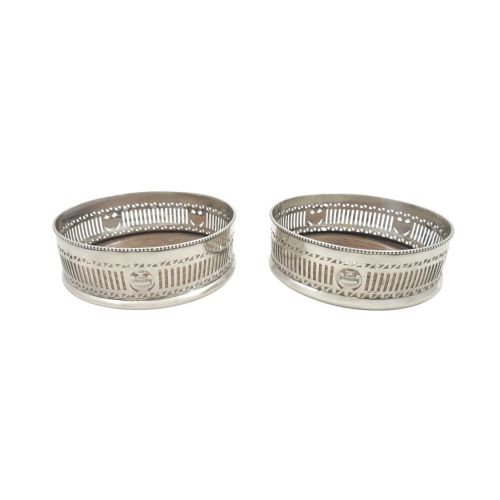
The distinction between standard production items and finer examples rests in the depth of the metalwork and the crispness of chased details. Pierced galleries with engraved armorial crests or cast foliate rims require greater skill than plain spun metal bands.
Weight and structural integrity also divide the range. Heavier gauge silver maintains its shape better over centuries of polishing, whereas lighter commercial items bend more easily under pressure.
Asprey·John and Thomas Settle·Thomas Daniell·Roberts and Belk·Broadway and Co·Thomas Bradbury and Sons
The Sterling Silver Wine Coaster Glossary
- Coaster
- A small portable tray or stand placed under a bottle or glass to protect the table surface. They were slid from guest to guest during dessert courses.
- Gallery
- The upright outer rim of a coaster, which can be solid, pierced, or pierced and engraved. This section frequently bears the hallmarks.
- Armorial
- A design displaying a coat of arms or family crest. These were often engraved onto the silver button in the centre of the wooden base.
- Hallmark
- Official stamped marks indicating the silver standard, assay office, and year of manufacture. They provide the primary means of dating British silver.
Sterling Silver Wine Coaster: Frequently Asked Questions
What size bottles do these fit?
Most standard wine and champagne bottles fit comfortably within the interior diameter of these stands. Magnum sizes require specific wider variants.
Larger historical bottles occasionally demand careful measurement of the internal gallery before placement.
How do I clean the silver?
Gentle application of a standard silver cloth removes tarnish without damaging the delicate raised details. Avoid abrasive dips that strip the character from older metal.
Keep polishing agents away from the wooden bases and baize bottoms to preserve the original materials.
Were they always used in pairs?
Dining traditions frequently dictated pairs of coasters to circulate port and red wine in opposite directions around the table. Single examples and larger sets also appear in historical records.
Hosts matched the number of coasters to the scale of the gathering and the courses served.
How do I identify the date?
Stamped hallmarks on the silver rim provide the specific assay office and year letter for pieces made in Britain. Comparing stylistic clues like neoclassical pierced patterns or Edwardian ornamentation narrows down unmarked items.
Consulting standard date letter charts helps pinpoint the exact decade of production.