
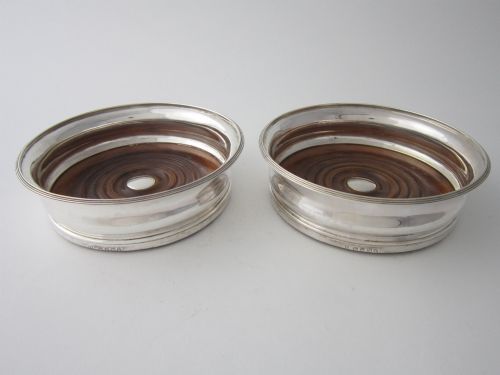


George III Silver Coasters
George iii silver coasters are small table vessels designed to protect dining surfaces, combining precious metal with turned wood bases.

What they are
George iii silver coasters appear primarily as pairs of circular bottle holders originating from the Georgian period around the turn of the nineteenth century. These vessels sit directly on the dining table to hold wine bottles and decanters safely during post-dinner circulation.
The form combines metal outer galleries with integrated wooden bases, frequently utilising mahogany wood to provide a stable foundation for heavy glass bottles. Makers produce these items in matched pairs as well as individual examples, often featuring pierced decoration or plain silver walls.
How they were made
Silversmiths shape sterling silver and old Sheffield plate into circular galleries, employing piercing techniques to create openwork patterns alongside solid walls. These metal rims are then fitted securely to turned wood bases, using mahogany as the primary timber for its grain and durability.
Makers construct the turned wood centres with central buttons or bosses, often in silver, anchoring the timber to the surrounding metal gallery. Craftspeople shape the wooden inserts on a lathe to fit snugly inside the silver or plated rims.
The recorded pieces span the Georgian period, specifically around eighteen hundred.
What varies in quality
The distinction between standard examples and finer pieces rests on the crispness of the silversmith's piercing and the weight of the metal utilised in the gallery. Heavier gauge sterling silver maintains its structural integrity better than thinner plates or old Sheffield plate alternatives over decades of use.
The quality of the turned wood base and how tightly it integrates with the metal rim separates basic production from superior workshop output. Well-executed pieces show precise lathe work on the mahogany, with tight joints between the timber and the silver surround.
The George III Silver Coasters Glossary
- George III
- The period of British history spanning the reign of George III from 1760 to 1820, encompassing these items. Pieces from this era often display classic Georgian proportions and decorative motifs.
- Sterling silver
- A silver alloy containing 92.5 percent pure silver by mass, standard for quality British tableware. This material provides the bright reflective surface seen on the primary wine coasters.
- Old Sheffield plate
- A composite material formed by fusing a thin sheet of silver to a thicker base of copper. This technique appears on plated wine coasters from the Georgian era.
- Turned wood
- Wood shaped on a lathe to create circular components, used here for the base inserts. Mahogany serves as the principal timber for these turned elements in the records.
- Wine coaster
- A small portable tray or dish with a raised edge used for moving bottles across a table. The form protects polished dining furniture from moisture rings and scratches.
Frequently Asked Questions
What are george iii silver coasters used for?
These vessels hold wine bottles and decanters on the dining table during and after meals. Their primary purpose is to protect polished wooden tables from drips and condensation while allowing guests to slide bottles safely along the surface.
They also serve a decorative function, presenting wine bottles within polished metal galleries that catch candlelight.
How do you clean george iii silver coasters?
Cleaning requires a soft cloth and specialist silver polish applied gently to avoid damaging the metal or the turned wood base. Water should be kept away from the mahogany inserts to prevent warping.
Careful handling preserves both the sterling silver surfaces and the integrity of the old Sheffield plate.
Are these items found in pairs?
Many examples survive as matched pairs, reflecting their original use at opposite ends of a dining table. Single pieces also appear frequently in the record.
Pairs generally command more attention from collectors seeking a symmetrical arrangement for a sideboard or table.
What materials make up these coasters?
The construction combines sterling silver or old Sheffield plate with turned mahogany wood bases. Some versions feature pierced metalwork walls while others remain plain.
The juxtaposition of bright metal and dark timber defines the visual character of the pieces.