



Mahogany Revolving Tray
Mahogany revolving tray pieces are practical timber servers built to rotate easily at the table, offering convenient access to food and condiments.
Mahogany Revolving Tray
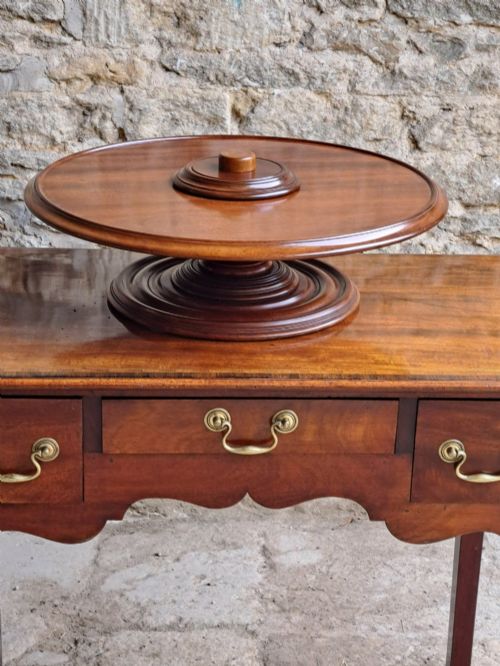
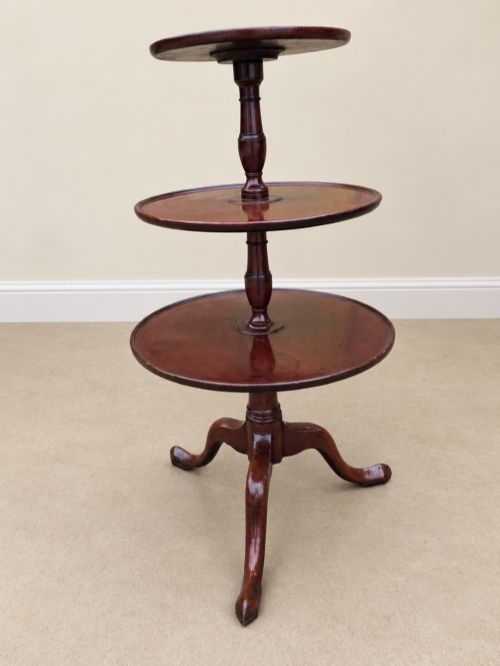
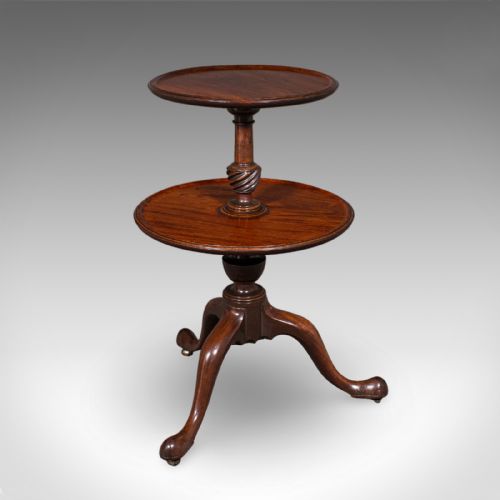
A mahogany revolving tray is primarily encountered on this page as a table top lazy Susan, a multi-tiered dumb waiter, or a party turntable. These items emerge from various periods including the Georgian, Regency, Victorian, and Edwardian eras.
The selections span simple table top round stands alongside tall, tiered serving pieces fitted onto tripod bases or side tables. Buyers seek these items for both functional dining use and traditional interior display.
How they were made
Maker construction relies heavily on solid mahogany timber paired with brass components for turning mechanisms and fittings. Artisans shaped these woods into circular trays and tiered tiers supported by turned columns or tripod legs.
Detailing often involves traditional wood carving and careful turning to ensure smooth rotation of the upper tiers and table top trays. The integration of brass hardware facilitates the revolving action across both table top stands and larger dumb waiters.
Mahogany Revolving Tray Retail Price Guide 2026
Typical asking prices for mahogany revolving tray among the pieces listed under this phrase on Sellingantiques today, from the lower quarter to the upper quarter. They describe what is for sale here now, not the wider market.
Listings span Georgian, Regency, Victorian, and Edwardian periods, constructed primarily from mahogany with brass fittings.
What varies in quality
Quality differences rest on the richness of the mahogany timber grain, the precision of the turning work, and the original smoothness of the revolving mechanism. Pieces from the Georgian and Regency periods often display finer cabinet-making standards than later Edwardian iterations.
The integration of sturdy brass fittings and balanced multi-tier proportions also separate standard utility items from finer dining accessories. Proportion and stability during rotation remain central to the overall standard of each piece.
The Mahogany Revolving Tray Glossary
- Lazy Susan
- A revolving tray placed on a table to allow easy sharing of dishes. This rotating accessory sits flat on dining surfaces or larger stands.
- Dumb waiter
- A freestanding tiered serving stand designed to hold food and tableware without servants present. These pieces frequently feature multiple revolving trays on a central column.
- Tripod base
- A three-legged support structure commonly found beneath floor-standing dumb waiters. This configuration provides stability on uneven dining room floors.
- Tier
- An individual level or shelf on a multi-layered serving stand. Pieces in this category commonly incorporate two or three tiers for storage.
Mahogany Revolving Tray: Frequently Asked Questions
What is a mahogany revolving tray used for?
These pieces function as rotating servers designed to pass food, drinks, and condiments around a dining table with ease. They eliminate the need to reach across guests during meals.
Larger multi-tiered versions act as serving stands for afternoon tea or side dishes, keeping the main table clear of clutter.
How do I date a mahogany revolving tray?
Dating relies on observing the cabinet-making style, timber characteristics, and turning techniques visible in the piece. Georgian and Regency examples exhibit different proportions and joinery compared to later Victorian and Edwardian items.
Hardware details like brass turning pivots also offer clues to the manufacturing period, ranging from the eighteenth century into the early twentieth century.
Are these trays stable when spinning?
Properly balanced trays and dumb waiters rotate smoothly on their central pivots without wobbling. Floor-standing versions rely on sturdy tripod bases to keep the tiers level during use.
Table top lazy Susans depend on an even underside mechanism to ensure items do not tip over when the tray turns.
What maintenance does mahogany require?
Mahogany surfaces benefit from occasional dusting with a soft cloth to protect the timber finish. Avoiding direct sunlight and extreme moisture preserves the rich colour of the wood over time.
Brass turning mechanisms occasionally require light cleaning to maintain smooth rotation without disturbing the historical integrity of the piece.