



Antique Revolving Server
An antique revolving server brings practical dining function and timber craftsmanship to the table.
Antique Revolving Server
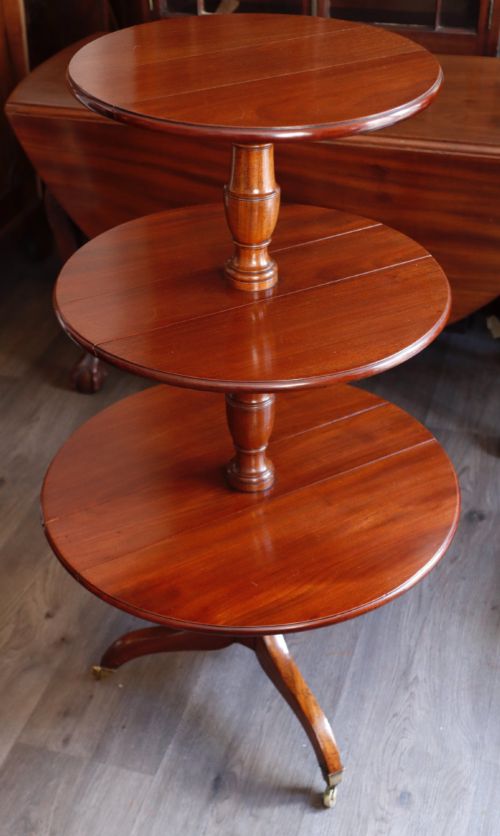
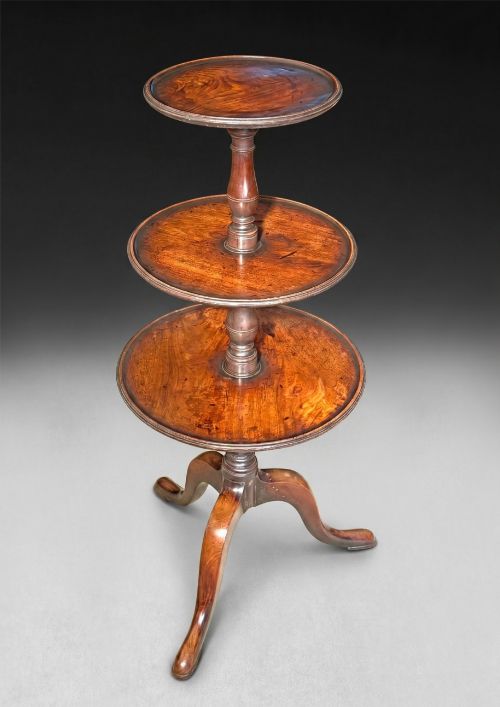
An antique revolving server covers rotating serving pieces, mechanical butter dishes, and tiered dumb waiters that turn for easy access at the table. When browsing this selection, buyers encounter everything from Georgian mahogany multi-tier stands to silver-plated breakfast dishes and Edwardian lazy susans.
The form spans formal dining room dumb waiters with tripod bases to tabletop rotating trays and breakfast warmers with rollover lids. Examples range from early Georgian pieces in rich timber to later Victorian plated designs and Art Deco walnut trolleys.
Originating as domestic dining furniture to assist with service, these rotating pieces reflect shifts in hospitality from the eighteenth century through to the early twentieth century. The frequent meeting point on this page is the classic mahogany revolving lazy susan or tiered dumb waiter.
Materials and construction methods
Makers utilised solid mahogany and walnut for structural timber pieces, shaping circular tiers and turning central columns on lathes. Tripod bases and brass mechanisms provide stability and smooth rotation for the heavier tiered dumb waiters.
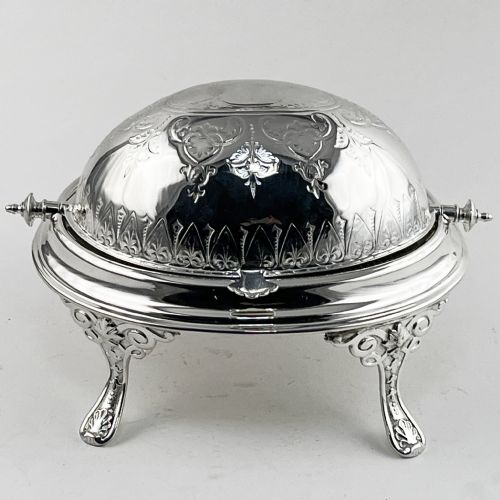
Silver plating and electroplated nickel silver appear on later Victorian and Edwardian lidded dishes, applying metal over a base foundation to create gleaming serving vessels. Porcelain sections, such as those by Coalport, integrate into specialised supper sets alongside wooden rotating bases.
A revolving breakfast dish ensured that late risers in grand houses could still enjoy warm bacon without waiting for a servant.
Distinctions in quality and execution
The smoothness of the mechanical rotation and the stability of the central pivot separate standard utility items from superior examples. Finely turned timber columns, well-fitted joints, and robust metal mechanisms indicate higher workshop standards during production.
The grade of timber selection and the preservation of original silver plating heavily influence the standing of an individual piece. Subtle details in edge moulding, the balance of tripod legs, and intact original hardware distinguish finer specimens from later replacements.
Mappin and Webb·Coalport
The Antique Revolving Server Glossary
- Dumb waiter
- A freestanding tiered shelving unit designed to hold dishes and glasses near a dining table without requiring servant attendance. These pieces often feature graduated circular tiers rotating on a central pillar.
- Lazy susan
- A revolving tray placed on a table or countertop to assist in moving food easily between diners. They appear in wood, glass, and porcelain across various periods.
- Rollover dish
- A lidded serving vessel with a mechanism allowing the cover to roll back beneath the dish. These were popular for breakfast and preserve service in the Victorian era.
- Tripod base
- A three-legged support structure commonly found beneath nineteenth-century dumb waiters and occasional tables for balanced floor contact. The legs often terminate in pad or claw feet.
- EPNS
- Electroplated nickel silver, a common base metal method used for silver-plated serving dishes and breakfast warmers from the nineteenth century onward.
Antique Revolving Server: Frequently Asked Questions
What is an antique revolving server used for?
An antique revolving server facilitates the sharing of food and condiments around a dining table by turning on a central axis. They make passing dishes effortless during formal meals.
Different versions served specific roles, from multi-tiered dumb waiters holding plates to lidded silver breakfast dishes keeping warm food accessible.
How do I date an antique dumb waiter?
Dating relies on observing timber choices, leg designs, and structural joinery techniques characteristic of specific periods like the Georgian or Victorian eras. Earlier eighteenth-century pieces often display hand-turned mahogany columns and heavy tripod legs.
Later nineteenth-century examples introduce mechanical innovations, silver plating, and alternative woods like walnut or applied metal hardware.
Can I use an antique lazy susan on my dining table?
Many wooden and porcelain lazy susans remain sturdy enough for everyday dining use, provided the central pivot mechanism functions smoothly and supports weight evenly. Regular cleaning with appropriate wood or metal care preserves the finish.
Care should be taken with antique silver-plated or porcelain surfaces to avoid abrasive cleaners and excessive moisture exposure during meals.
What is the difference between a dumb waiter and a lazy susan?
A dumb waiter is typically a tall, freestanding tiered stand designed to sit beside a dining table for holding multiple courses and serving items. They feature stacked circular shelves on a central column.
A lazy susan is generally a lower, flat revolving tray designed to sit directly on top of the dining table for passing shared dishes and condiments.