



George III Dumbwaiter
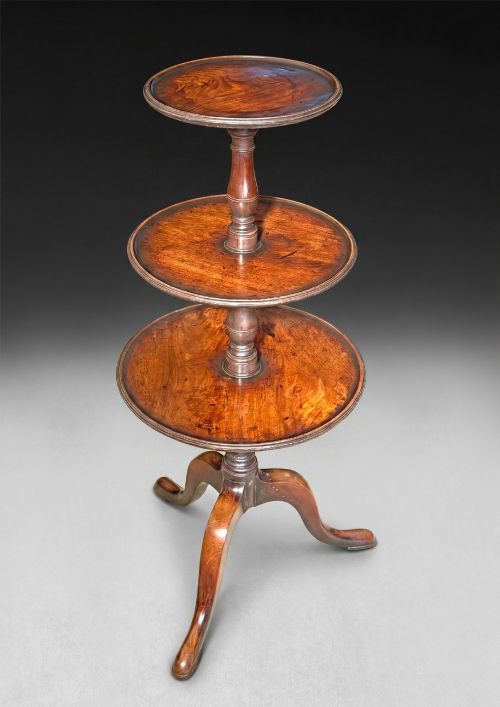
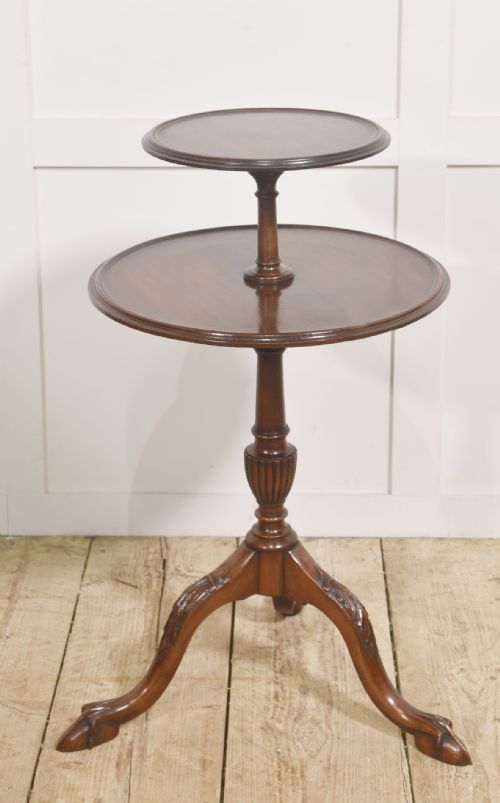
A george iii dumbwaiter brings tiered mahogany service to the dining room with genuine eighteenth-century presence.
George III Dumbwaiter
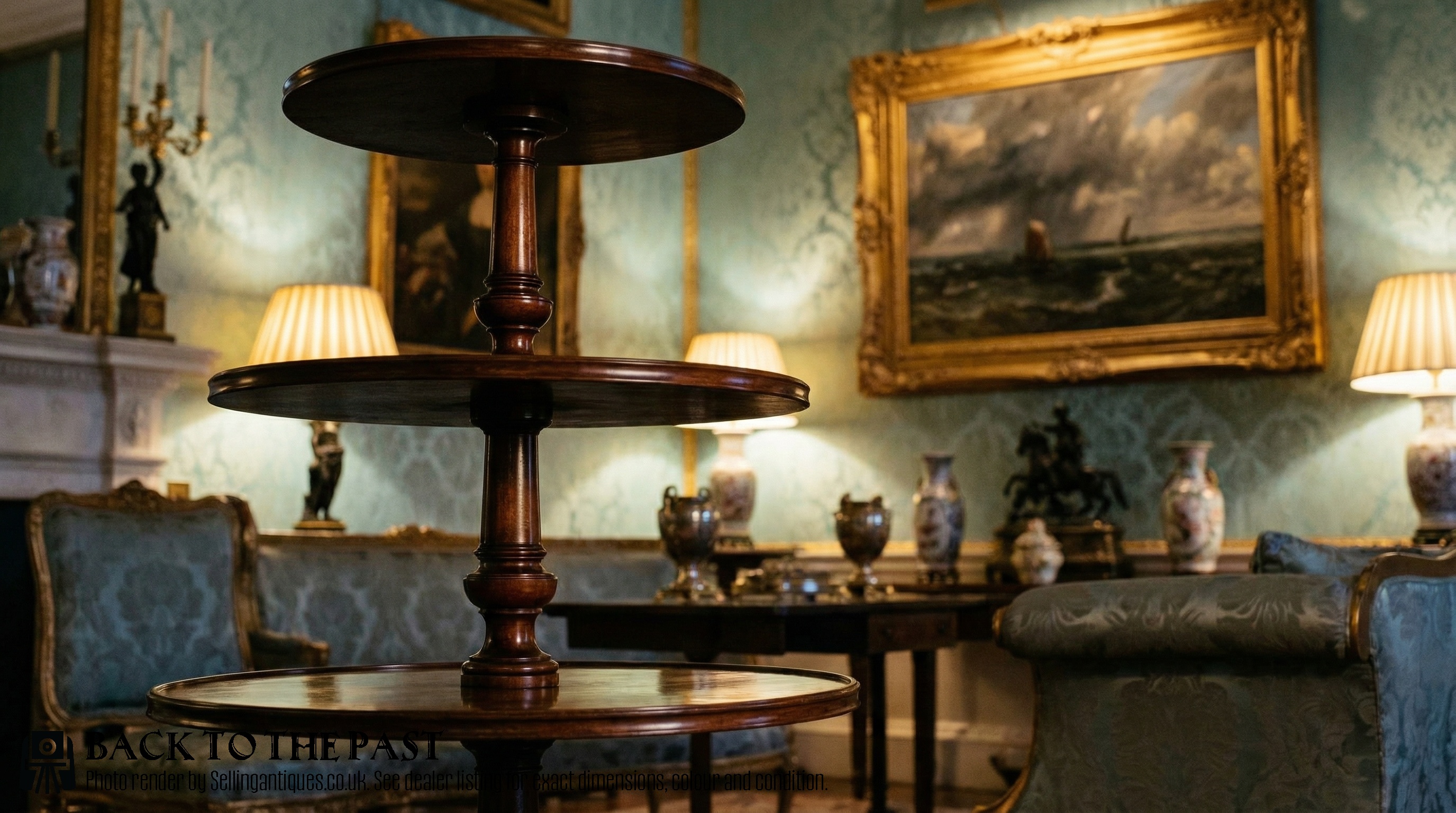
A george iii dumbwaiter functions as a tiered serving table designed for the dining room during the Georgian period. Most examples take the form of circular stacked trays that rotate on a central pillar.
The evidence shows various tier counts, including two-tier and three-tier formats, alongside rectangular drop-leaf options and hexagonal tables. Many pieces date from the eighteenth century, supplemented by later twentieth-century style revivals from 1910.
Buyers encounter these items grouped under alternative names such as lazy susan, etagere, or tiered table. The fundamental purpose remains a revolving or static multi-level stand utilised for food and tableware.
How they were made
Makers constructed these tables primarily using mahogany, selected for its rich grain and structural stability. Brass fittings often appear on castors, hinges, or revolving mechanisms.
Joinery techniques include turning for central columns and tripod bases to support multiple graduating trays. Some formats incorporate folding drop-leaf mechanisms and inlay work for decorative effect.
George III Dumbwaiter Retail Price Guide 2026
Typical asking prices for george iii dumbwaiter among the pieces listed under this phrase on Sellingantiques today, from the lower quarter to the upper quarter. They describe what is for sale here now, not the wider market.
Mahogany appears as the dominant material across all listed items, paired occasionally with brass elements and decorative inlay.
What varies in quality
The sophistication of the tier mechanism and the weight of the mahogany determine the distinction between standard production and superior execution. Stability in the central column and tripod legs dictates the physical longevity of the piece.
Detailing such as refined turning, precise inlay work, and original brass hardware elevate certain examples. Period authenticity from the eighteenth century carries greater weight than later revival pieces from 1910.
The George III Dumbwaiter Glossary
- George III
- The period spanning from 1760 to 1820, defined by neoclassical and transitional furniture designs in Britain. Pieces from this era form the core of the archive.
- Dumbwaiter
- A multi-tiered serving table that allows diners to access food without servant assistance. They frequently feature revolving circular tiers.
- Etagere
- A set of open shelves or tiers for displaying small objects or serving items. This form appears in late eighteenth-century examples.
- Lazy Susan
- A revolving tray placed on a table to assist in moving food easily between guests. The evidence links this directly to certain tiered configurations.
- Tripod base
- A three-legged support structure commonly found beneath the central pillar of these serving tables. This configuration ensures balance on uneven dining room floors.
George III Dumbwaiter: Frequently Asked Questions
What is a george iii dumbwaiter used for?
These tables served dining rooms by holding extra plates, wine bottles, and dishes during meals. The tiered design allowed diners to help themselves without servants present.
Today, they function effectively as standalone display pieces or occasional tables in living spaces and dining rooms.
How do I spot an 18th century piece?
Examine the timber density, the hand-turned details on the central column, and the wear patterns on the brass castors. Eighteenth-century examples rely on period mahogany construction and traditional joinery.
Later pieces from 1910 reflect the George III style revival rather than original Georgian manufacture.
Do all dumbwaiters revolve?
Many examples feature revolving circular tiers supported by a central spindle, allowing dishes to spin within reach of diners. Other formats utilise stationary shelves, rectangular drop-leaf surfaces, or hexagonal table tops.
Check the individual listing details to confirm whether a specific tier mechanism rotates or remains fixed.
Where should I place a tiered table?
These pieces suit corners or empty wall spaces in dining rooms, living rooms, and studies where vertical display helps utilise floor area. The tripod base requires adequate clearance around the perimeter.
Avoid high-traffic walkways if you select a folding drop-leaf version or a wide three-tier model.