



Wooden Rotating Tray
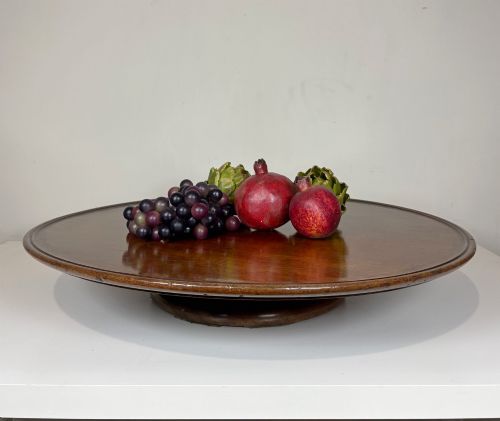
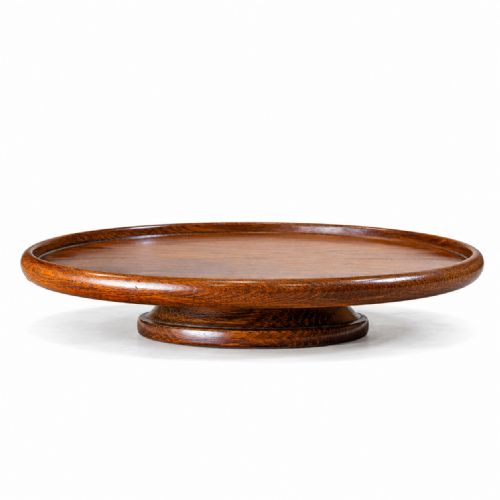
A wooden rotating tray is a revolving server that keeps food within reach at the table, spanning oak and mahogany from the Georgian period to the Art Deco era.
Wooden Rotating Tray
When you search for a wooden rotating tray, you encounter pieces designed for passing dishes easily around a table without reaching across guests. These items appear in various forms, including lazy susan servers, two-tier stands, and table top turntables.
The versions most commonly met on this page span the nineteenth century and the Edwardian era, alongside Georgian and 1920s examples. They function primarily as serving trays and table servers within domestic dining spaces.
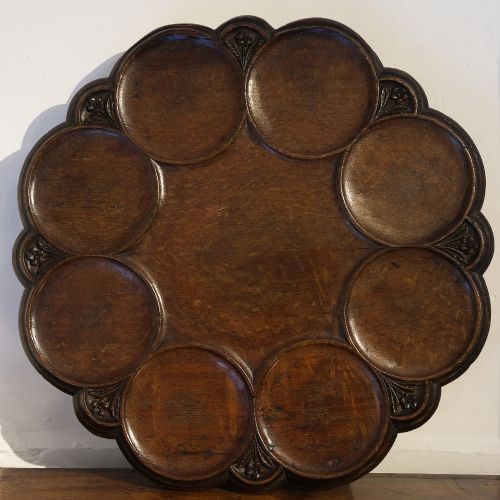
Makers shaped these serveware pieces from dense hardwoods like mahogany and oak, adopting English country, Victorian, and Edwardian aesthetic traditions. Some incorporate tiered structures or carved borders to secure dishes during rotation.
How they were made
Constructed predominantly from solid mahogany and oak, these trays rely on dense timbers to withstand the continuous friction of turning. Cabinet makers selected quartersawn boards to ensure stability and prevent warping across the circular top.
The revolving mechanism typically relies on a central pivot or wooden bearing system concealed beneath the surface. Artisans shaped the outer rims using hand planes and occasionally added carved details to the perimeter.
Wooden Rotating Tray Retail Price Guide 2026
Typical asking prices for wooden rotating tray among the pieces listed under this phrase on Sellingantiques today, from the lower quarter to the upper quarter. They describe what is for sale here now, not the wider market.
An eighteenth-century dinner guest no longer needed to ask a neighbour to pass the mustard.
What varies in quality
The distinction between standard and superior pieces rests on the choice of timber and the smoothness of the revolving mechanism. Solid mahogany or quarter-sawn oak with deep figuring indicates a higher grade of manufacture than plain utility timber.
Construction details such as integrated two-tier architecture and crisp hand-carving elevate certain examples above basic turned boards. The precision of the pivot ensures the tray rotates evenly without listing to one side.
The Wooden Rotating Tray Glossary
- Lazy Susan
- A revolving tray placed on a table to assist in moving food. These circular servers allow diners to share dishes effortlessly.
- Dumb waiter
- A tiered freestanding or table-standing server used to hold dishes. This term often applies to rotating trays with multiple levels.
- Tazza
- A small pedestal dish or shallow bowl raised on a foot. In this context, it describes an elevated revolving serving surface.
- Serveware
- Table utensils and dishes used for serving food. These pieces form the functional category for rotating trays and platters.
- Turntable
- A rotating platform designed to turn items smoothly. This mechanical assembly lies at the heart of every revolving tray.
Wooden Rotating Tray: Frequently Asked Questions
What is a wooden rotating tray used for?
These trays serve food and condiments at the dining table by allowing dishes to spin within reach of every guest. They reduce the need to pass heavy platters across the centre of the table.
Historically, they sat in the middle of formal dining arrangements to assist servants or diners during large meals.
How do I date a wooden rotating tray?
Dating relies on identifying the timber species, construction methods, and stylistic cues present in the woodwork. Georgian and Victorian examples often feature deeper patination and hand-turned components.
Later pieces from the Edwardian period or the 1920s exhibit different surface finishes and simpler edge profiles corresponding to their eras.
Are mahogany and oak the only woods used?
Mahogany and oak dominate the surviving examples from the periods represented here. Both hardwoods provided the necessary strength and weight for a stable revolving surface.
Cabinet makers valued these timbers for their durability and capacity to take a fine polish.
How do I maintain a wooden rotating tray?
Keep the wood conditioned with appropriate beeswax or furniture polish to preserve the finish and prevent the timber from drying out. Avoid exposing the tray to excessive moisture or direct heat sources.
Periodically check the central pivot underneath to ensure the mechanism continues to turn without binding.