

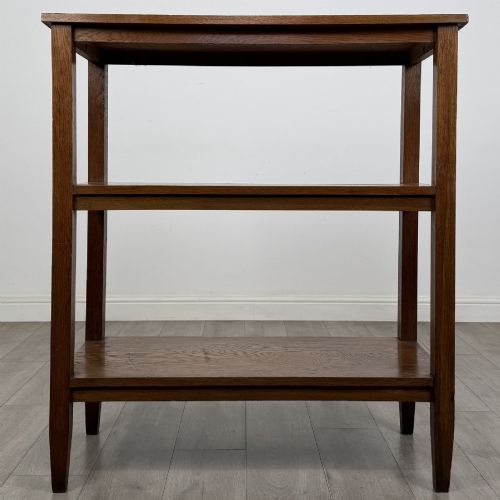
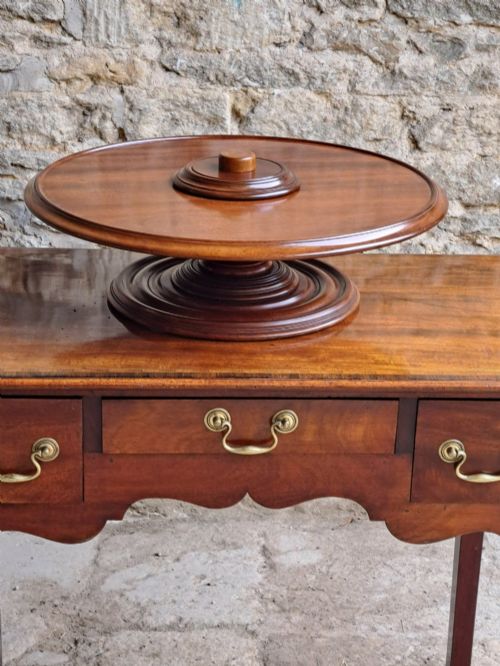
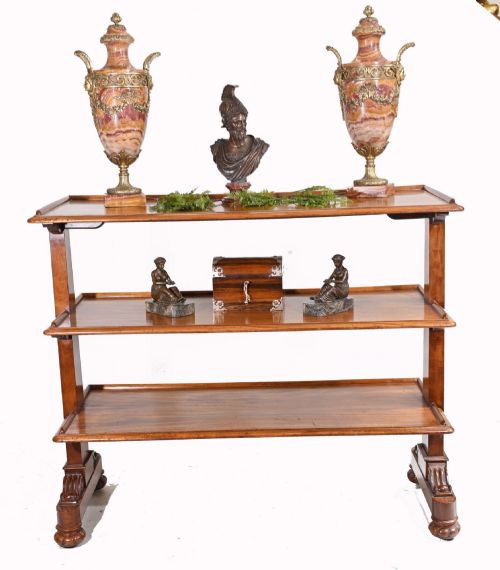
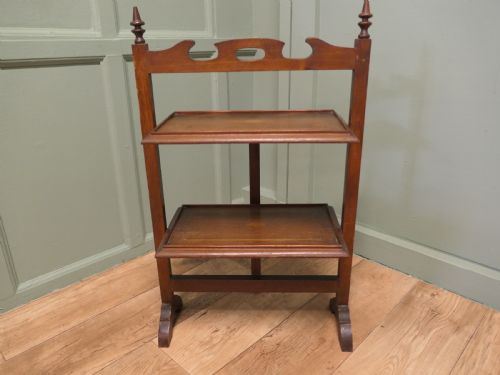


Antique Wooden Dumbwaiter
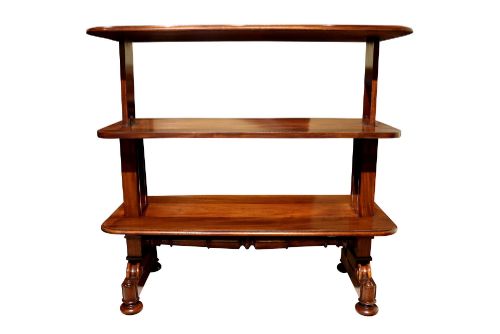
These antique wooden dumbwaiter pieces are tiered serving stands designed to hold food and tableware during meals without the need for hovering servants.
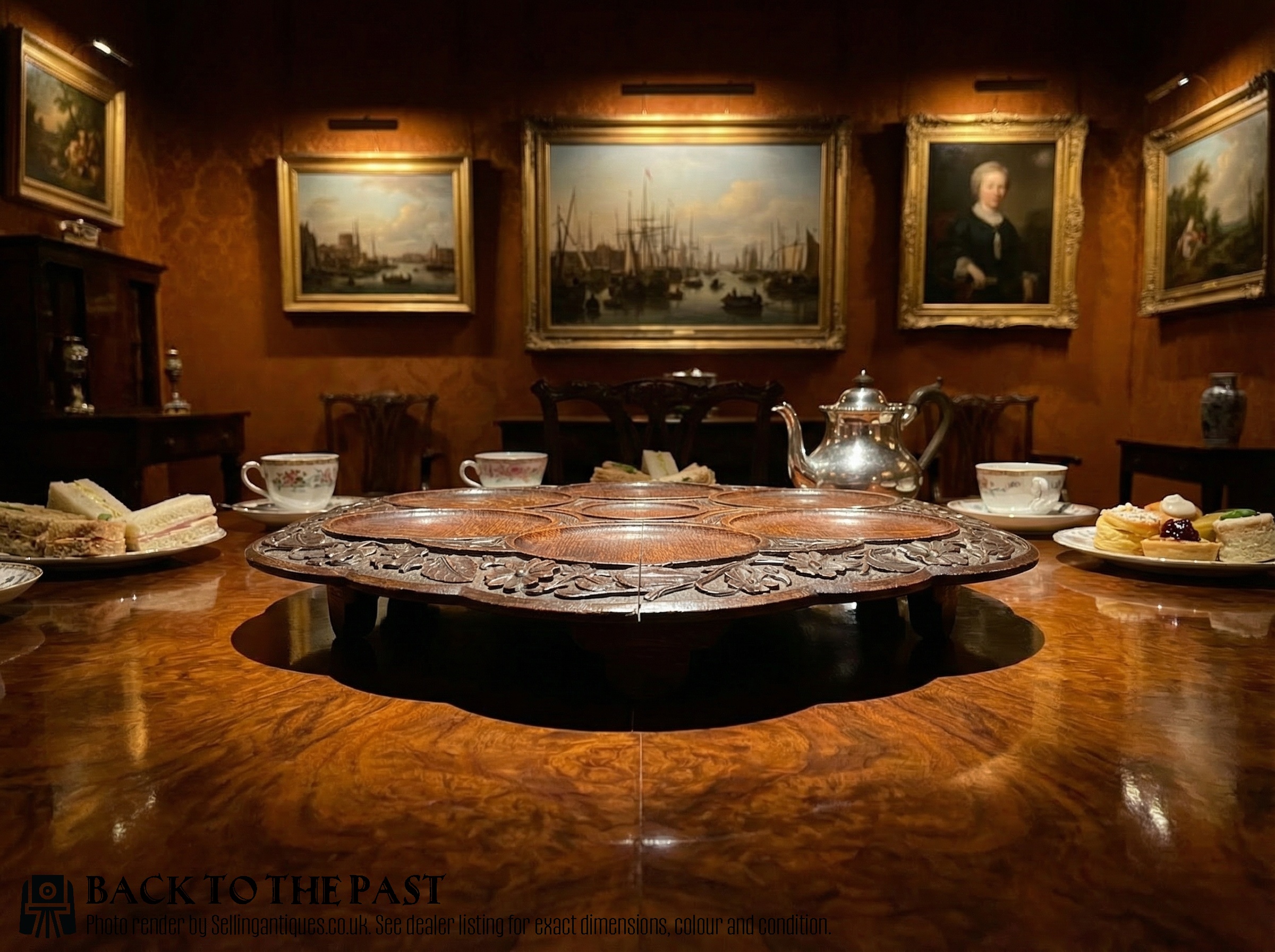
Antique Wooden Dumbwaiter
When you search for an antique wooden dumbwaiter, you encounter tiered serving stands, buffs, and revolving lazy susan table tops spanning the Georgian, Victorian, and Edwardian periods.
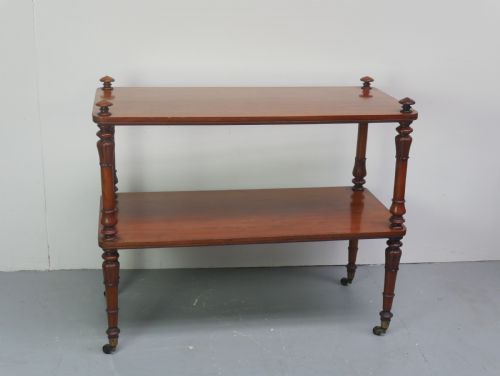
The pieces on this page appear predominantly in multi-tiered forms, including three-tier buffets, folding stands, and rise-and-fall versions designed for practical service.
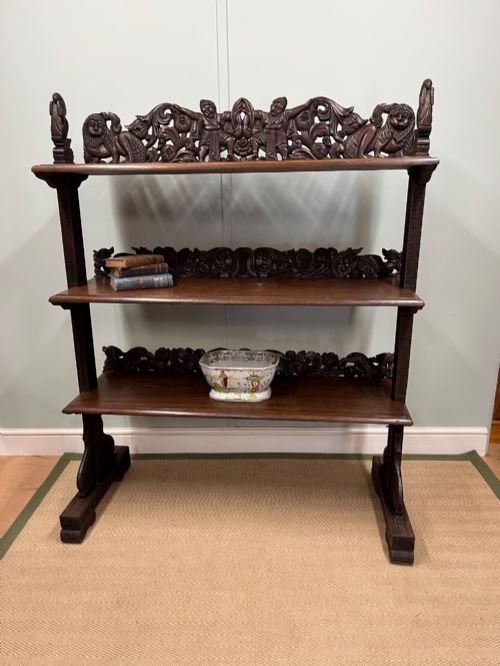
Origins stretch from English workshops to Anglo-Indian productions, utilising forms such as side tables, occasional tables, and food trolleys alongside traditional dumb waiters.
Materials and Construction
Cabinet makers constructed these pieces primarily from dense timbers such as mahogany, walnut, oak, and teak, occasionally employing exotic woods like padauk, rosewood, and satinwood.
Metal components such as brass mechanisms enabled the rise-and-fall movement, revolving actions, and folding capabilities found in many of the three-tier buffets and lazy susans.
Castors provided mobility for larger serving tables and food trolleys, while carved details and turned supports finished the upright structures.
Antique Wooden Dumbwaiter Retail Price Guide 2026
Typical asking prices for wooden dumbwaiter among the pieces listed under this phrase on Sellingantiques today, from the lower quarter to the upper quarter. They describe what is for sale here now, not the wider market.
Listings span the eighteenth, nineteenth, and early twentieth centuries, featuring mahogany, walnut, oak, and teak across buffet and lazy susan forms.
Craftsmanship and Proportion
The standard of a piece rests upon the selection of timber grain, the crispness of any carved ornamentation, and the stability of the stacked tiers.
Mechanical elements differentiate standard tables from sophisticated examples, with smooth operation in adjustable rise-and-fall mechanisms or revolving trays indicating superior workshop execution.
Maple & Co
The Antique Wooden Dumbwaiter Glossary
- Dumb waiter
- A tiered serving stand or revolving table top used to hold dishes during dining. These pieces allowed diners to serve themselves independently.
- Buffet
- A multi-tier shelving unit or serving table designed for food and tableware. They appear frequently in nineteenth-century dining rooms.
- Lazy Susan
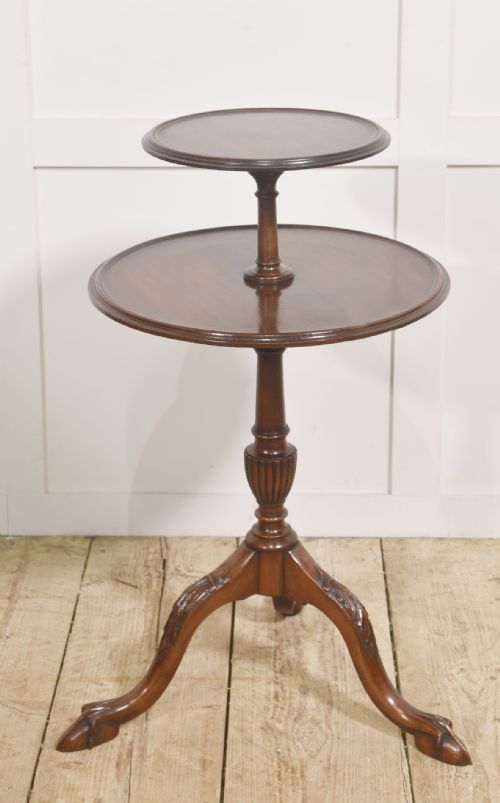
- A revolving tray or table top stand allowing dishes to spin within reach of multiple diners. They are encountered in both table-top and standing formats.
- Rise and fall
- A mechanical mechanism permitting individual tiers to adjust in height. This engineering allows the stand to compress or extend depending on service needs.
Antique Wooden Dumbwaiter: Frequently Asked Questions
What is an antique wooden dumbwaiter used for?
These tiered stands served meals by holding extra plates, cutlery, and dishes close to the dining table. They removed the need for servants to stand by constantly during dinner.
Today, people utilise them in dining rooms or living spaces as display stands, book shelves, or side tables for everyday objects.
How do I tell a Georgian dumbwaiter from a Victorian one?
Georgian pieces generally display restrained classical proportions, often featuring revolving circular tiers supported by tripod legs. They rely on clean lines and fine timber selection.
Victorian examples tend to be heavier and more mechanically complex, frequently incorporating three tiers, castors for mobility, and rise-and-fall or folding actions.
What is a rise and fall dumbwaiter?
A rise and fall mechanism allows the tiers of the stand to adjust vertically along a central column. This engineering let users modify the height of the shelves.
Such pieces require careful handling of the brass screw or ratchet mechanism to adjust the height without straining the timber supports.
Can I use a cake stand as a dumbwaiter?
While cake stands and dumbwaiters share a multi-tiered wooden construction, cake stands are generally lighter Edwardian or late Victorian pieces intended for afternoon tea.
Dumbwaiters are typically heavier dining room furniture built to bear the weight of substantial ceramic plates and serving dishes.