




Three Tier Sideboard
A three tier sideboard brings stepped tiers of timber to a dining room, offering layered surfaces for service and display.
Three Tier Sideboard
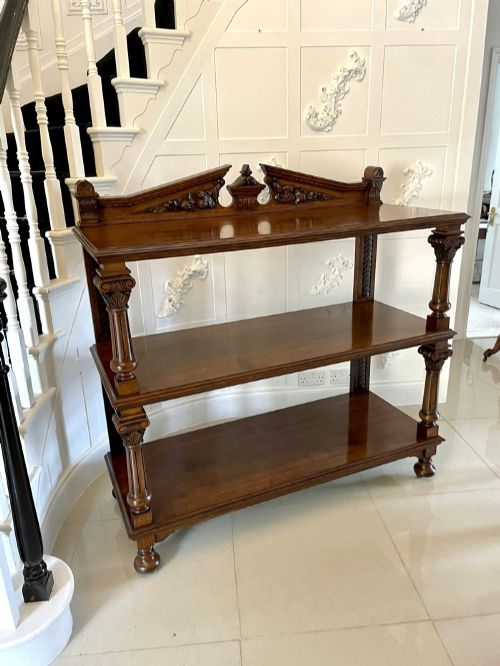
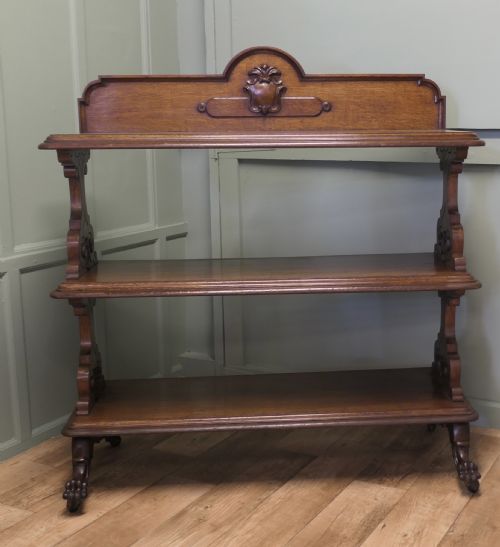
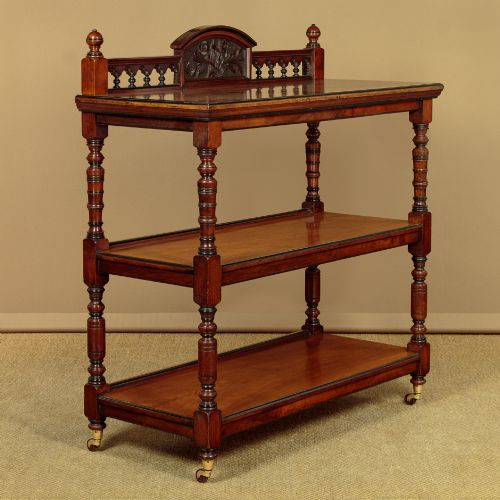
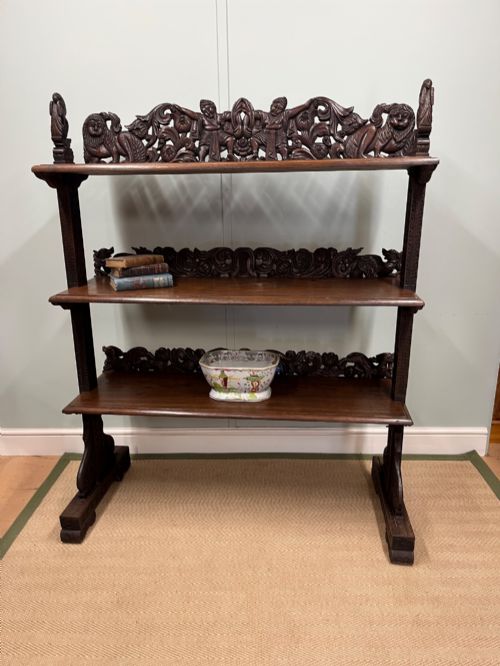
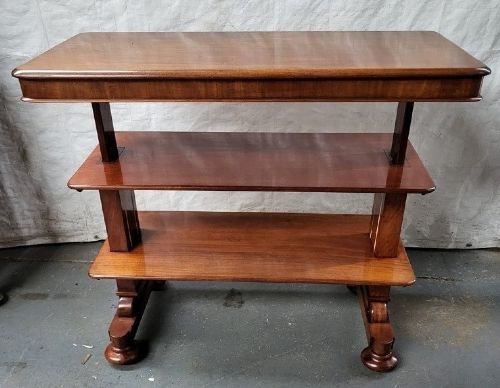
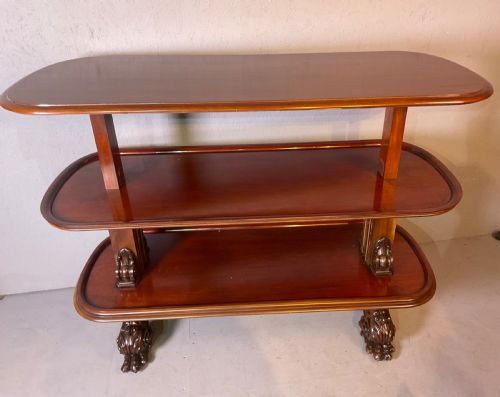
When you examine a three tier sideboard, you encounter tiered serving furniture that also appears under descriptions such as buffets, dumbwaiters, and etageres. These pieces emerge from the eighteenth, nineteenth, and early twentieth centuries, spanning periods from the Regency and William IV eras through the Victorian and Edwardian decades. The common form comprises multiple stacked surfaces supported by turned pillars, columns, or carved supports, frequently fitted with castors.
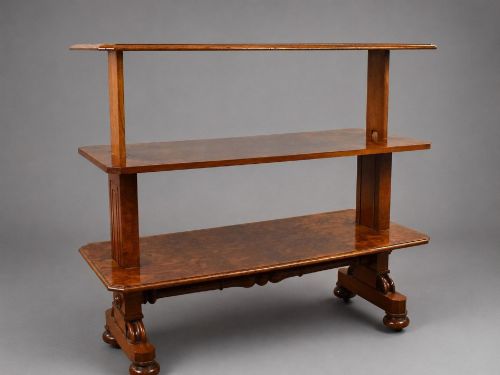
On this page, mahogany and oak examples predominate, alongside selections in walnut, burr walnut, teak, pollard oak, and cherrywood. You will find variants ranging from simple three tier stands to large metamorphic servers with adjustable shelves or enclosed cupboard sections below. Their origins extend across English workshops as well as French provincial regions and Anglo-Indian production.
How they were made
Cabinet makers constructed these pieces using dense hardwoods like mahogany, oak, and walnut, often selecting figured veneers such as burr walnut or pollard oak for visual depth on primary surfaces. Timber was joined using traditional cabinet-making methods, while structural uprights incorporate turned, reeded, or carved decoration depending on the stylistic vocabulary of the period. Brass components appear in castors, gallery rails, and drop handles.
Carving ranges from profuse foliate relief work on Victorian oak frames to restrained moulded edges on earlier Regency and George IV examples. Metamorphic versions integrate mechanical ratchets, brass adjustment pins, or folding mechanisms to allow shelves to shift position or collapse.
Three Tier Sideboard Retail Price Guide 2026
Typical asking prices for three tier sideboard among the pieces listed under this phrase on Sellingantiques today, from the lower quarter to the upper quarter. They describe what is for sale here now, not the wider market.
The listings show three tier sideboards executed in eight distinct timbers, ranging from dark mahogany and walnut to lighter teak and cherrywood.
What varies in quality
Quality rests in the selection of timber and the crispness of the cabinet work, from plain solid boards to highly figured burr veneers matched symmetrically across the tiers. The execution of the turning on the upright pillars and the depth and sharpness of any carved enrichment reveal the skill of the original workshop. Maker attribution, such as pieces bearing stamps or tags from established firms, alters the standing of a piece.
Structural integrity depends on the rigidity of the joints connecting the tiers to the upright columns, particularly on tall or heavily loaded dumbwaiters. Original elements, including brass castors, screw fixings, and functional adjustment mechanisms, retain the historical integrity of the piece more effectively than later replacements.
Maple & Co·James Shoolbred & Co
The Three Tier Sideboard Glossary
- Buffet
- A sideboard or serving table used for holding dishes and food. In nineteenth-century usage, the term frequently overlaps with three tier stands and dumbwaiters.
- Dumbwaiter
- A multi-tiered piece of dining room furniture designed to hold plates, glasses, and serving dishes without the aid of servants. They often feature pivoting or fixed circular or rectangular shelves.
- Metamorphic
- Describing furniture designed to transform its shape or function through mechanical devices such as hinges, ratchets, or sliding brackets. These adjustments allow shelves to change height or fold flat.
- Pollard oak
- Oak timber taken from pollarded trees, yielding a tightly clustered, knotty grain pattern prized for decorative veneering. It was utilised by cabinet makers during the nineteenth century.
- Etagere
- A piece of furniture consisting of a set of open shelves for displaying small objects or serving items. They share a close structural relationship with three tier buffets.
Three Tier Sideboard: Frequently Asked Questions
What is a three tier sideboard?
A three tier sideboard is a piece of dining furniture featuring three distinct horizontal surfaces stacked vertically. These tiers are held apart by turned or carved columns and provide elevated space for serving food or displaying tableware.
They appear under various historical designations, including buffets, dumbwaiters, and etageres. The form evolved to assist with dining service in large households during the eighteenth and nineteenth centuries.
How were dumbwaiters used?
Dumbwaiters served as auxiliary stands in dining rooms where guests preferred to dispense with attending servants during meals. Diners placed extra plates, wine bottles, and side dishes upon the tiers for easy self-service.
Some versions included revolving trays or adjustable shelves so diners could reach items without standing up. They sat beside the main dining table during meals and served as display furniture between uses.
How do I date a three tier buffet?
Dating relies on identifying stylistic markers, timber choices, and construction methods characteristic of specific periods. Regency and William IV pieces often display clean architectural lines in solid mahogany, whereas high Victorian examples frequently feature heavier proportions, profuse carved oak, or burr walnut veneers.
Hardware offers additional clues, as original brass castors and fastening screws match the manufacturing techniques of their era. Maker stamps or labels underneath shelves provide definitive chronological anchors when present.
Are these pieces adjustable?
Certain examples incorporate metamorphic mechanisms that allow the shelves to change height or tilt. These use brass ratchets, pins, or sliding brackets concealed within the central support columns.
Most surviving pieces remain fixed in position with permanent glued and pegged joints between the shelves and uprights. Adjustable variants require careful handling of the internal metalwork to preserve their movement.