


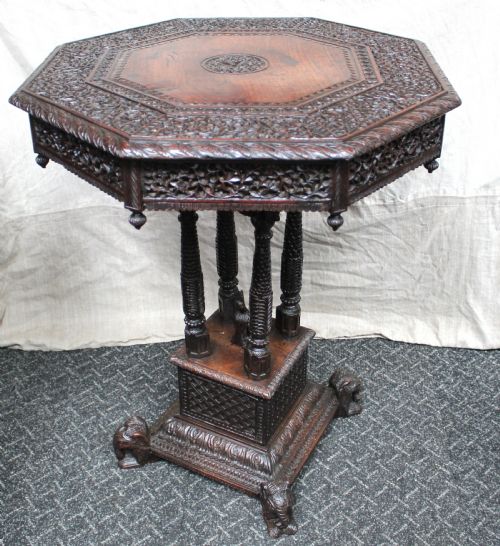


Colonial Teak Side Table
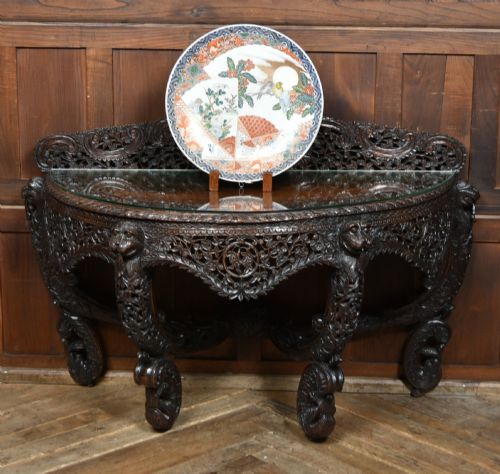
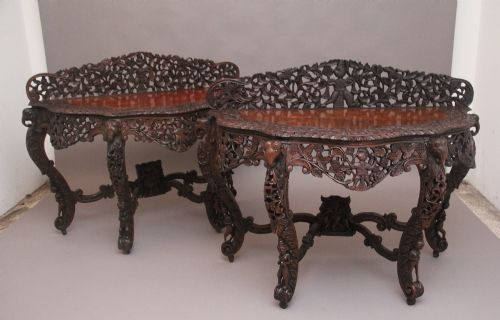
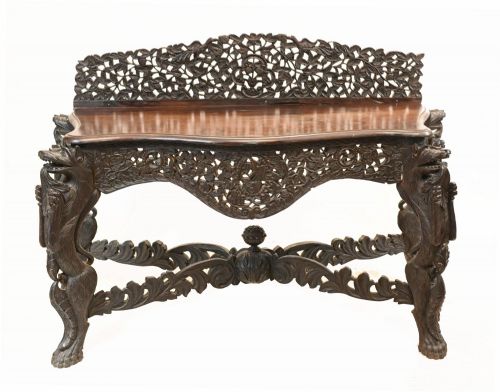
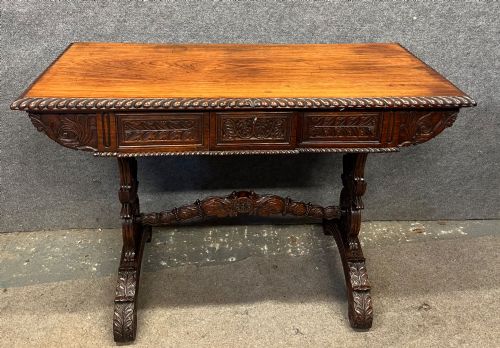
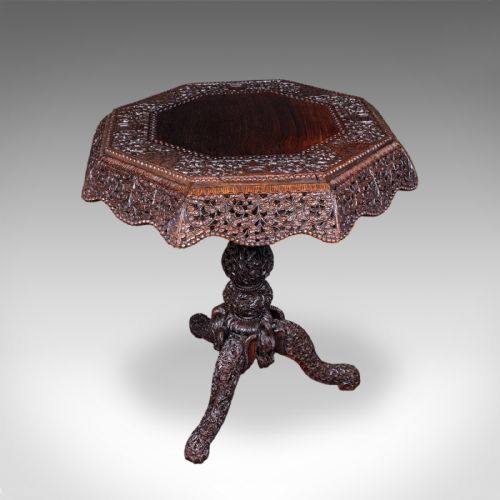
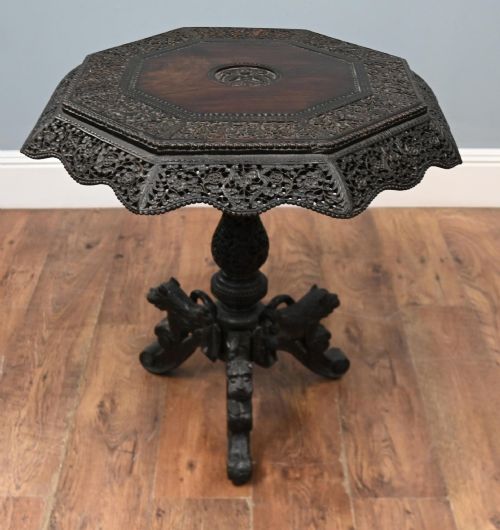
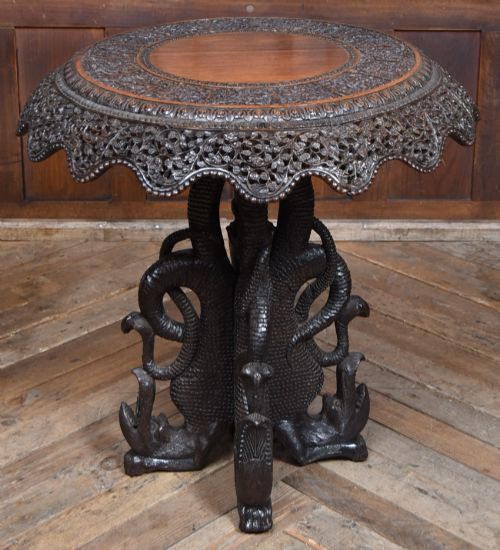
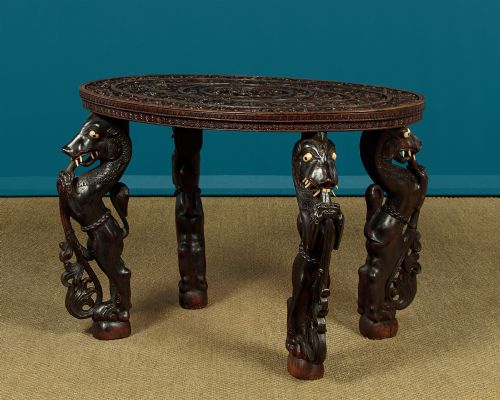
These colonial teak side table examples combine dense tropical timbers with intricate regional carving, offering practical surfaces filled with historical character.
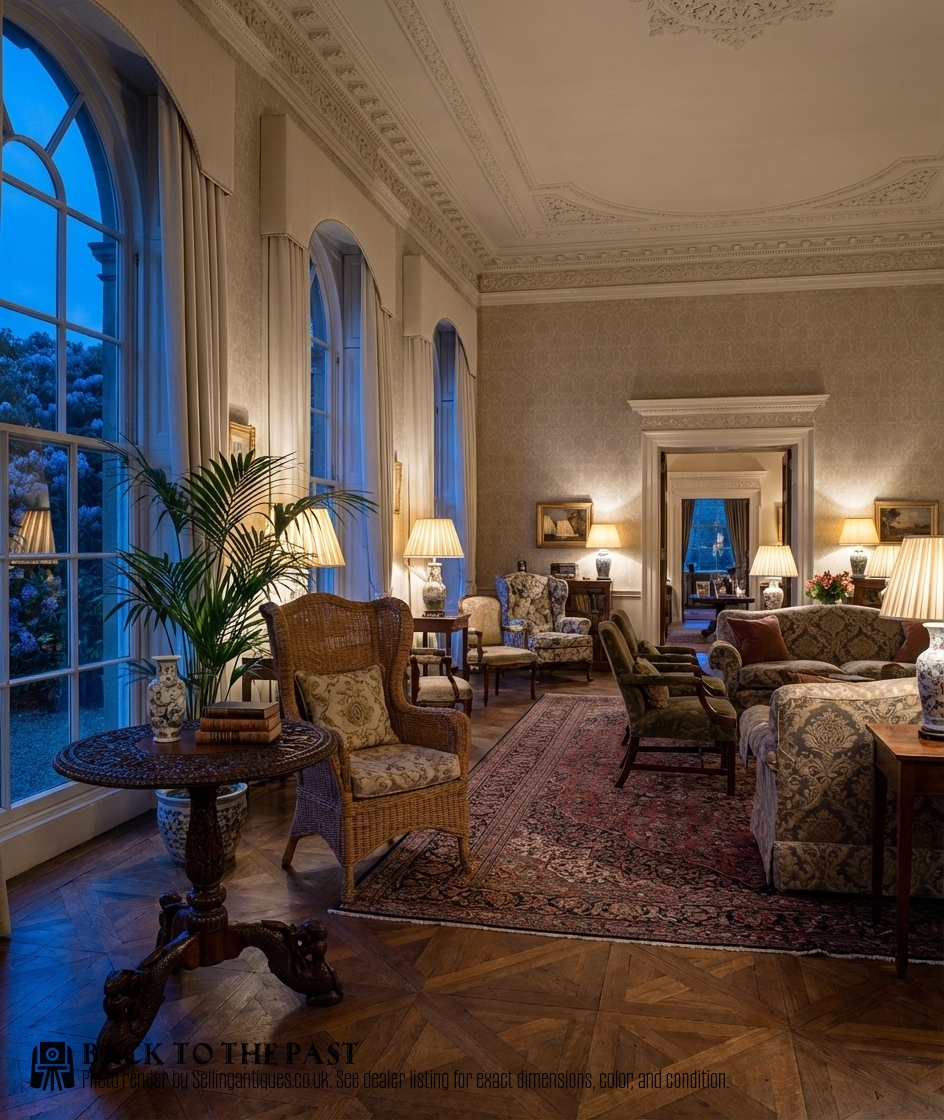
Colonial Teak Side Table
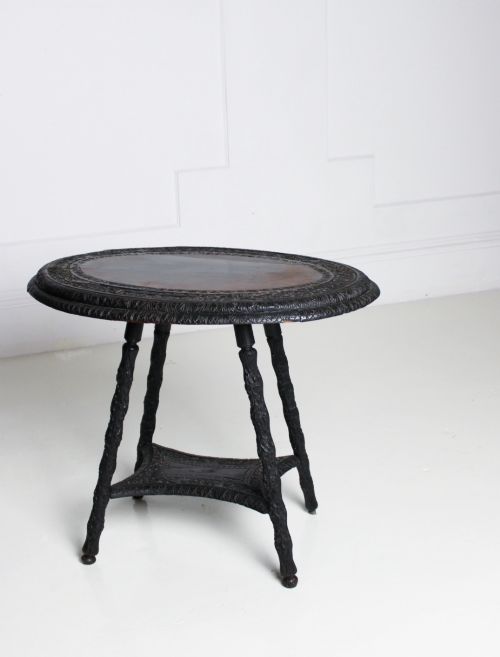
A colonial teak side table brings distinctive regional craftsmanship into a room, spanning forms like occasional tables, coffee tables, and console tables. These pieces emerge from distinct aesthetic traditions including Anglo-Indian, Anglo-Burmese, and Burmese vernacular styles.
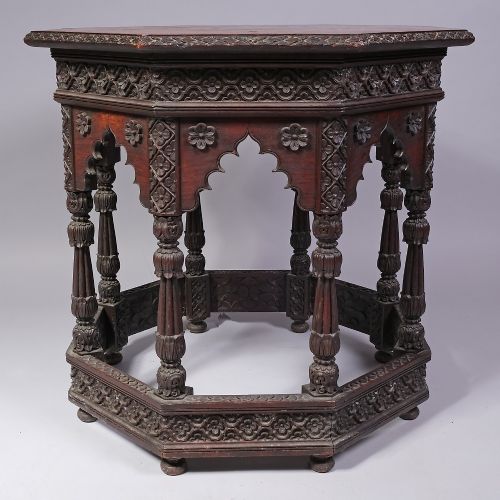
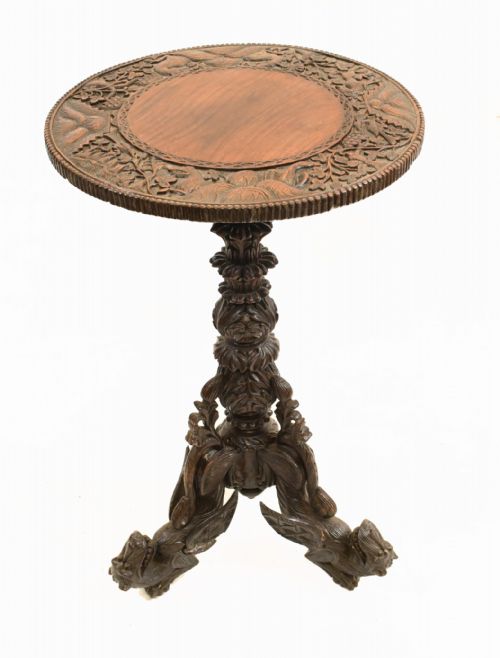
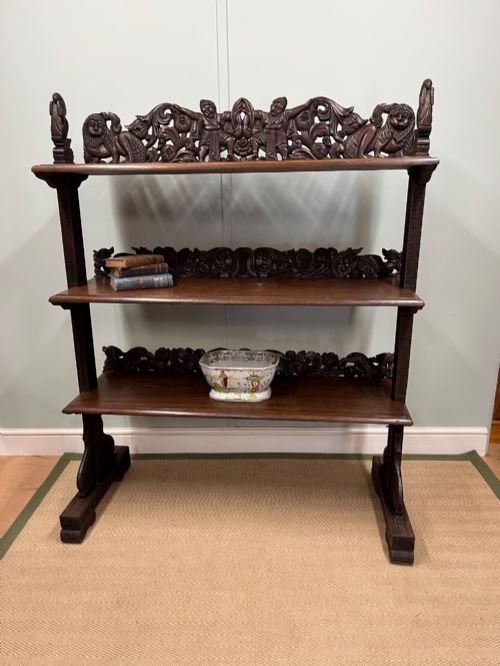
Most examples you encounter on this page date from the nineteenth century through the early twentieth century. Common formats include circular tilt-top tables, octagonal surfaces, and tiered buffets designed for practical household utility.
Regional workshops produced specialised forms such as elephant tables, camel tables, and Hoshiarpur folding tables. These varied shapes reflect the diverse furniture requirements of colonial households across the Indian subcontinent and Burma.
Craftsmanship and Proportion
Quality rests heavily on the depth and crispness of the hand carving rather than surface polish alone. Superior pieces display sharply defined foliage, figures, or animal motifs that retain their geometric precision across complex curves.
Structural integrity separates everyday utility from finer examples, particularly in folding mechanisms and pedestal bases. Well-made pieces maintain balanced proportions and stable joinery despite the natural movement of dense tropical timbers over time.
Colonial Teak Side Table Retail Price Guide 2026
Typical asking prices for colonial teak side table among the pieces listed under this phrase on Sellingantiques today, from the lower quarter to the upper quarter. They describe what is for sale here now, not the wider market.
Several nineteenth-century tables feature carved elephants and camels holding up the tea.
The Colonial Teak Side Table Glossary
- Anglo-Indian
- Furniture made in India during the British colonial period, combining European furniture forms with traditional local craftsmanship. These pieces often feature dense surface carving and exotic hardwoods.
- Hoshiarpur
- A North Indian town renowned for intricate woodwork, particularly tables and folding stands featuring dense bone inlay and carved geometric patterns. Artisans in this region specialised in intricate surface enrichment.
- Tilt-top
- A table top hinged to a pedestal base so it can be tipped vertically when not in use. This mechanism allowed for easier storage in colonial interiors.
- Padouk
- A heavy tropical hardwood with a distinctive reddish hue used in regional furniture making. It provides a stable base for detailed carving.
- Occasional table
- A small, movable table designed for specific, intermittent uses around a room. These forms make up a large portion of the available colonial teak side table selections.
Colonial Teak Side Table: Frequently Asked Questions
How do I identify an elephant table?
Elephant tables feature carved figural supports shaped as elephants, typically forming the legs or pedestal base of the piece. These regional designs originate primarily from nineteenth-century workshops in the Bombay Presidency.
The carving ranges from simple stylized forms to highly detailed figures adorned with traditional trappings. They support circular or octagonal table tops decorated with matching foliate motifs.
Where were these tables made?
These pieces originated across the Indian subcontinent and Burma during the colonial administration. Major stylistic centres included British India, the Bombay Presidency, and various Burmese workshops.
Local artisans adapted indigenous woodworking techniques to satisfy European demand for portable and decorative furniture. This cross-cultural exchange produced distinct regional styles such as Anglo-Indian and Anglo-Burmese.
How do I care for a teak table?
Maintaining a teak table requires basic environmental control and gentle cleaning to preserve the dry or waxed timber finish. Keep the wood away from direct heat sources and extreme humidity fluctuations to prevent splitting.
Dust the intricate carved recesses regularly with a soft brush rather than a cloth that might snag. Apply a neutral wax finish sparingly only when the timber appears dry.