


Burmese Teak Side Table
These pieces of a Burmese teak side table bring substantial nineteenth-century craftsmanship into your room with deep carving and dense timber.
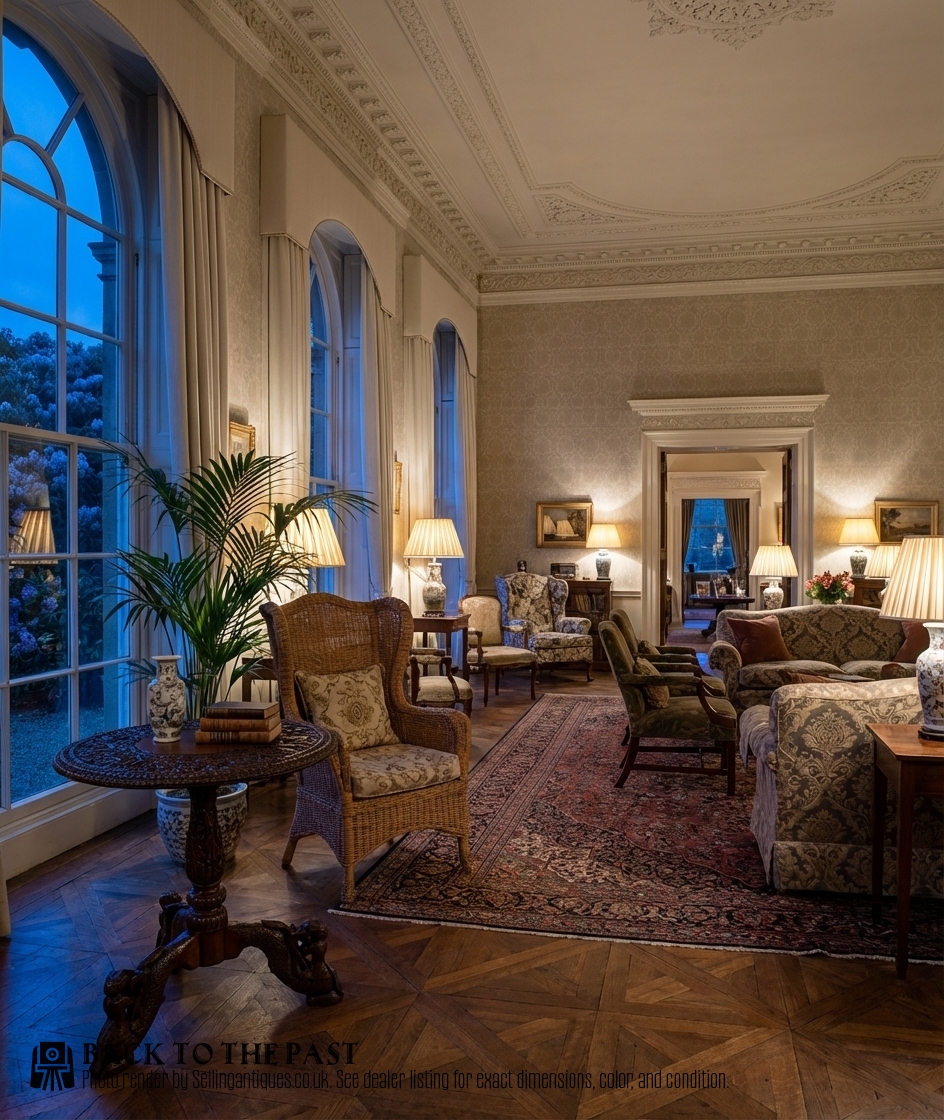
Burmese Teak Side Table
A Burmese teak side table sits within the nineteenth century, emerging across decades from eighteen-forty to nineteen-hundred in forms such as occasional tables, console tables, and tiered buffets. Anglo-Burmese and Burmese Colonial styles dominate the selection, bringing heavy carving and distinct regional shapes into domestic spaces.
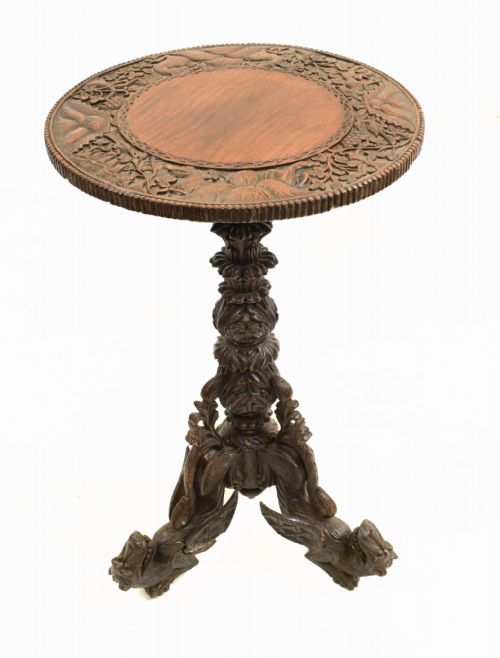
The most common version you will meet here is a hand-carved occasional or side table, often featuring multiple tiers or circular tops. These items reflect vernacular and colonial influences, utilising the dense hardwood native to the region.
Makers shaped these tables to serve functional roles in nineteenth-century interiors, producing items that function today as coffee tables, dining tables, or display surfaces. The origins trace directly to Burma and Myanmar, preserving distinct cultural motifs within the woodwork.
How they were made
The primary material across these pieces is teak, a durable hardwood chosen for its strength and rich grain. Artisans combined this timber with secondary elements like bone inlay and paint to accentuate the carved surfaces.
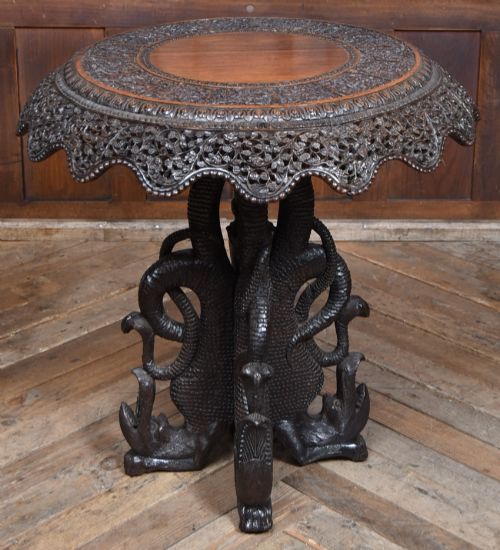
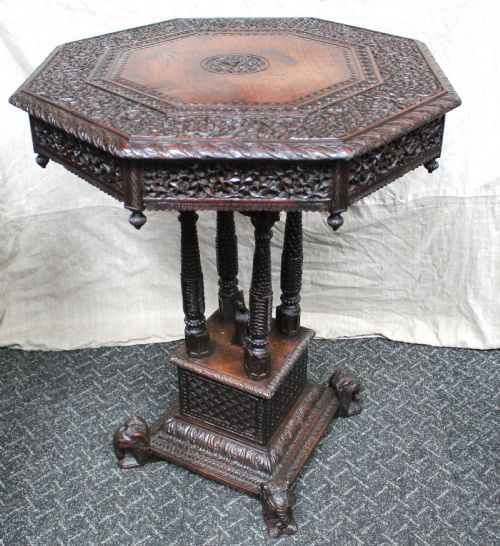
Manual carving defines the construction, with craftsmen cutting intricate patterns directly into the solid wood. Construction methods involve traditional joinery to support heavy tiers, elephant-leg supports, and tip-top mechanisms without relying on modern hardware.
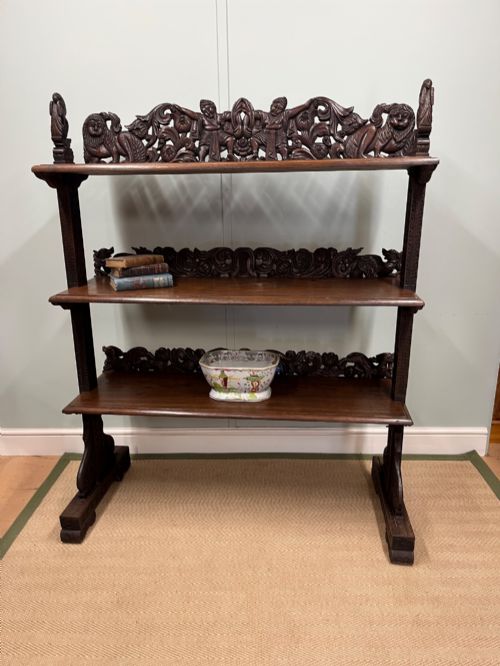
Object forms on this page include side tables, occasional tables, console tables, buffets, coffee tables, and dining tables.
What varies in quality
Depth and precision of the hand carving separate simpler village pieces from more elaborate examples. Sharp, crisp relief work indicates superior artisanal skill during the nineteenth century.
The structural complexity of the form alters the character of the piece, moving from straightforward single-surface tables to elaborate multi-tiered buffets and tables with figural supports like carved elephant legs.
The Burmese Teak Side Table Glossary
- Teak
- A dense, durable tropical hardwood native to Southeast Asia. It provides the heavy, weather-resistant foundation for nineteenth-century Burmese furniture.
- Anglo-Burmese
- A design style combining traditional Burmese carving techniques with European furniture forms popular during the colonial period. These pieces frequently merge local motifs with Western domestic utility.
- Tip-top table
- A table featuring a hinged top that pivots to a vertical position when not in use. This mechanism allowed for compact storage against walls in nineteenth-century rooms.
- Tiered buffet
- A multi-level piece of furniture designed for display or serving. In this selection, these structures utilise sturdy teak to support several open shelves.
Burmese Teak Side Table: Frequently Asked Questions
How do I use a Burmese teak side table at home?
These tables function well as prominent display surfaces in living areas or hallways, holding lamps, books, or decorative objects. Their sturdy teak construction handles daily use while adding nineteenth-century character to the room.
Position a multi-tiered version or a round carved table where the detailed woodwork remains visible from multiple angles. Avoid placing them in direct sunlight to protect the natural finish of the timber.
What styles are common in nineteenth-century Burmese tables?
The selection includes Anglo-Burmese, Anglo-Indian, and Burmese Colonial designs alongside simpler vernacular pieces. These styles often feature dense, deep carving and structural elements inspired by local wildlife and architecture.
Look for characteristics such as figural supports, including elephant legs, or multi-tier configurations that define the regional output of the period.
Are these tables made from solid teak?
The listings consist primarily of solid teak and related hardwoods sourced from Burma during the nineteenth century. Artisans relied on the natural density of the timber to support heavy hand-carved ornamentation without warping.
Some examples incorporate secondary materials like bone inlay or painted highlights to accent the primary carved wooden structure.
How do I date a carved Burmese side table?
Dating relies on stylistic markers and recorded periods spanning from eighteen-forty to nineteen-hundred. Nineteenth-century examples display hand-carved details that reflect the prevailing colonial and vernacular aesthetics of the era.
Examine the construction methods, tool marks on the teak, and the specific complexity of the tiers or console shapes to understand the age of the piece.