


Brown Teak Tripod Table
A brown teak tripod table brings dense grain, deep relief carving, and rich colonial history straight into a room.
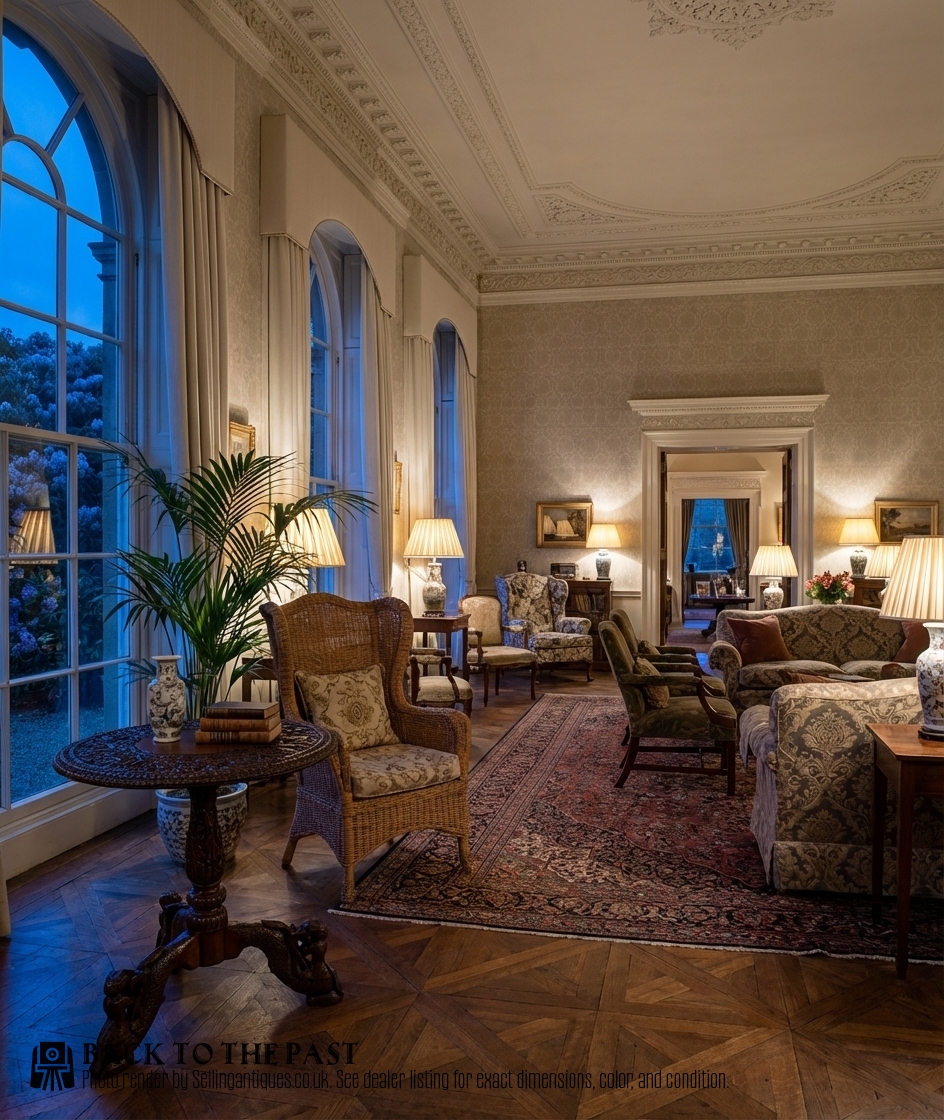
Brown Teak Tripod Table
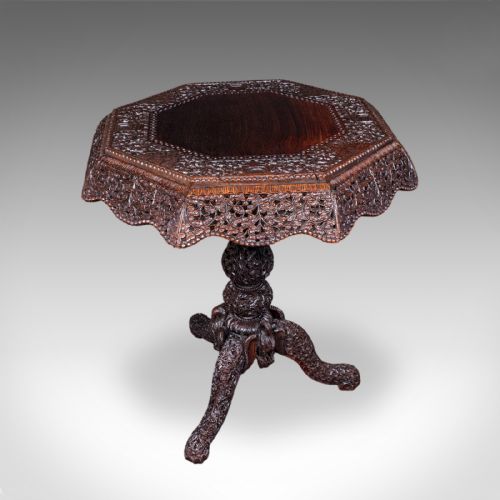
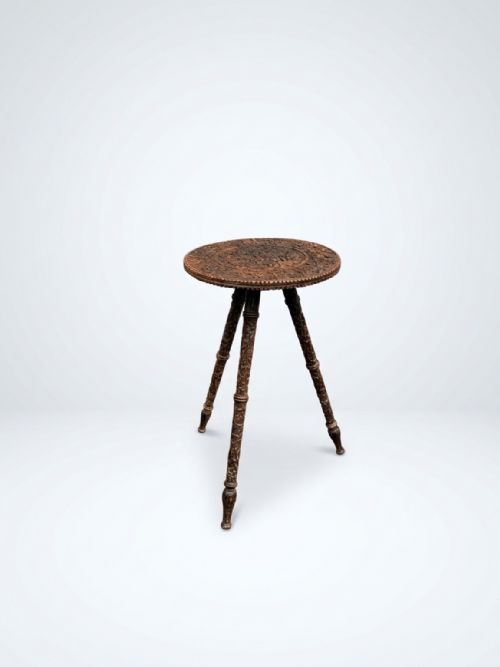
A brown teak tripod table combines three-legged supports with dense tropical hardwoods, often taking the form of side tables, occasional tables, and plant stands. These pieces arrive from distinct regional traditions including Anglo-Indian, Anglo-Burmese, and Colonial workshops across the nineteenth and early twentieth centuries.
The versions most commonly met on this page showcase intricate hand carving and occasionally bone or ebony inlay. Forms range from circular elephant tables and shield-shaped occasional coffee tables to carved tip-top designs and pedestal stands originating from Bombay, Hoshiarpur, and Burma.
Makers utilised durable teak and rosewood to construct sturdy surfaces capable of functioning as low coffee tables or compact display stands. Each example reflects the stylistic exchange of the nineteenth-century British Empire, adapting traditional eastern motifs for western domestic interiors.
How these tables were constructed
Artisans built these tables using dense tropical timbers, predominantly teak and rosewood, paired with contrasting decorative details. Workshops applied delicate bone inlay and ebony inlay to dark wood surfaces, creating sharp geometric and floral patterns.
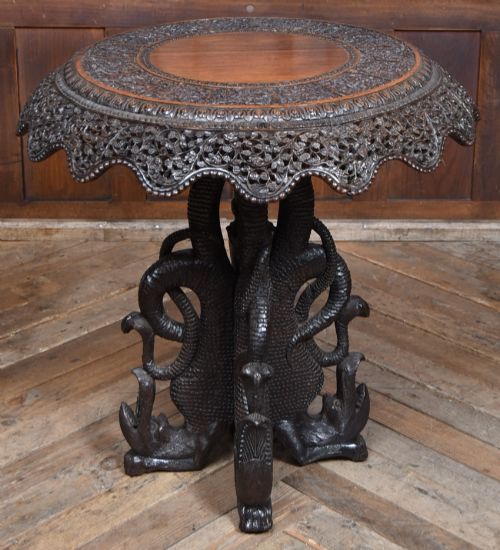
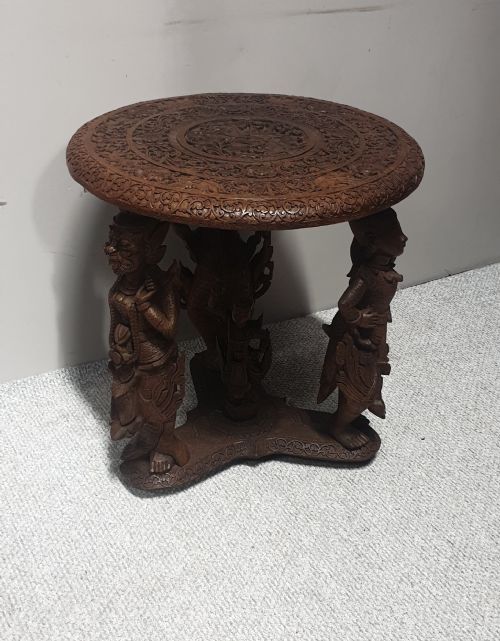
The structural framework relies on three-legged tripod bases supporting carved tops, which occasionally feature folding mechanisms or tilt-top actions. Carvers executed deep relief work by hand, decorating aprons, pedestals, and table edges with motifs of elephants and foliage.
Several tables feature miniature carved elephants tucked beneath the top, serving as silent, sturdy supporters for your afternoon tea.
What separates the finest examples
Quality rests upon the depth, crispness, and complexity of the hand carving across the tabletop and pedestal. Superior pieces display intricate figural work, such as elephants or dense scrolling foliage, executed with sharp relief rather than shallow, softened marks.
The integration of contrasting materials dictates the refinement of the piece, with precise bone inlay and ebony inlay elevating standard construction. Selection of well-figured teak and stable tripod joints further distinguishes workshop output.
The Brown Teak Tripod Table Glossary
- Tripod base
- A three-legged support system designed to keep small tables steady on uneven floors. This configuration allows compact occasional tables to stand firmly without bulky frames.
- Tip top
- A hinged tabletop that tilts vertically to save space when not in use. This mechanism appears frequently on nineteenth-century occasional tables.
- Bone inlay
- Small pieces of animal bone fitted into recessed channels within the timber surface to create contrasting patterns. Artisans used this technique extensively in regional Indian workshops.
- Anglo-Indian
- A descriptive term for furniture made in India during the British colonial period, combining local craftsmanship with British room forms. These items often feature dense carving and native hardwoods.
- Pedestal table
- A single central pillar supporting a tabletop, resting upon three or more feet. This form maximises legroom around small side tables.
Brown Teak Tripod Table: Frequently Asked Questions
How were these tables used originally?
These tables served as versatile occasional furniture in nineteenth-century drawing rooms and parlours for holding lamps, books, or decorative objects. Their compact footprint allowed servants to move them easily around a room as needed.
Tilt-top variants provided a space-saving solution when pushed against a wall between uses. Plant stands specifically elevated potted ferns and decorative flora within domestic interiors.
How do I style a carved tripod table today?
Place a carved teak table beside a sofa or armchair where its textured surface can be appreciated at close quarters. The rich brown timber works well alongside both contemporary upholstery and traditional interiors.
Keep objects placed upon the surface minimal to let the intricate woodcarving remain visible. Avoid damp locations to protect the dry tropical timber and delicate inlay work.
How can I tell regional styles apart?
Anglo-Indian pieces from Bombay or Hoshiarpur frequently incorporate distinct bone inlay, geometric patterns, and elephant motifs into the carved woodwork. Burmese examples tend to rely entirely on deep, dramatic relief carving across teak without contrasting bone details.
Colonial pieces made for export balance traditional eastern woodworking techniques with standard British furniture forms of the Victorian era. Examining the specific timber choice and carving depth clarifies the likely geographical origin.