

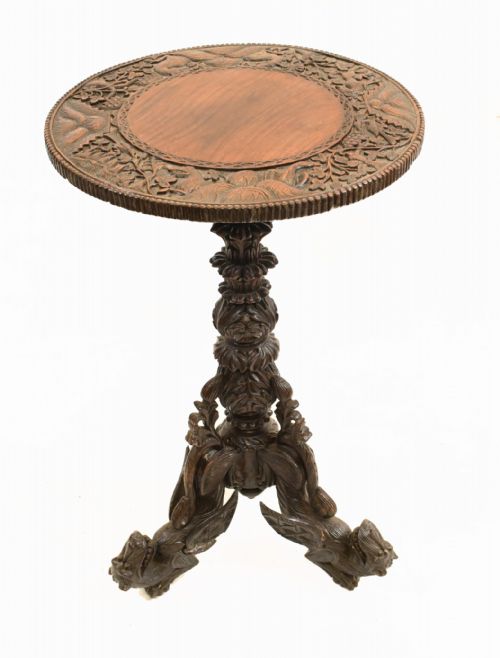


Burmese Carved Tripod Table
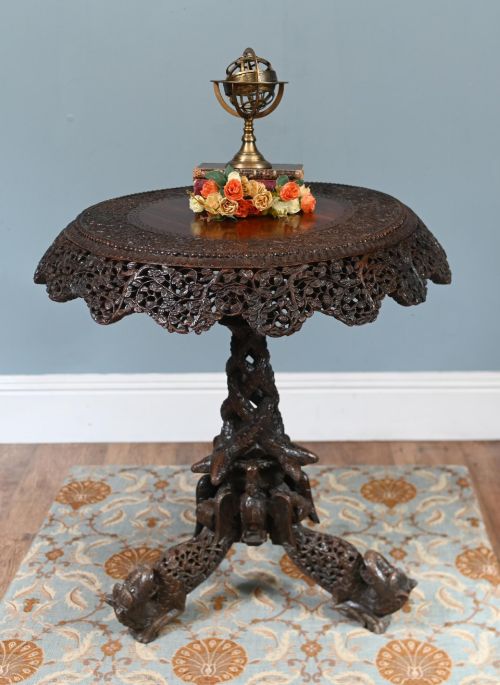
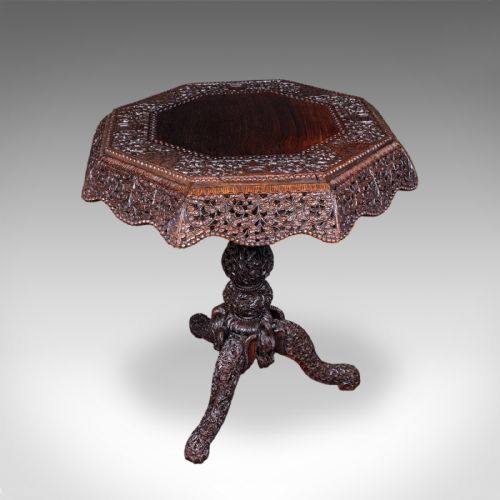
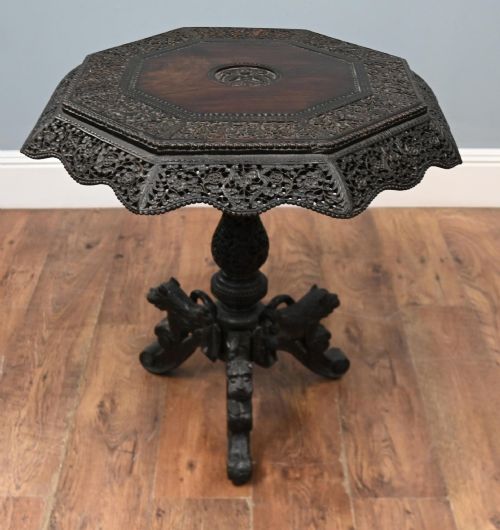
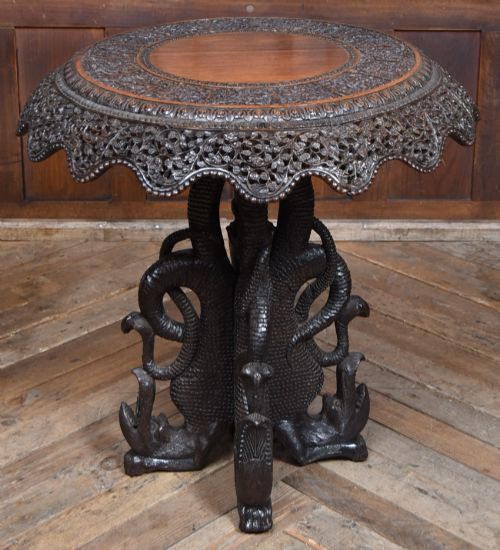
A burmese carved tripod table brings dense, intricate foliage and animal motifs into a room through nineteenth-century colonial craftsmanship.
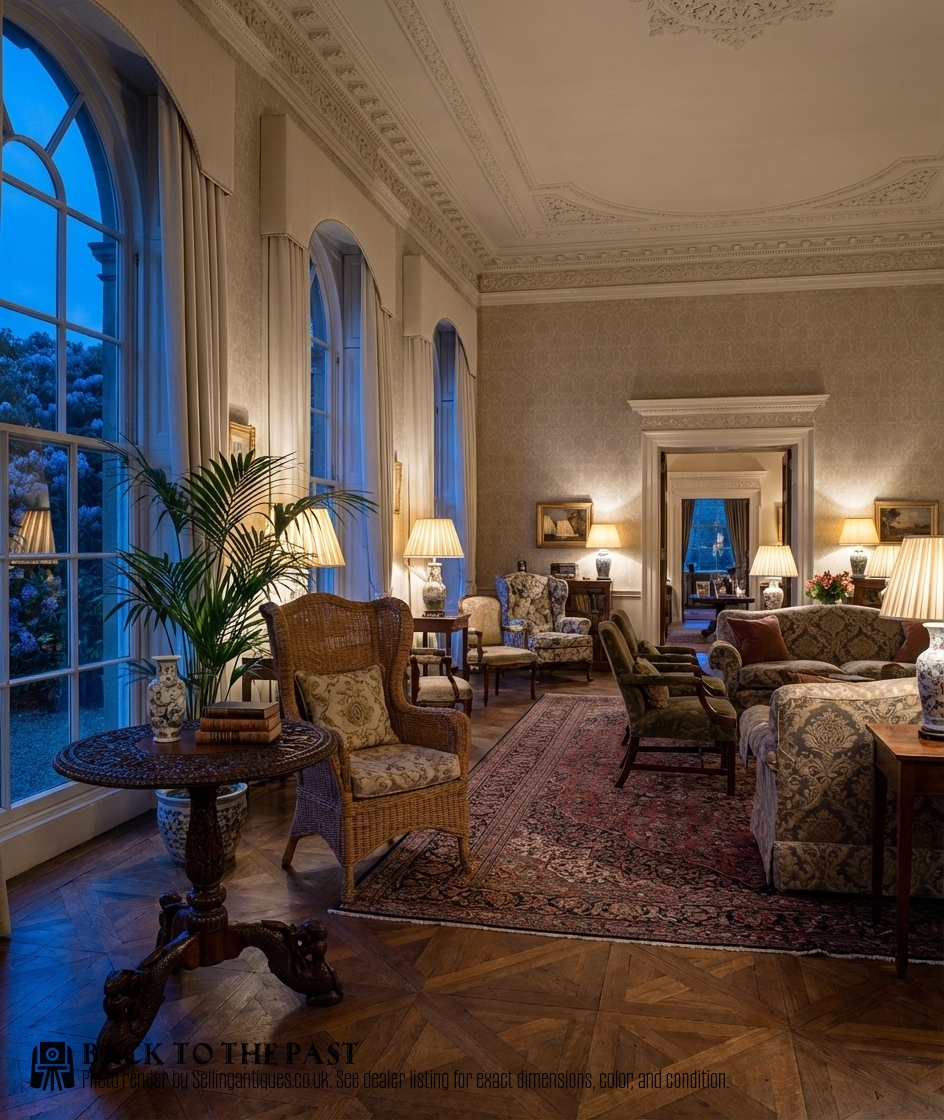
Burmese Carved Tripod Table
A Burmese carved tripod table is a low or occasional surface supported by three legs, originating from nineteenth-century Burma and the broader Anglo-Burmese colonial sphere. These pieces serve as side tables, occasional tables, or tilt-top tables designed for domestic use.
The version most commonly met on this page is the nineteenth-century side or occasional table, frequently featuring a round top above three legs. Makers produced these pieces during the 1870s, 1880s, and 1890s, drawing on Anglo-Burmese and Anglo-Indian design traditions.
Buyers look for these tables to introduce heavily carved wooden surfaces into a room. The form combines functional occasional furniture with dense sculptural decoration across the top and base.
How they were made
Makers constructed these tables from dense tropical timbers including teak, padouk, and general hardwood. These heavy woods provided the stable foundation necessary to support deep, intricate hand carving without splintering.
Artisans executed the decoration using hand tools to cut deep relief patterns into the timber surfaces. The tilt-top mechanism, where present, relied on simple wooden catches and pivots integrated into the tripod frame.
Burmese Carved Tripod Table Retail Price Guide 2026
Typical asking prices for burmese carved tripod table among the pieces listed under this phrase on Sellingantiques today, from the lower quarter to the upper quarter. They describe what is for sale here now, not the wider market.
Materials across the inventory include teak, padouk, and general hardwood shaped into side, occasional, and tilt-top tables.
What varies in quality
The depth and crispness of the hand carving separate finer examples from simpler production. Superior tables display sharp undercut foliage and figures that retain their definition across the entire top and base, rather than shallow or blurred stamping.
The choice of timber also distinguishes the range, with dense padouk and selected teak offering superior grain and weight compared to standard mixed hardwoods. The structural integrity of the tripod joint and the smooth operation of any tilt mechanism complete the measure of quality.
The Burmese Carved Tripod Table Glossary
- Tripod table
- A small freestanding table supported by three legs. This form became popular for occasional use in nineteenth-century interiors.
- Tilt-top table
- A table with a tabletop that pivots on a hinge so it can stand vertically against a wall when not in use. This mechanism saves space in smaller rooms.
- Padouk
- A heavy, durable tropical hardwood with a reddish hue used in fine furniture making. It accepts detailed hand carving exceptionally well.
- Anglo-Burmese
- A style of furniture produced during the British colonial period in Burma combining local craftsmanship with British domestic forms. These pieces often feature traditional Burmese motifs applied to Western furniture shapes.
- Side table
- A small table designed to stand against a wall or beside seating. They provide a surface for lamps or decorative objects.
Burmese Carved Tripod Table: Frequently Asked Questions
What is a Burmese carved tripod table?
A Burmese carved tripod table is a nineteenth-century occasional or side table featuring three legs and dense hand-carved decoration. These pieces originate from the colonial period and combine local woodwork traditions with British furniture forms.
Craftsmen utilised heavy tropical timbers like teak and padouk to create round tops and folding mechanisms. They remain popular today for their sculptural qualities and rich surface detail.
How were these tables used originally?
In nineteenth-century homes, these tables served as occasional furniture for holding small decorative items, books, or tea service. The tilt-top versions allowed owners to fold the table flat and store it against a wall when floor space was needed.
Their portable nature meant they could be moved easily between rooms as household needs shifted during the day.
How do I care for a carved wooden table?
Protect the carved wooden surface by keeping the table away from direct sunlight and sudden temperature changes, which can dry out the timber. Dust the intricate carvings regularly with a soft, dry brush to prevent dirt buildup in the recesses.
Avoid using silicone-based polishes or wet cloths on antique hardwoods. A light application of appropriate furniture wax occasionally helps nourish the wood.
How can I tell the age of these tables?
Dating relies on examining the construction methods, tool marks, and timber characteristics typical of the nineteenth century. Tables from this era often display hand-cut joinery and heavy tropical hardwoods associated with colonial production.
Stylistic markers such as Anglo-Burmese design motifs also point toward the late nineteenth century, specifically between the 1870s and 1890s.