







Carved Wooden Etagere
These carved wooden etagere pieces bring tier upon tier of display space and intricate woodwork into a room.
Carved Wooden Etagere
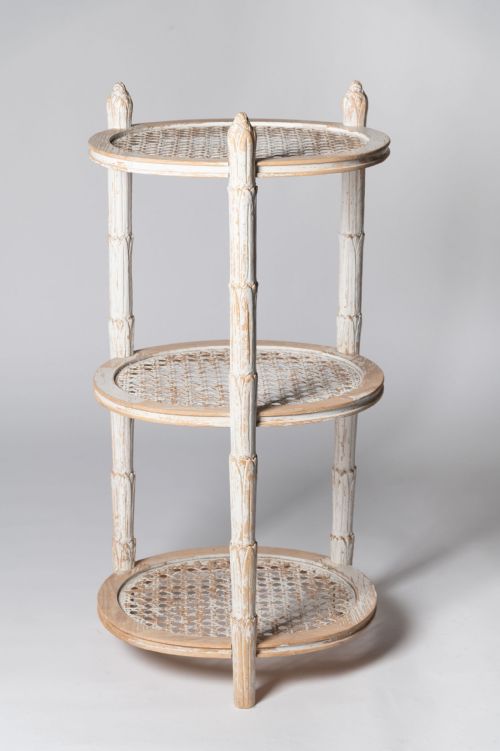
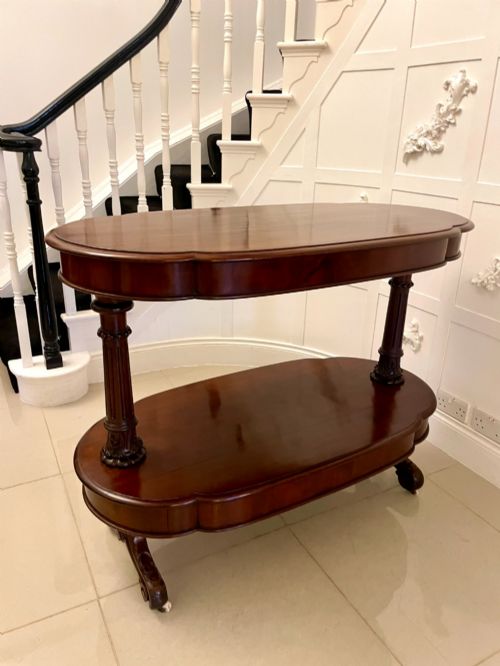
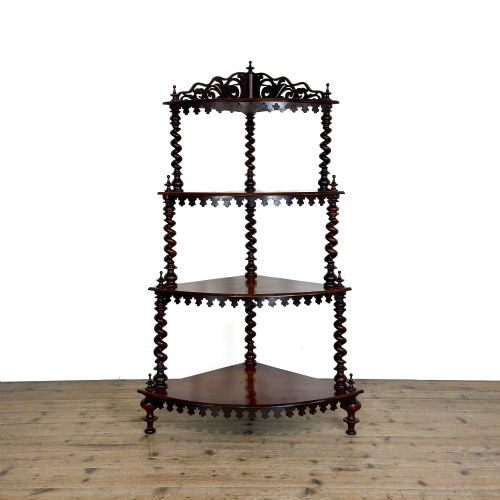
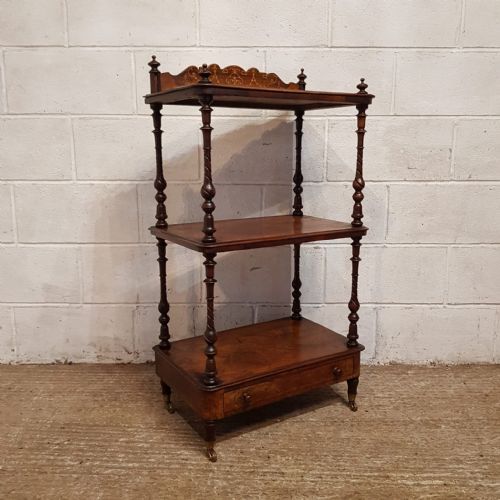
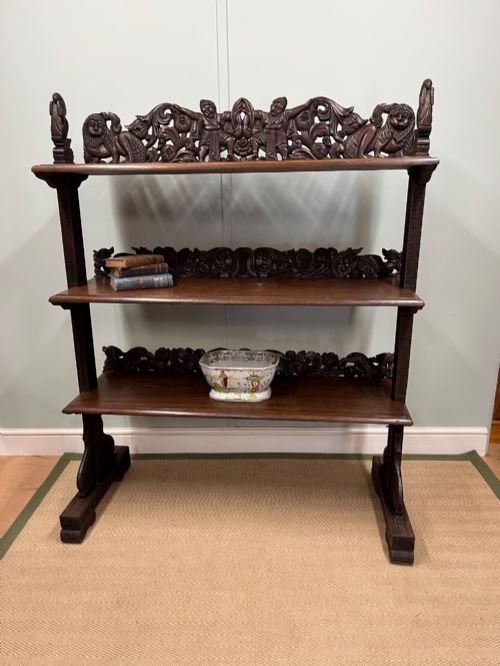
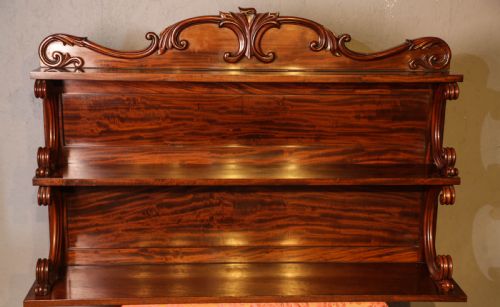
A carved wooden etagere provides tiered shelving for display, appearing across the inventory in forms that include corner whatnots, wall shelves, buffets and freestanding multi-tier stands. Most examples hail from the nineteenth century and the Victorian era, bringing structured vertical display to nineteenth-century domestic interiors.
The selection ranges from compact wall-hanging shelves to large exhibition-quality freestanding burr walnut and mahogany pieces fitted with mirrors and drawers. These tiered units served practical functions as bookcases, display cabinets and dumb waiters while adding ornamental carved detail to a room.
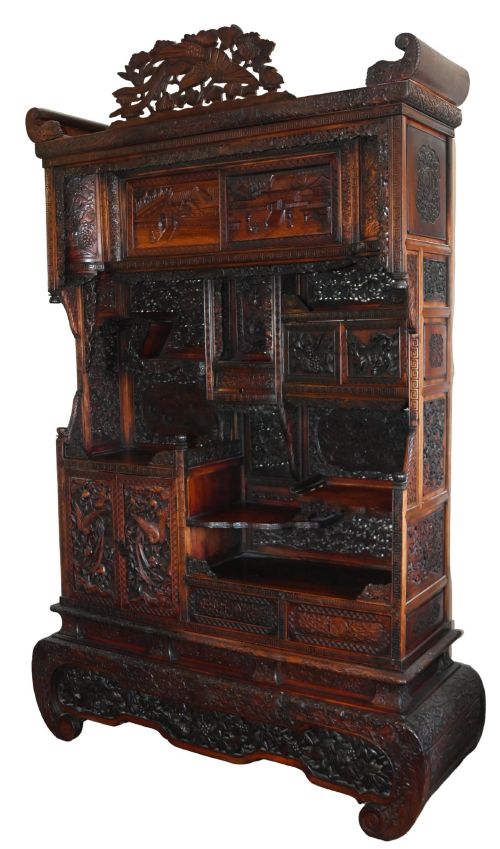
Alongside standard Victorian walnut and mahogany pieces, the evidence includes Anglo-Indian padauk shelves, Japanese Meiji Period shodana cabinets, French walnut etageres and Burmese teak buffets. This variety reflects global trade and diverse regional cabinetry traditions during the nineteenth and early twentieth centuries.
How they were made
Cabinetmakers constructed these pieces using dense hardwoods such as mahogany, walnut, burr walnut, padauk, teak and satin birch, often accented with turned legs and glass elements. The reliance on substantial timbers provided the structural integrity required to support multiple stacked shelves.
Makers integrated brass hardware, mirrors and single drawers into the framing, combining storage functionality with decorative display surfaces. Surface carving and turning techniques defined the styles, ranging from Victorian Gothic and Rococo revivals to French provincial and Anglo-Indian designs.
Carved Wooden Etagere Retail Price Guide 2026
Typical asking prices for carved wooden etagere among the pieces listed under this phrase on Sellingantiques today, from the lower quarter to the upper quarter. They describe what is for sale here now, not the wider market.
What varies in quality
Quality separates standard utility shelving from exhibition-grade pieces through the selection of figured timbers like burr walnut and the execution of detailed carving. Superior examples exhibit refined turning, integrated mirrors and well-fitted drawers.
The provenance and maker attribution also influence distinction, as seen in signed pieces from firms like Maple and Co alongside distinctive regional carving traditions from Burma, Japan and West Africa.
Maple and Co
The Carved Wooden Etagere Glossary
- Etagere
- A piece of furniture consisting of a set of open shelves for displaying small objects or ornaments. It originated in France and gained popularity during the nineteenth century.
- Whatnot
- A multi-shelved open cabinet used for displaying curiosities, books or ornaments. It frequently appears in corner configurations or as a freestanding tiered stand.
- Burr walnut
- Wood taken from a walnut tree growth featuring swirling grain patterns. Cabinetmakers prized this timber for high-end decorative veneering on Victorian furniture.
- Padauk
- A dense tropical hardwood displaying rich reddish-brown colouration. It appears in Anglo-Indian, Burmese and West African pieces within the evidence.
- Shodana
- A traditional Japanese tiered display cabinet featuring asymmetrical shelving. Examples appear from the Meiji Period.
Carved Wooden Etagere: Frequently Asked Questions
What is a wooden etagere used for?
These tiered pieces functioned primarily as open display units for ceramics, books and decorative objects in nineteenth-century homes. They provided vertical storage without closing off the room.
Today, they serve the same decorative purpose, fitting into corners or against walls to hold collections and display items.
How do I identify a Victorian whatnot?
Victorian whatnots typically feature three or more stacked wooden tiers supported by turned columns or carved uprights. Many incorporate mirrors, low drawers or fretwork galleries.
They rely heavily on timbers like mahogany and walnut, frequently showing nineteenth-century revival styles such as Gothic or Rococo.
What is the difference between an etagere and a buffet?
An etagere is built primarily for open display with multiple shelves, whereas a buffet often incorporates enclosed storage or serving surfaces. Both forms overlap in nineteenth-century multi-tier listings.
Buffets in the evidence tend to be substantial timber pieces designed for dining spaces, while etageres focus on vertical display.
How should I care for antique wood shelves?
Maintain these pieces by keeping them away from direct sunlight and sudden temperature shifts to protect the timber and veneer. Regular dusting with a dry cloth preserves the polished finish.
Avoid excessive moisture and commercial silicone polishes, opting instead for traditional beeswax suited to antique hardwoods.