

Antique Etagere Unit
An antique etagere unit brings tiered display and open shelving to a room, spanning forms from the Georgian period through the Victorian era.
Antique Etagere Unit
When you search for an antique etagere unit, you encounter tiered open furniture designed for display, commonly known across these listings as whatnots, etageres, display cabinets, and shelving units. These pieces range from compact three-tier stands to large multi-shelf architectural furniture.
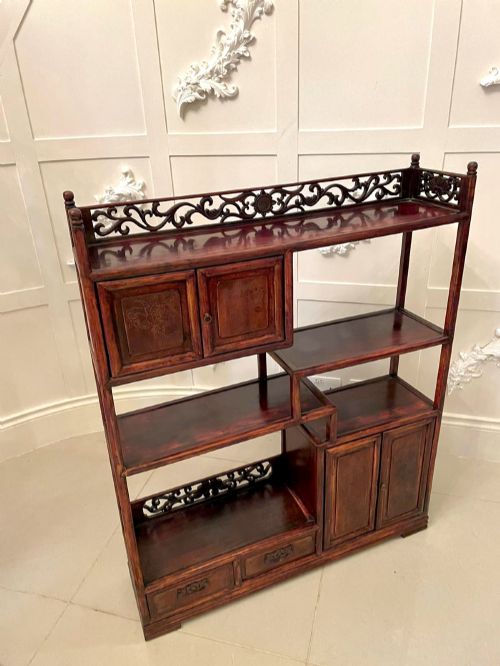
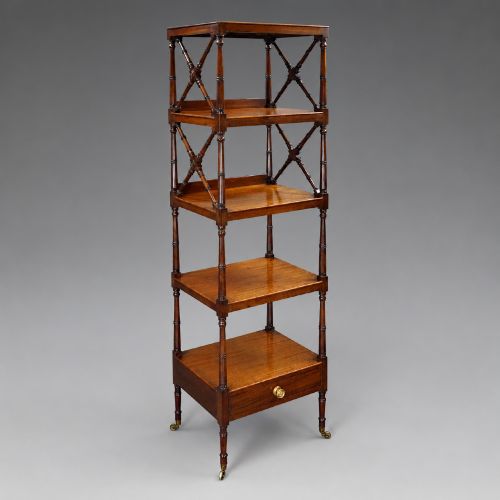
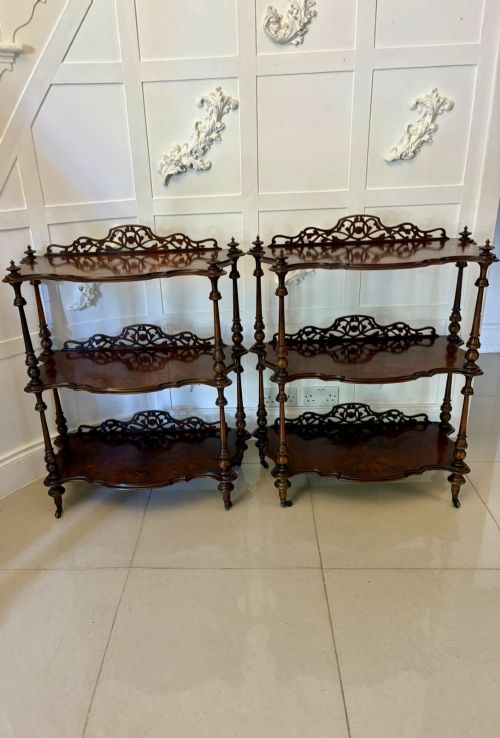
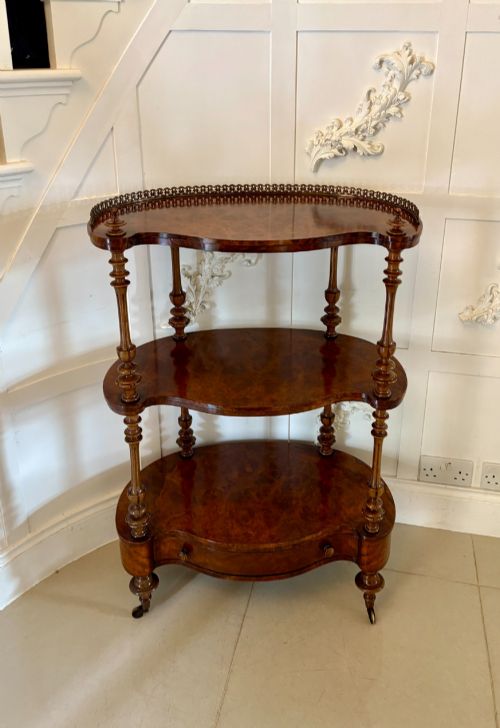
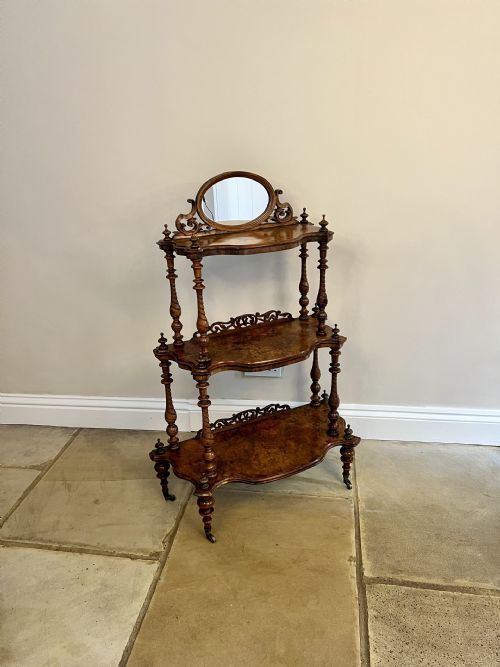
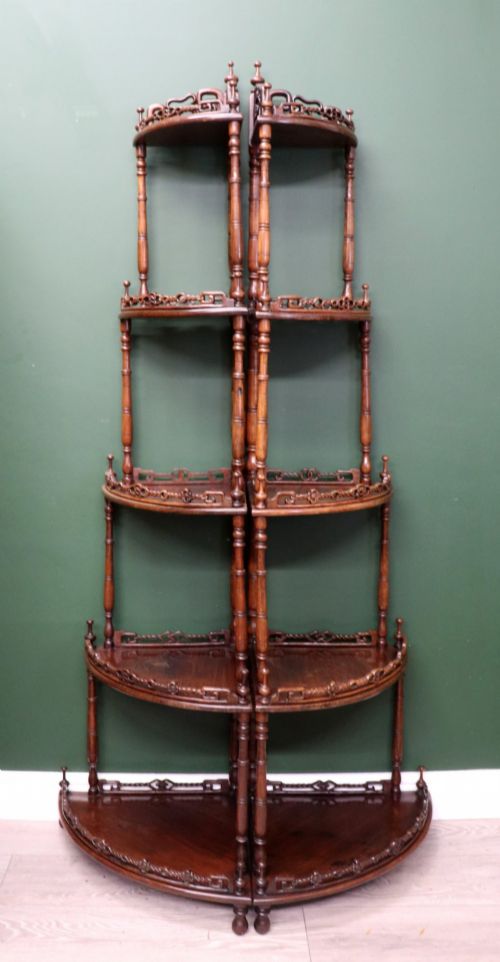
The version you are most likely to meet on this page is a Victorian burr walnut or mahogany multi-tier whatnot, alongside rosewood pieces from the nineteenth century and Regency examples. Forms extend to corner shelves, hanging units, and occasional display cabinets.
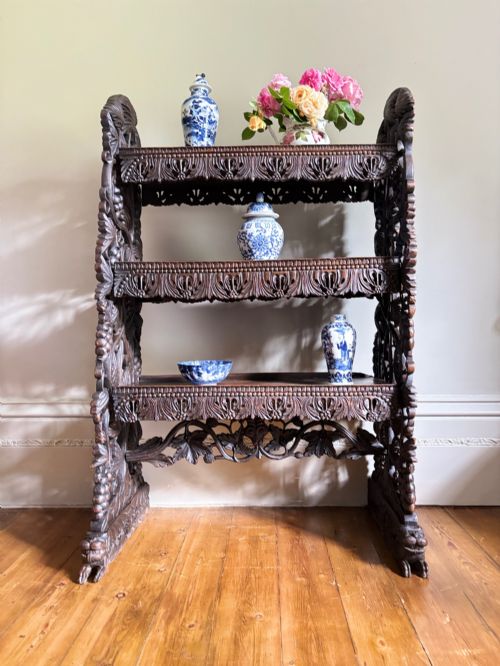
Makers and regional styles introduce further variety, with items spanning English cabinet-making, French walnut designs, Anglo-Indian padauk shelves, and Chinese hardwood or pagoda display cabinets.
How they were made
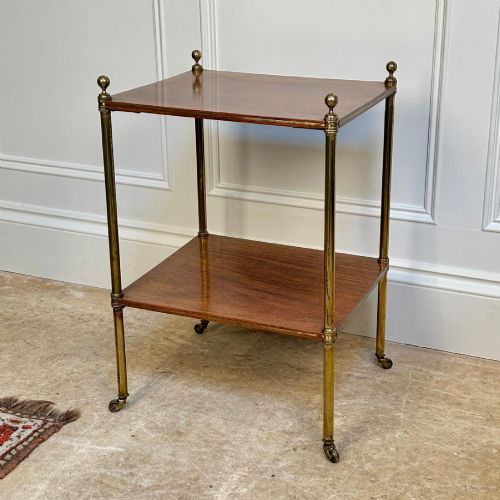
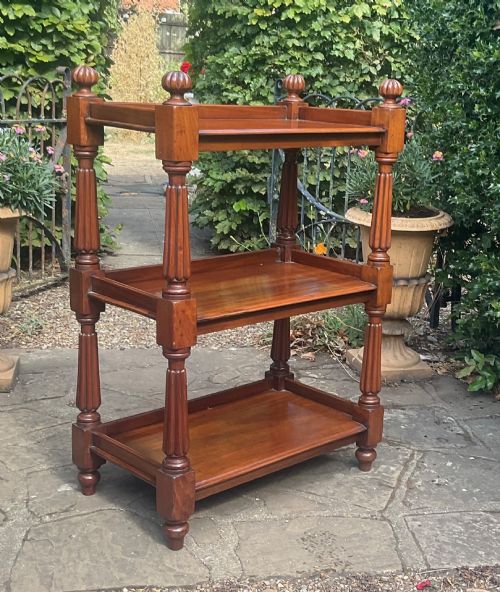
Cabinet-makers constructed these tiered units primarily in solid timbers and rich veneers, utilising mahogany, walnut, burr walnut, and rosewood. More specialised pieces incorporate bamboo, teak, padauk, birdseye maple, and wrought iron.
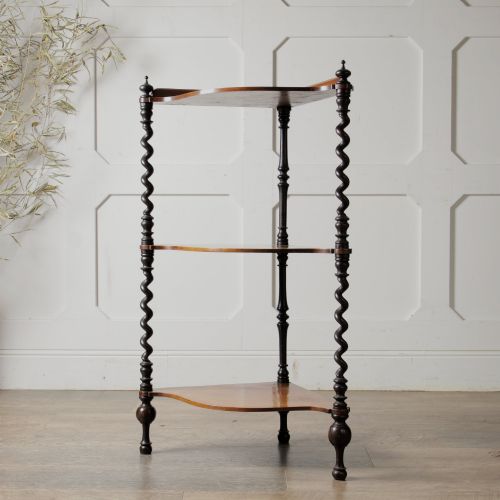
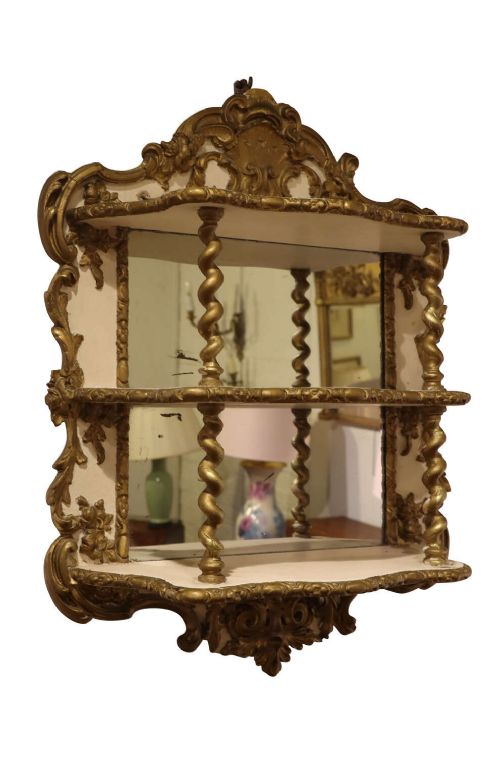
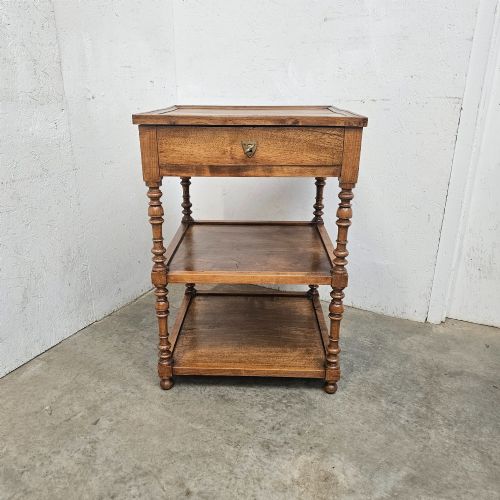
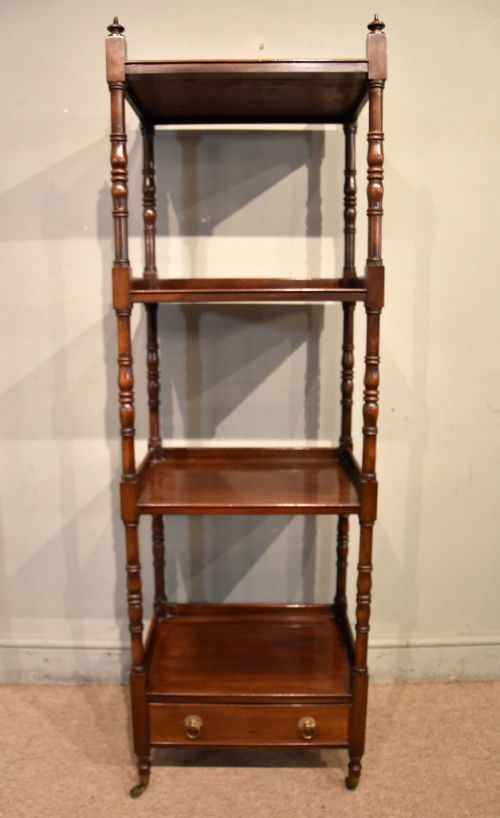
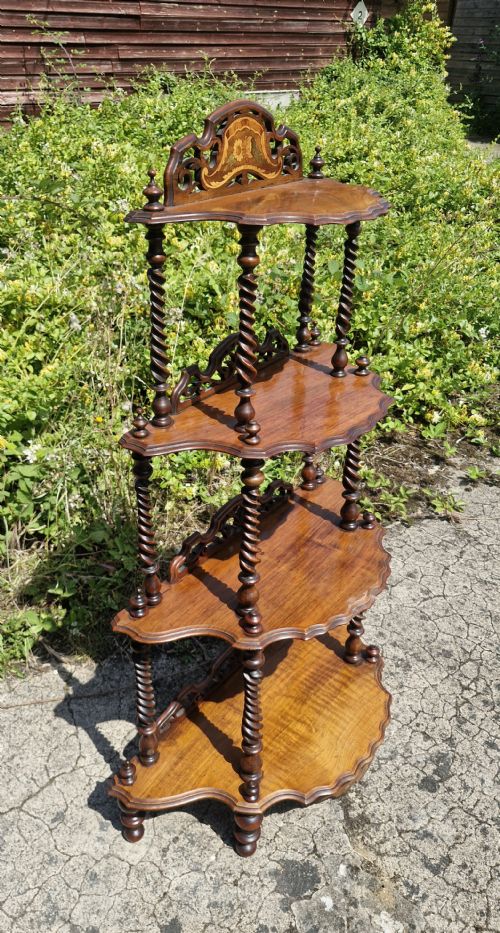
Structural details define the construction, such as barley twist supports, turned legs, and brass fittings. Joinery supports multi-tier shelves, corner configurations, and occasional cabinet sections.
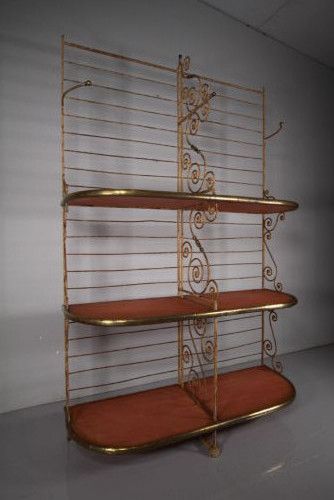
A towering six-tier ebonised dumb waiter rubs shoulders with delicate hanging shelves and Parisian baker's racks.
What varies in quality
The distinction between standard utility shelving and top-tier examples lies in timber selection and decorative finish, such as the depth of figure in burr walnut or the precision of turned barley twist uprights. Superior pieces display harmonious proportions across multiple tiers.
Maker attribution and regional craftsmanship elevate certain items, particularly pieces stamped by established firms like Edwards & Roberts or those featuring fine carving and specialised joinery.
Edwards & Roberts
The Antique Etagere Unit Glossary
- Whatnot
- A set of open shelves for displaying small objects, popular throughout the nineteenth century. These tier structures often feature turned supports and finials.
- Etagere
- A piece of furniture consisting of a set of open shelves for displaying ornaments. The term frequently applies to lighter, decorative French and English tier units.
- Burr walnut
- A prized timber veneer showing swirling, knotty grain patterns. Cabinet-makers utilised this decorative wood on prominent Victorian display surfaces.
- Padauk
- A dense tropical hardwood with a reddish hue. Anglo-Indian workshops utilised this material for substantial shelving and furniture.
- Barley twist
- A carved spiral column decorating furniture supports. This turning technique appears frequently on nineteenth-century uprights.
Antique Etagere Unit: Frequently Asked Questions
What is an etagere?
An etagere is a piece of furniture with open shelves designed for displaying ornaments, porcelain, and small decorative objects. These tiered structures provide vertical storage without enclosing the items.
Originating in France, the form became popular across Europe and Britain during the nineteenth century, appearing in various woods including mahogany, rosewood, and walnut.
How were whatnots used?
Whatnots served as multipurpose display and storage furniture in nineteenth-century sitting rooms and drawing rooms. Households placed books, tea wares, and decorative objects upon the tiers.
Their open construction allowed owners to showcase collections from all angles while keeping frequently used items accessible within the living space.
Where should I place corner shelves?
Corner shelves and corner whatnots fit directly into ninety-degree wall junctions to utilise overlooked room space. These units provide display surfaces without protruding into the main floor area.
They work effectively in smaller rooms or narrow hallways where standard rectangular furniture would restrict movement.
How do I identify a Victorian whatnot?
Victorian whatnots typically feature multiple open tiers supported by turned wooden columns, barley twist uprights, or delicate fretwork sides. Walnut, burr walnut, and mahogany are the predominant timbers from this period.
Many examples incorporate lower cabinet sections or serpentine shaping, reflecting the decorative preferences of mid to late nineteenth-century cabinet-makers.