



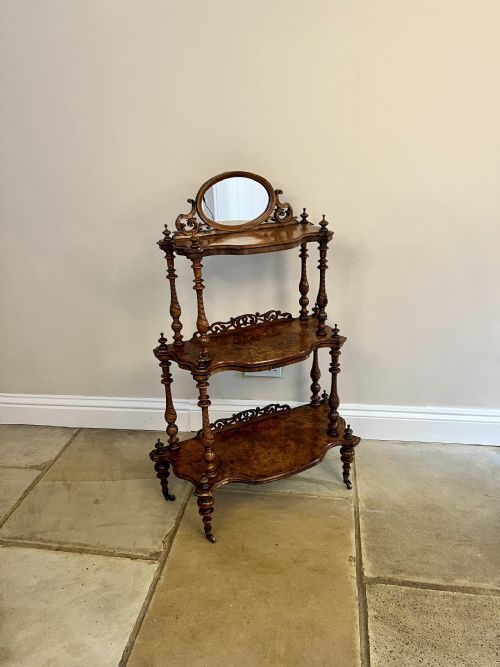
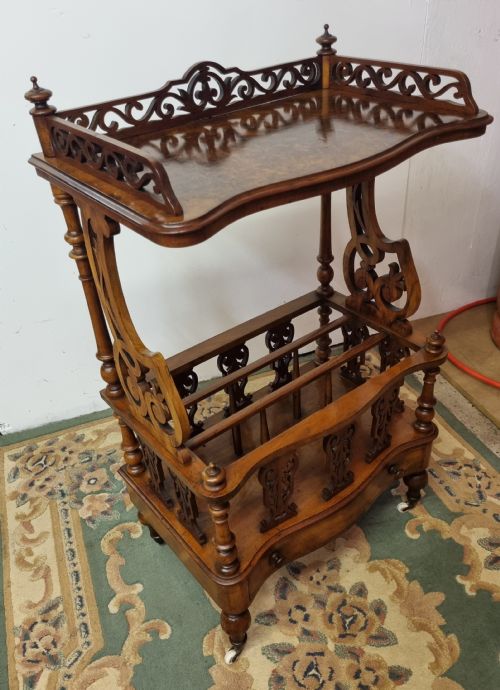
Victorian Carved Tier Shelf
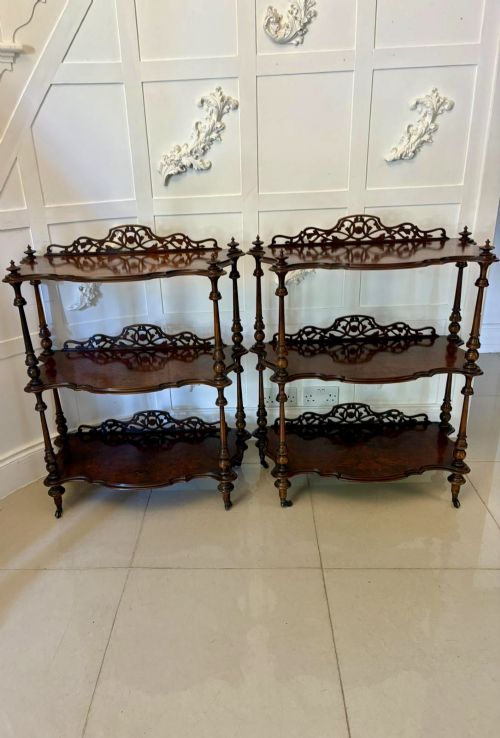
A victorian carved tier shelf brings architectural display space to a room, offering multiple platforms for books and ceramics.
Victorian Carved Tier Shelf
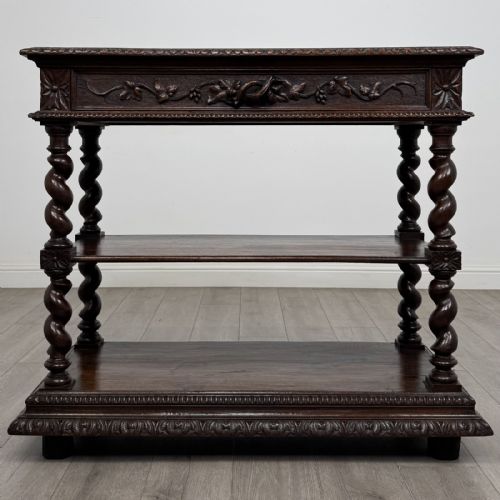
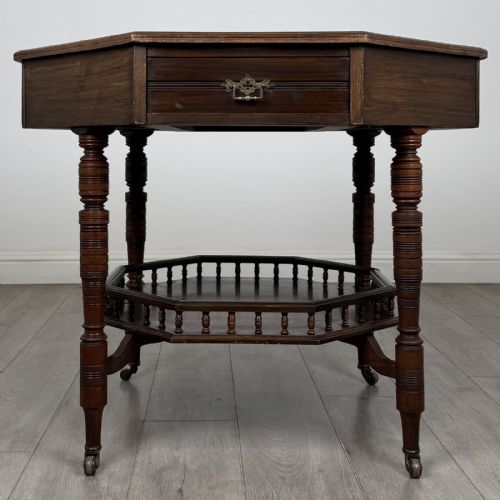
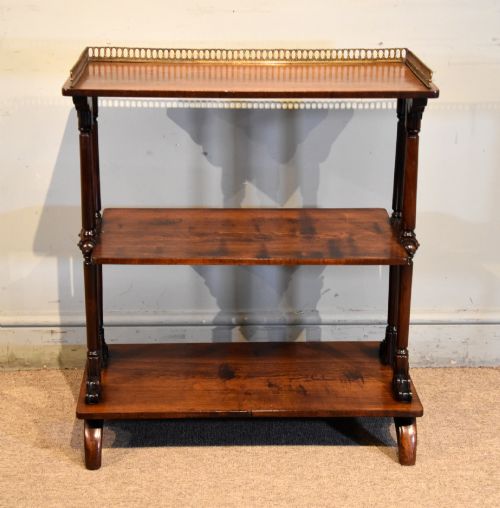
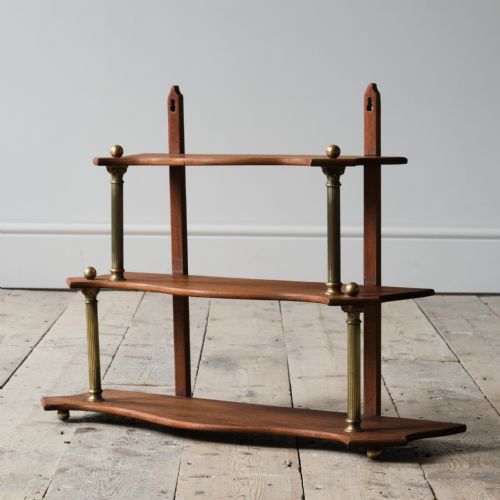
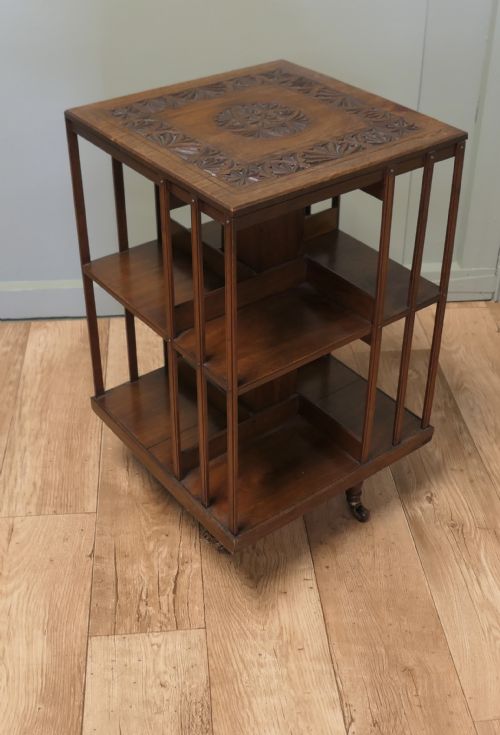
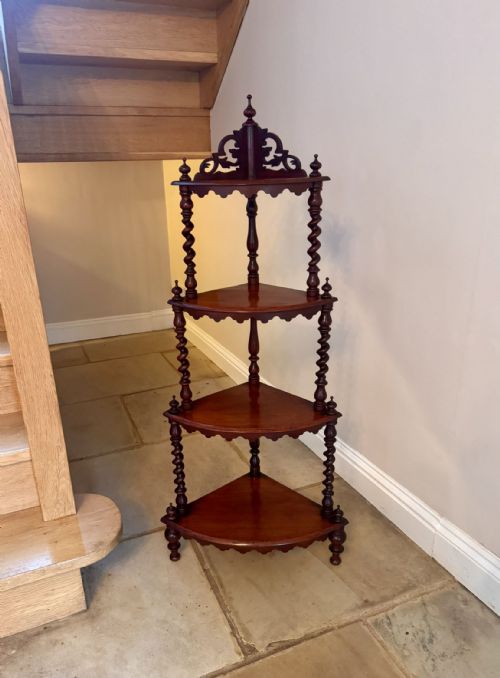
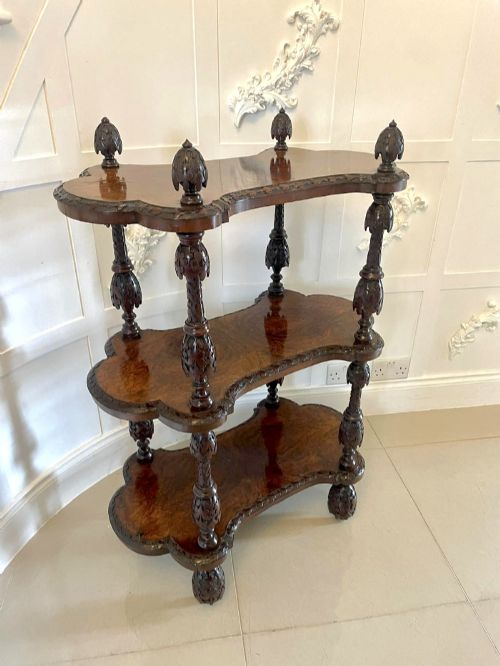
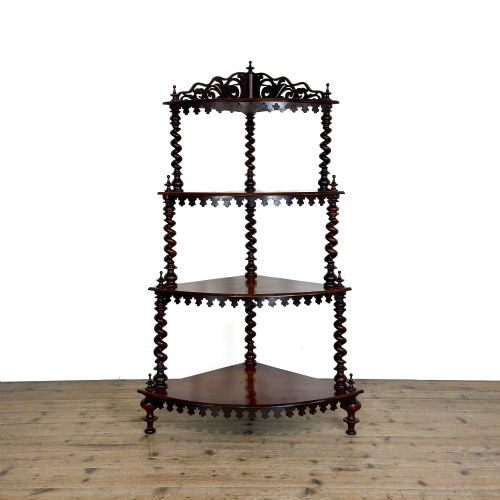
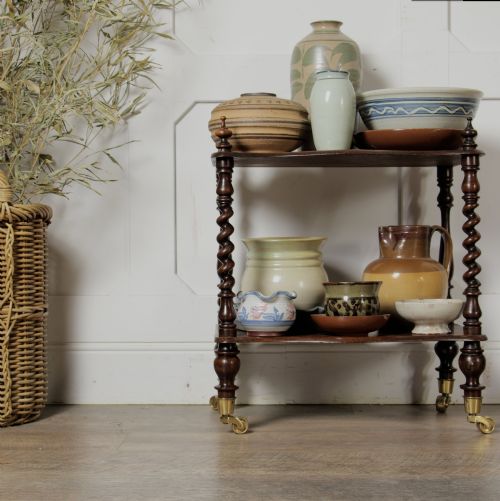
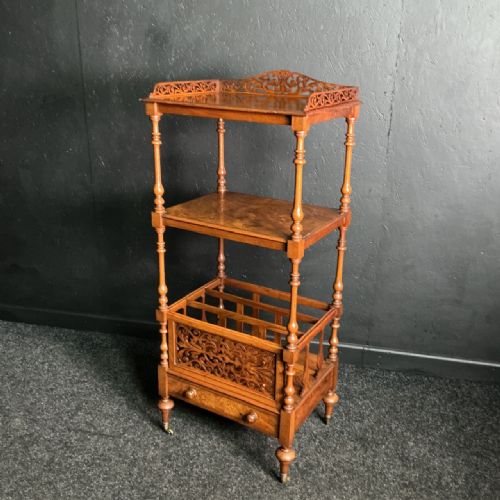
A victorian carved tier shelf takes the form of multi-tiered furniture designed for vertical display, most commonly encountered as freestanding whatnots, étagères, or wall-hanging units across this page. These pieces provide graduated tiers supported by turned columns, barley twists, or carved uprights, often incorporating lower cabinets, drawers, or mirrored backs.
The selections span distinct configurations, ranging from corner units designed to utilise awkward angles to expansive freestanding buffet shelves and portable bookshelves. Walnut, burr walnut, mahogany, and rosewood dominate the construction, reflecting the material preferences of the nineteenth century.
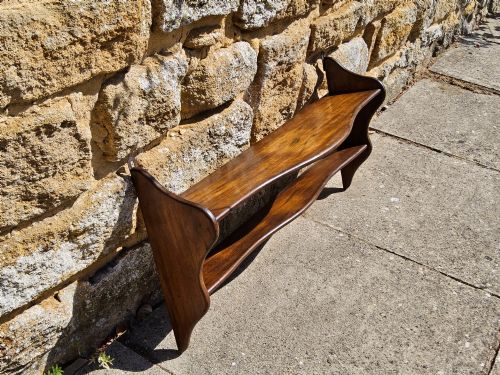
Makers and craftsmen utilised specific regional variations, producing Anglo-Indian padauk pieces alongside traditional English walnut and mahogany designs. Buyers encounter both compact wall-mounted shelving and large exhibition-grade freestanding pieces equipped with adjustable tiers.
How They Were Made
Cabinetmakers constructed these tier shelves using dense hardwoods such as mahogany, walnut, and rosewood, frequently applying burr walnut veneers to display intricate grain patterns. Structural uprights often utilised turned elements like barley twists or robust columns to support the weight of multiple wooden tiers.
Joinery techniques combined traditional mortise and tenon framing with fine fret-cut detailing, brass fittings, and inset mirrors. Individual tiers were secured to upright supports, sometimes incorporating fully adjustable mechanisms or lower drawer compartments constructed with dovetailed joints.
Victorian Carved Tier Shelf Retail Price Guide 2026
Typical asking prices for victorian carved tier shelf among the pieces listed under this phrase on Sellingantiques today, from the lower quarter to the upper quarter. They describe what is for sale here now, not the wider market.
Listings feature walnut, mahogany, rosewood, oak, and satin birch across Victorian, Regency, and Edwardian periods.
What Varies in Quality
The standard of timber selection and veneer matching defines the upper tier of these pieces, particularly where highly figured burr walnut or rosewood is employed. Superior examples demonstrate crispness in hand-carving and fretwork, whereas lesser pieces rely on simpler turned components and plain mahogany.
Structural complexity also separates standard domestic items from exhibition pieces, with refinements such as integrated mirrors, operable drawers, adjustable shelving tiers, and fine brass hardware indicating higher craftsmanship during manufacture.
Robert Strahan
The Victorian Carved Tier Shelf Glossary
- Whatnot
- A freestanding piece of furniture consisting of multiple shelves for displaying ornaments or books. Originating in the eighteenth century, it became a staple of Victorian interiors.
- Etagere
- A set of open shelves for displaying small objects, often highly decorative and freestanding. The term originates from French furniture design.
- Burr Walnut
- Wood taken from a walnut tree growth containing swirling, knotty grain patterns. It was sliced into thin veneers for high-status Victorian cabinetry.
- Barley Twist
- A carved wooden support column resembling a twisted rope. This turned detail appears frequently on nineteenth-century furniture legs and uprights.
- Canterbury
- A low stand with partitioned sections originally designed for holding sheet music or books. Some Victorian variants combine this form with lower tier shelving.
Victorian Carved Tier Shelf: Frequently Asked Questions
What is a whatnot shelf?
A whatnot is a multi-tiered freestanding shelving unit designed to display ornaments, ceramics, and books. These pieces use vertical space efficiently while adding architectural interest to a room.
Victorian makers produced them in various woods, including walnut and mahogany, often featuring turned supports and decorative fretwork.
Where should I place a tier shelf?
Tiered shelves suit corners, hallways, and living rooms where vertical display space is needed without a large footprint. Corner variants fit snugly into unused angles.
Wall-hanging versions work well above sideboards or desks, whereas freestanding étagères anchor open wall spaces.
How do I identify a Victorian shelf?
Victorian tier shelves typically feature dense hardwoods like walnut, rosewood, or mahogany, often combined with burr walnut veneers. Details like barley twist columns and carved fretwork point to nineteenth-century production methods.
Many pieces also incorporate mirrors, small drawers, or adjustable tier mechanisms characteristic of the period.
Are these shelves sturdy enough for heavy books?
Most tier shelves were built for displaying ornaments, ceramics, and lighter volumes rather than heavy reference libraries. Freestanding whatnots offer solid timber construction but have weight limits per tier.
Wall-hanging versions require secure fixing to wall studs to safely support their load.