




Antique Corner Shelving Unit
An antique corner shelving unit turns neglected angles into display space, offering tiered timber boards or enclosed cupboards designed to fit snugly against walls.
Antique Corner Shelving Unit
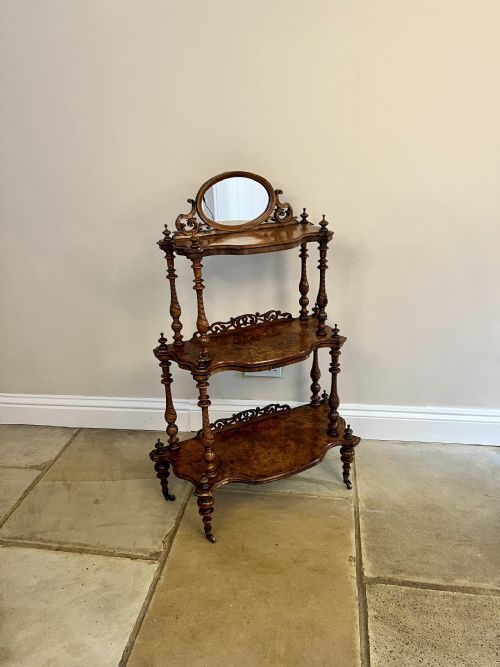
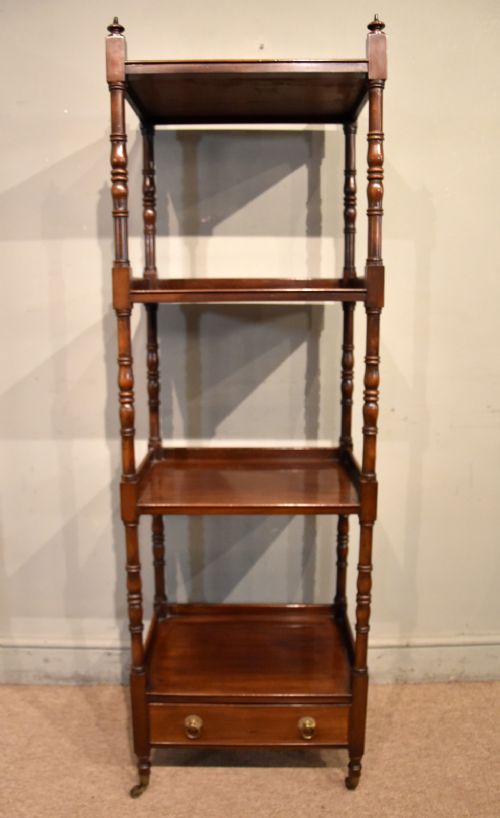
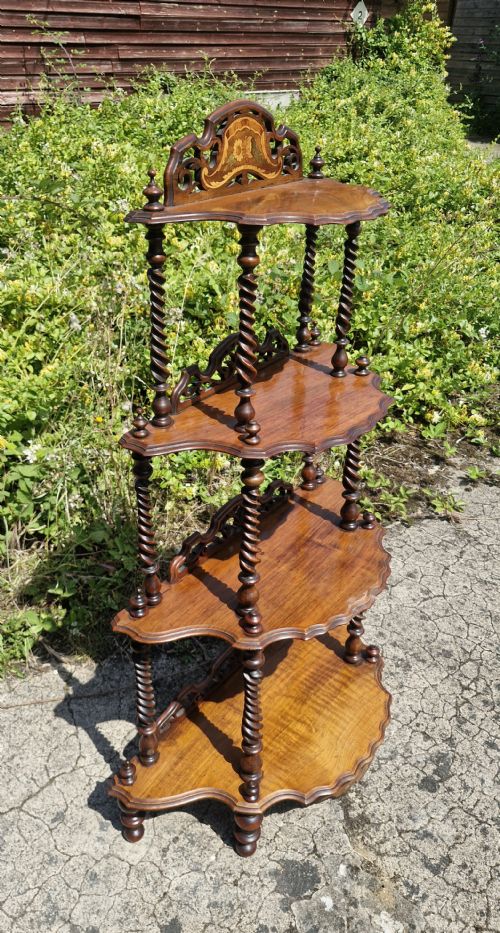
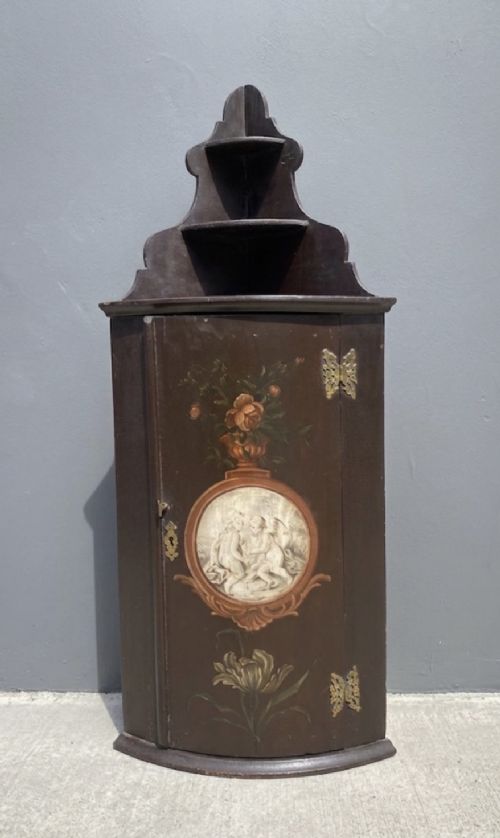
An antique corner shelving unit spans multiple eras, appearing as Georgian cupboards with upper shelves, multi-tiered Victorian whatnots, and campaign-style cabinets. These pieces utilise awkward architectural junctions to hold books, ceramics, and ornaments without consuming floor area.
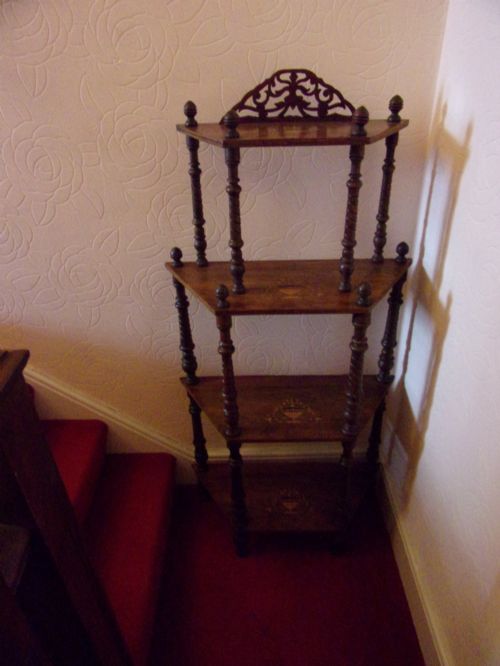
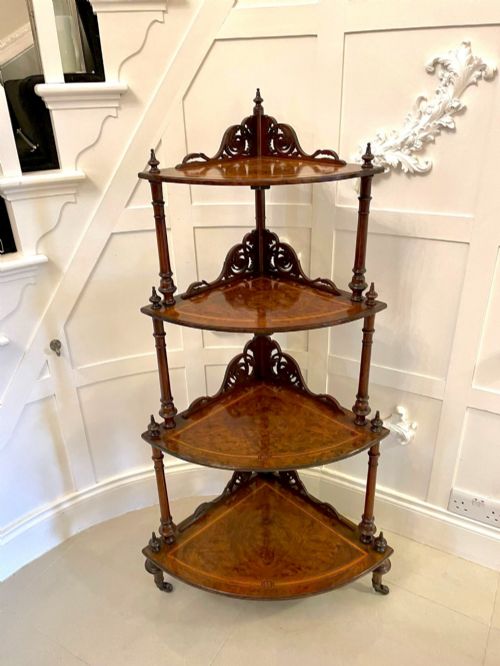
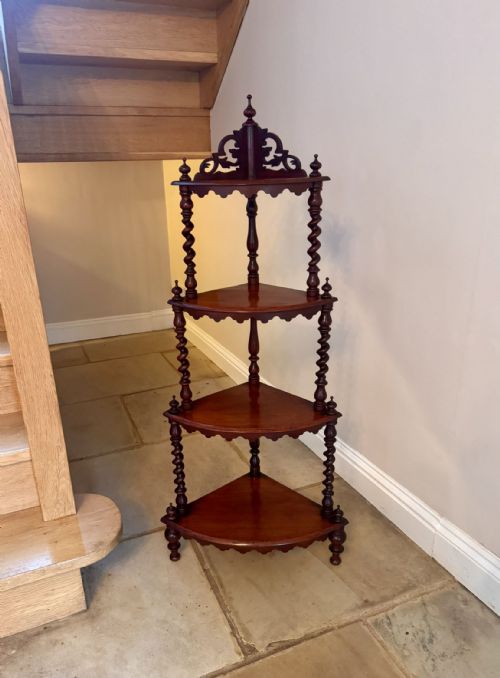
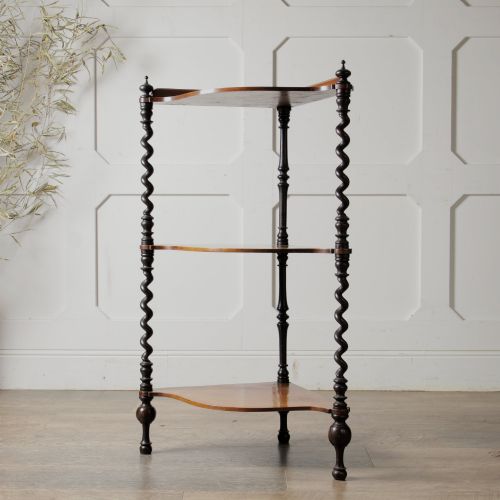
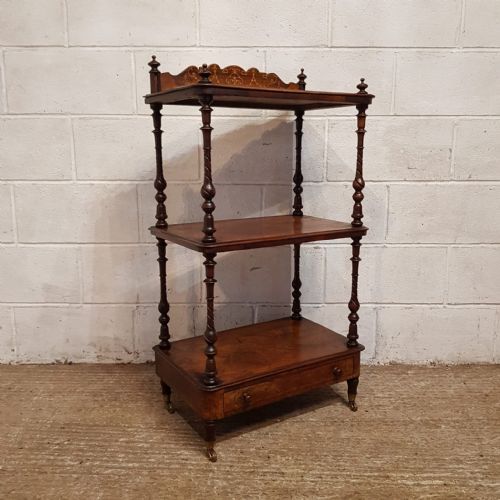
The version most commonly met on this page is the Victorian walnut or mahogany whatnot, often featuring three to six tiers supported by turned columns or barley twist uprights. Alongside these, 18th-century painted cupboards and inlaid Sorrento olive wood shelves appear.
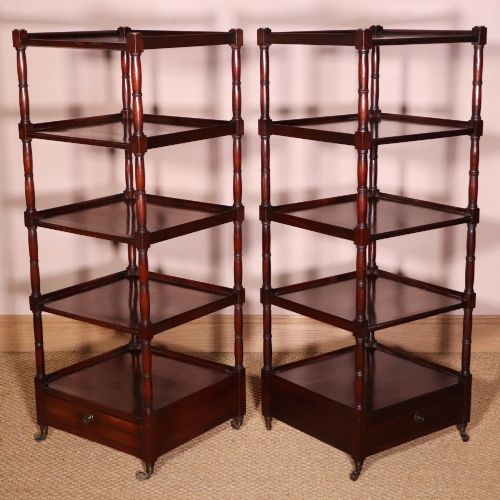
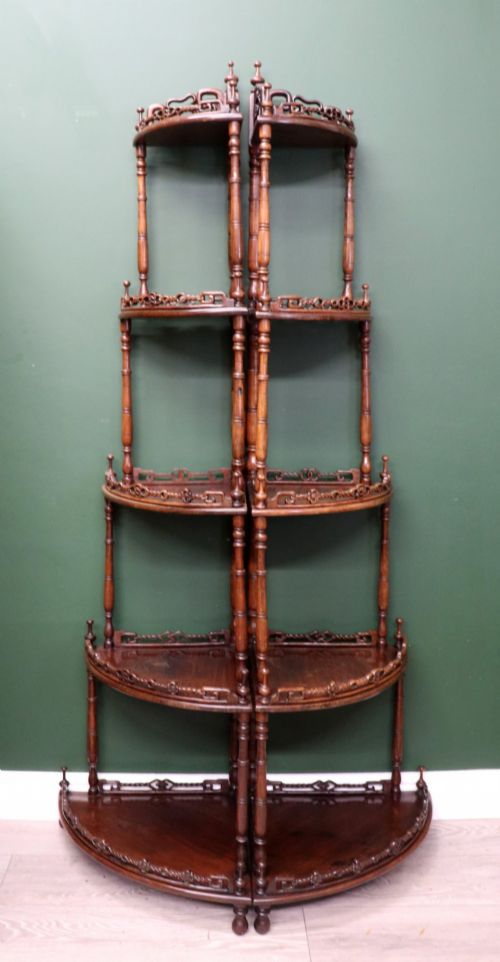
Builders constructed these pieces as standing etageres, hanging wall units, and demi-lune display consoles designed specifically for room angles. Their utility remains practical today for organising smaller spaces.
Materials and construction
Cabinet makers relied heavily on timber species such as mahogany, walnut, burr walnut, and rosewood, frequently incorporating marquetry inlay, brass mounts, and painted finishes. These dense hardwoods provided the structural strength required to support stacked shelves without sagging.
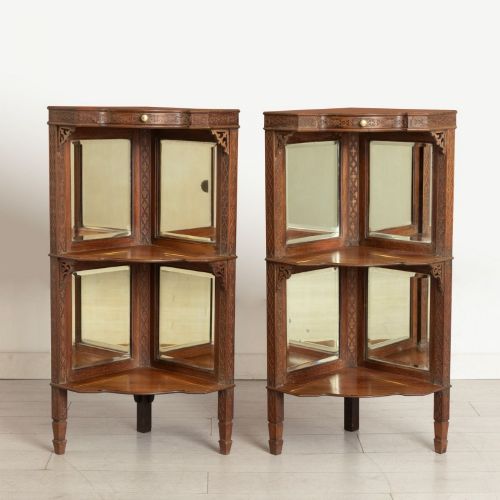
Joinery techniques included dovetailed joints for enclosed cupboard carcases and secure peg or screw fixings for tiered uprights and barley twist columns. Many pieces integrated mirrored backs or delicate turned galleries to retain items safely on upper ledges.
Antique Corner Shelving Unit Retail Price Guide 2026
Typical asking prices for corner shelving unit among the pieces listed under this phrase on Sellingantiques today, from the lower quarter to the upper quarter. They describe what is for sale here now, not the wider market.
Recorded periods span the 18th century, Georgian era, 19th century, Victorian period, Edwardian era, and the 20th century.
Distinctions in manufacture
The standard of timber selection separates simpler utility items from finer parlour pieces, particularly seen in the choice of figured burr walnut veneers or dense, rich mahogany grains. Better examples display careful grain matching across tiers and doors.
Refinement in turning work and joinery detail dictates overall quality, from plain uprights to hollow barley twist columns and intricate marquetry or brass inlay. Superior workshops delivered crisp carving and robust structural integrity that endured centuries of use.
Edwards & Roberts·Goodhall, Lamb and Heighway of Manchester
The Antique Corner Shelving Unit Glossary
- Whatnot
- A piece of furniture consisting of several open shelves for displaying small objects. They became particularly popular during the Victorian period.
- Etagere
- A piece of furniture with a set of open shelves for displaying ornaments. The term originates from French cabinet making.
- Barley twist
- A type of turned wooden column resembling the spiral shape of barley sugar. It is frequently seen on 19th-century supports.
- Demi-lune
- Half-moon shape, used to describe furniture with a semicircular front and flat back designed to fit against a wall.
- Marquetry
- Decorative veneer work arranged in intricate patterns using various woods. Craftsmen applied these designs to cabinet doors and tabletops.
Antique Corner Shelving Unit: Frequently Asked Questions
What is an antique corner shelving unit?
An antique corner shelving unit is a piece of furniture built to fit into the ninety-degree angle of a room, providing open tiers or enclosed cupboards for storage and display.
These pieces range from tall multi-tiered Victorian whatnots to earlier Georgian hanging cupboards, all designed to maximise vertical space in domestic interiors.
How were these corner units used historically?
Historically, households utilised these shelves in parlours, drawing rooms, and dining spaces to display porcelain, books, and decorative ornaments.
Enclosed lower cupboards also served to store household goods out of sight, while open tiers kept frequently accessed items close to hand.
How do I place one in a modern room?
Placing an antique corner unit effectively involves identifying an empty room angle that lacks function, allowing the furniture to anchor the space without blocking pathways.
They work well in living rooms, hallways, and studies where floor space is limited but surface area for display is needed.