


Walnut Three Tier Stand
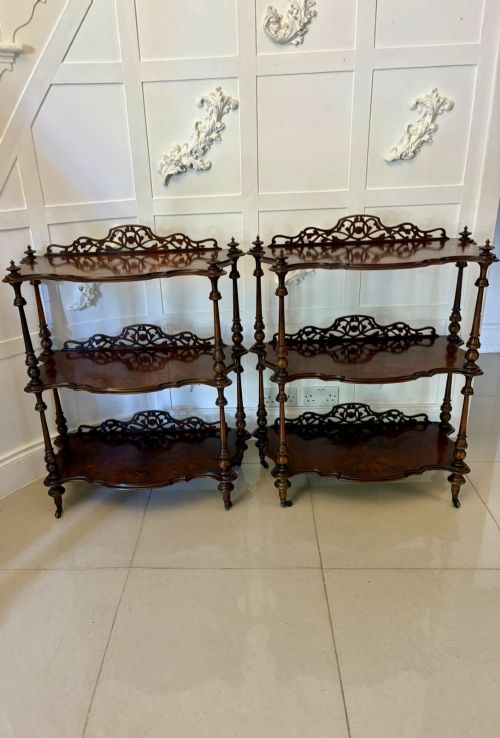
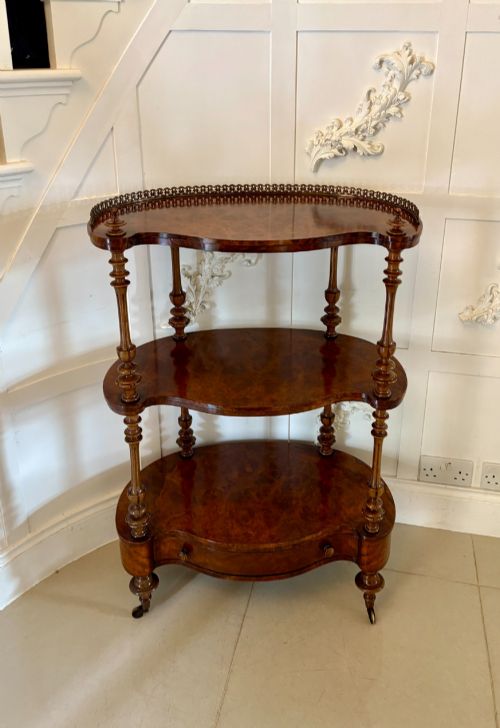
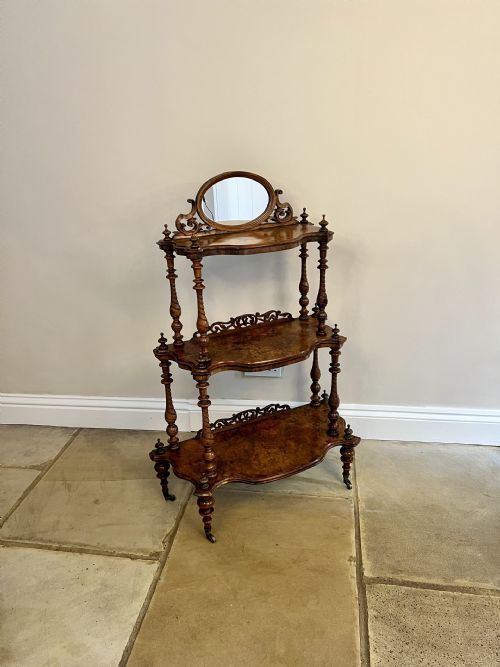
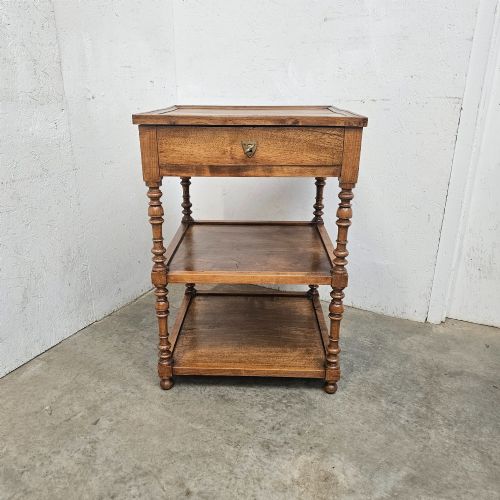
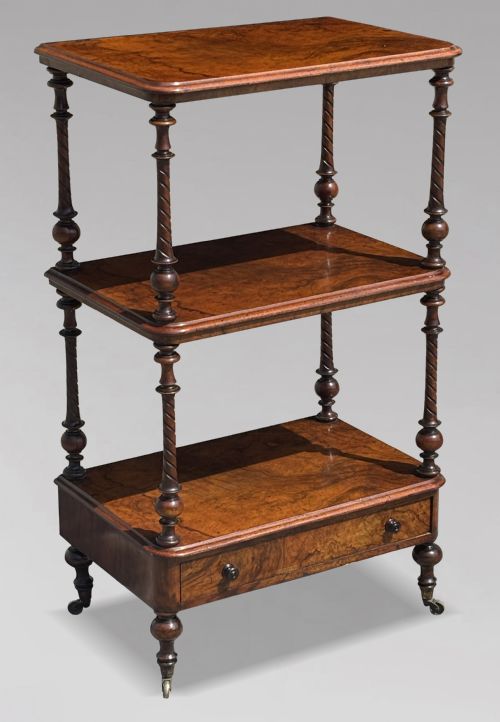
A walnut three tier stand provides tiered display space in rich timber, combining vertical utility with period decorative character.
Walnut Three Tier Stand
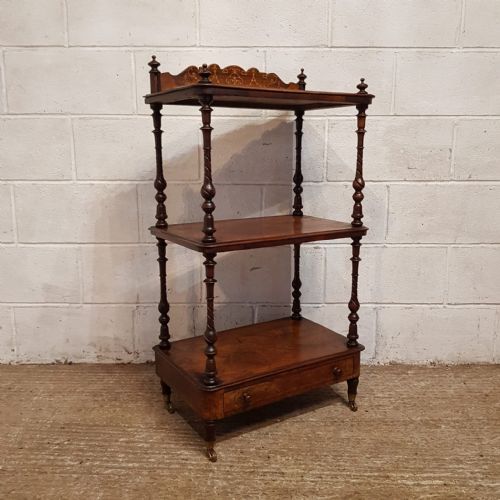
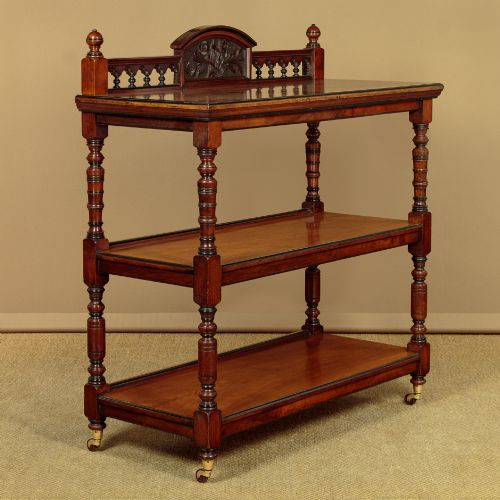
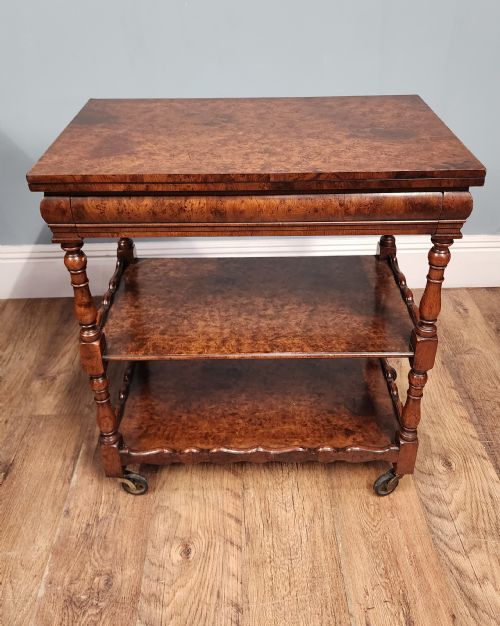
A walnut three tier stand appears primarily as a Victorian whatnot, etagere, or multi-tiered display table dating from the nineteenth and early twentieth centuries.
Makers shaped these pieces as freestanding open shelves, corner units, or folding stands intended for books, ceramics, and ornaments.
The evidence shows English Victorian examples alongside French Napoleon III, Louis XV style, and later Art Deco interpretations.
Materials and Construction
Craftsmen utilised solid walnut and burr walnut veneer, frequently enhancing surfaces with marquetry inlay and ebonised wood details.
Construction incorporated turned legs, brass mounts, ormolu, and ceramic elements to support the tiered wooden platforms.
Listings feature walnut three tier stand examples spanning the Victorian, Edwardian, and Art Deco periods, including French and English origins.
Assessing the Pieces
Quality rests in the selection of burr walnut veneer figures and the precision of the marquetry inlay across the multiple tiers.
Fine examples display careful joinery in turned supports, integrated drawers, and substantial brass mounts rather than simpler utilitarian assembly.
Gillows·Hille·Michel Dufet
The Walnut Three Tier Stand Glossary
- Whatnot
- An open piece of furniture with shelves for displaying ornaments or books, popular throughout the Victorian period.
- Etagere
- A set of open shelves for displaying small objects, frequently of French origin and incorporating decorative mounts.
- Burr Walnut
- Timber taken from a tree growth that yields intricate, swirling grain patterns highly prized for cabinet veneers.
- Marquetry
- Decorative inlay work using various wood veneers to create pictorial patterns on furniture surfaces.
- Dumb Waiter
- A tiered serving stand or small table used in dining rooms for holding dishes or tea.
Walnut Three Tier Stand: Frequently Asked Questions
What is a walnut three tier stand used for?
These tiered stands served as display surfaces for decorative objects, books, and ceramics in nineteenth-century drawing rooms.
Today they function as practical side tables or display units in living spaces.
How do I identify a Victorian whatnot?
Victorian examples typically feature three or more graduated shelves supported by turned columns and sometimes include a small drawer.
Look for rich walnut timber or burr walnut veneer alongside period stylistic details like Aesthetic Movement or rococo revival influences.
Are French and English stands different?
French etageres often incorporate ormolu mounts, marquetry inlay, and refined serpentine shapes associated with Louis XV or Napoleon III styles.
English pieces tend to focus on sturdy walnut construction, turned uprights, and functional tiered shelving.
Where should I place an etagere?
An open etagere suits corners or wall spaces where multiple tiers can hold books or collections without crowding a room.
Freestanding models also work effectively behind seating or beside a fireplace.