


Walnut Dining Room Server
A walnut dining room server brings gravitas and rich timber grain to an interior, acting as a practical surface for serving food and storing silver.
Walnut Dining Room Server
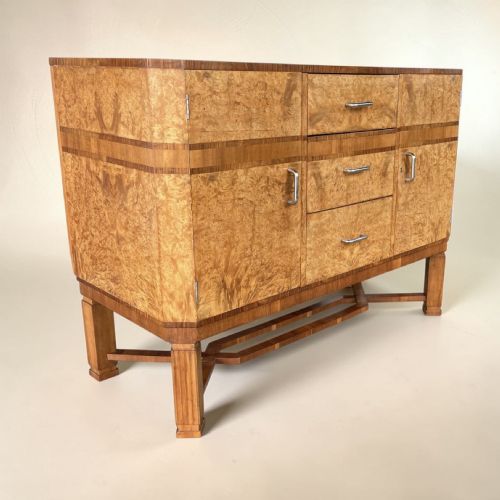
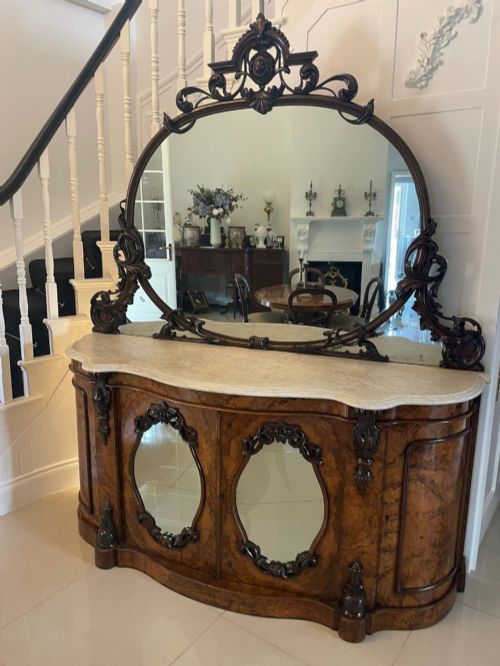
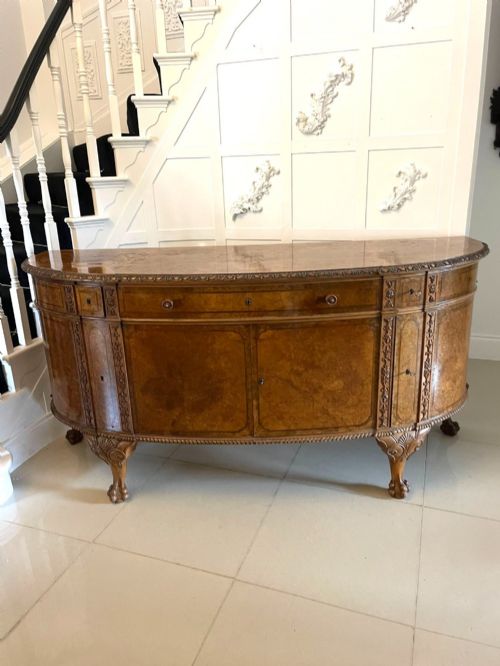
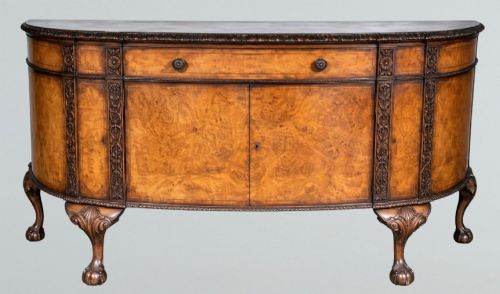
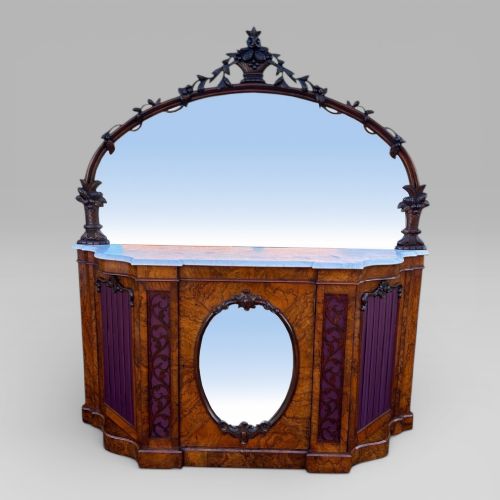
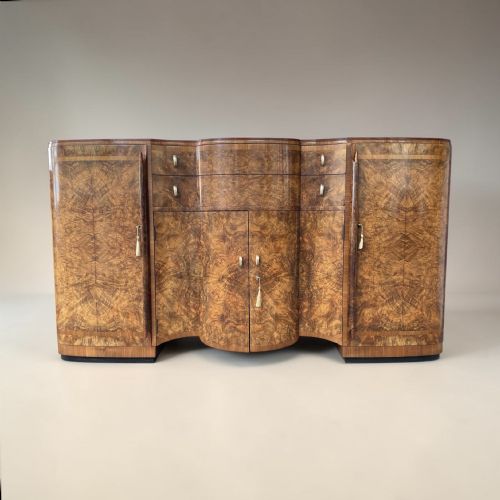
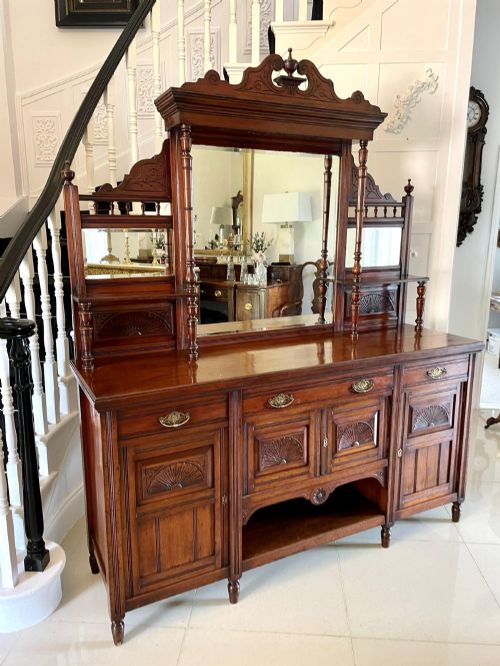
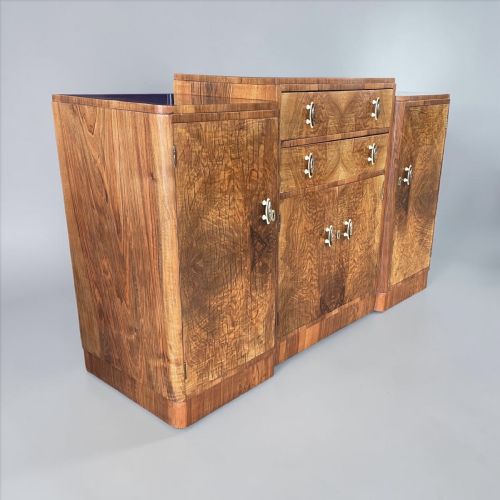
When searching for a walnut dining room server, buyers encounter a diverse selection of large storage furniture designed for formal entertaining. The items listed on this page span several decades and stylistic revivals, ranging from mid-nineteenth-century Victorian pieces to sleek twentieth-century Art Deco cabinets.
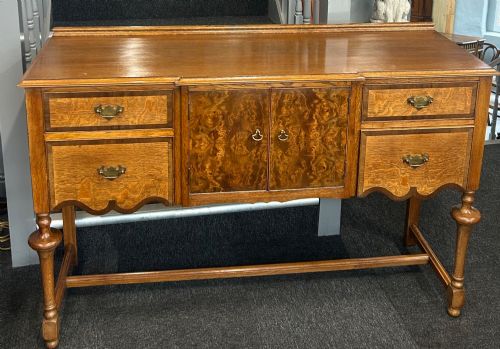
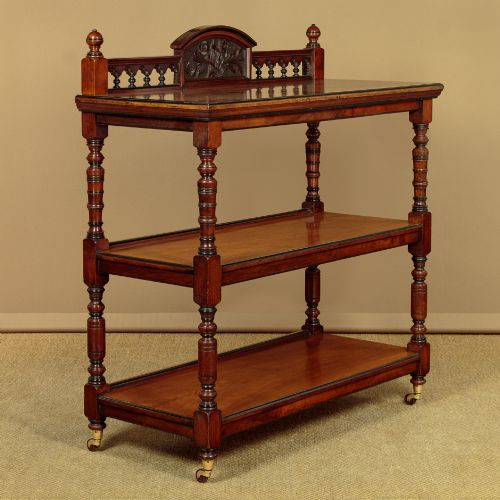
The most common forms include heavy sideboard credenzas, low servers, and tiered dumb waiters built from figured timbers. Makers from the Victorian period through the nineteen-thirties utilised rich veneers and solid cuts to anchor the dining room.
How they were made
Cabinet makers relied on solid walnut and decorative burr walnut veneers applied over secondary hardwoods to create striking figured surfaces on doors and drawer fronts. Carved ornamentation, marquetry inlays, and applied mouldings define the structural decoration across both nineteenth-century revival pieces and later modern designs.
Functional details include fitted interiors for cutlery, marble tops on select Victorian server units, and glass panelling on cocktail cabinets. Brass handles, hinges, and metal mounts provide structural contrast to the dark timber tones.
Listings feature walnut furniture spanning from the Victorian era through the Art Deco period, incorporating marble tops, brass hardware, and glass elements.
What varies in quality
The calibre of a walnut dining room server rests heavily on the selection and matching of the timber veneer. Pieces featuring symmetrical burr patterns across large drawer fronts or curved doors generally represent finer craftsmanship than those with plain, unfigured surfaces.
Depth of carving and the integration of secondary elements like inset marble slabs or fitted cutlery drawers separate standard production items from master workshops. Joinery execution, particularly on curved bow-front structures and heavy mirror backs, dictates the lasting integrity of the piece.
Maurice Adams·Epstein·Hamptons of Pall Mall London·Harry And Lou Epstein
The Walnut Dining Room Server Glossary
- Burr walnut
- A prized wood grain obtained from tree growths that produce intricate, swirling patterns. This figured veneer appears frequently on high-end Art Deco and Victorian serving cabinets.
- Credenza
- A grand sideboard or buffet often featuring a mirrored back and enclosed cupboards. These pieces provide substantial storage for dining room silver and glassware.
- Dumb waiter
- A tiered serving table on wheels or fixed legs used to hold dishes beside a dining table. Examples range from simple nineteenth-century three-tier stands to metamorphic designs.
- Marquetry
- The art of applying small pieces of veneer to form decorative patterns and pictures. It surfaces on early twentieth-century cabinet doors to add visual texture.
Walnut Dining Room Server: Frequently Asked Questions
What is a walnut dining room server used for?
These servers provide a dedicated surface for plating dishes during meals and offer internal storage for cutlery, linen, and glassware. They act as both practical furniture and focal points within formal dining spaces.
Larger variations include cupboards and drawers that keep dining accessories organised close to the table. Some configurations incorporate glass displays or specialised serving trays.
How do I identify an Art Deco server?
Art Deco servers emphasise streamlined silhouettes, curved bow fronts, and symmetrical burr walnut veneers without traditional carved ornamentation. They typically date from the nineteen-twenties and nineteen-thirties.
These cabinets often feature minimal hardware, letting the natural grain of the timber dominate the exterior design. Many include specialised compartments for modern cocktail storage.
What is the difference between a sideboard and a credenza?
A sideboard generally refers to a low storage unit with cabinets and drawers, while a traditional credenza often includes a decorative carved mirror back and enclosed side compartments. Both serve similar dining room functions.
Victorian iterations frequently blur these lines by incorporating high mirrored backs onto heavy wooden server bases. The terminology often depends on regional preferences and the specific era of manufacture.
How do I care for walnut veneer surfaces?
Maintain walnut furniture by keeping it away from direct sunlight and sudden temperature shifts that can dry out the timber. Regular dusting with a soft, dry cloth preserves the polished finish.
Avoid using harsh chemical polishes or placing wet items directly on the wood. A light application of appropriate wax helps maintain the lustre of antique veneers over time.