



Victorian Tier Trolley
A victorian tier trolley brings tiered timber and smooth mobility together, serving drinks and books across the room with ease.
Victorian Tier Trolley
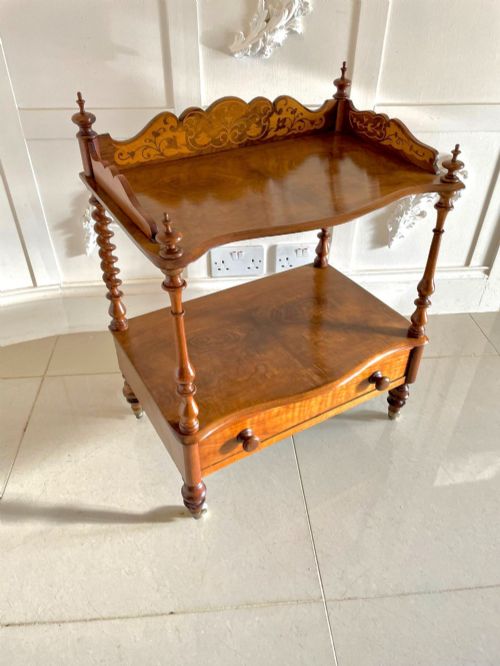
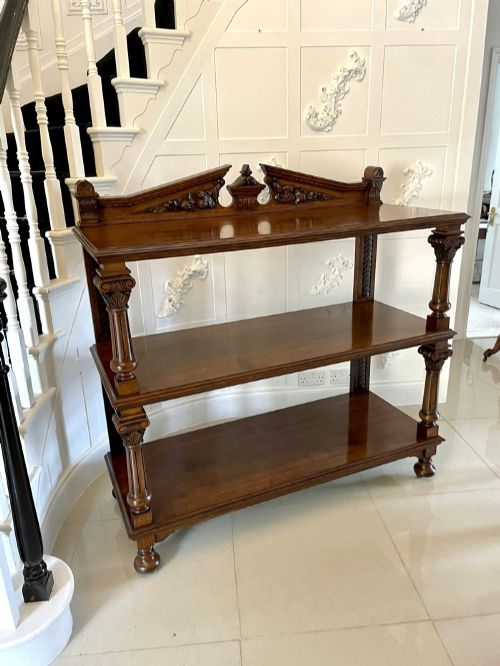
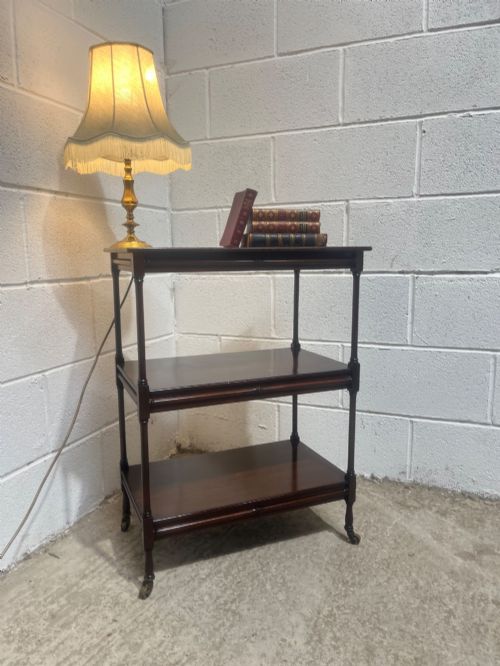
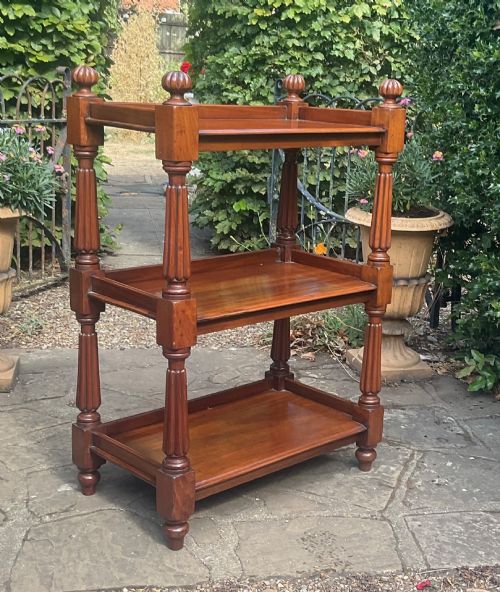
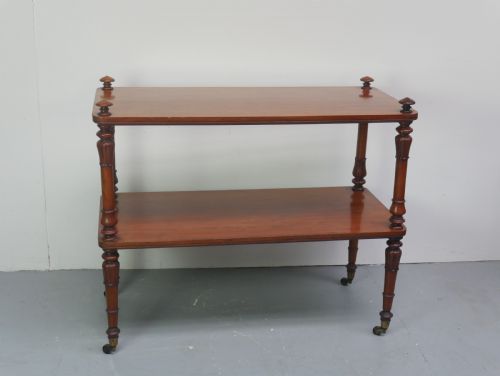
A victorian tier trolley takes many forms in wood, appearing as a dumb waiter, buffet, etagere or whatnot with multiple tiers for serving or display. These pieces served practical domestic duties in dining rooms and libraries, designed to hold food, books or drinks within easy reach.
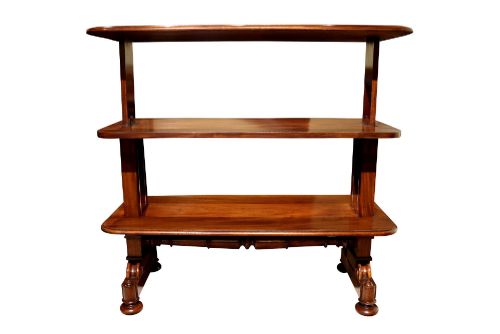
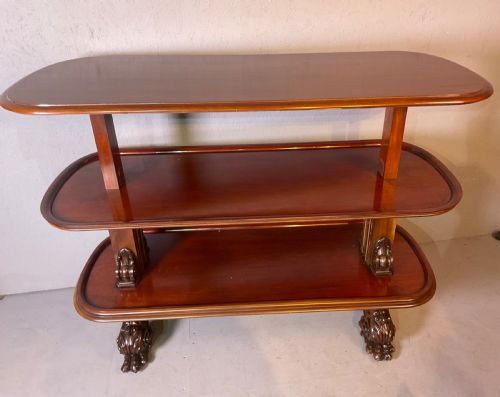
Mahogany and walnut dominate the selection, often arranged in three-tier configurations supported by turned columns or castors. Buyers frequently encounter versions with adjustable shelves or rising tiers, reflecting the inventive mechanical spirit of the nineteenth century.
How they were made
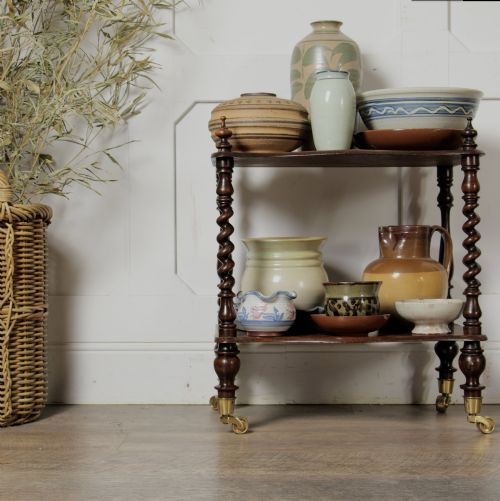
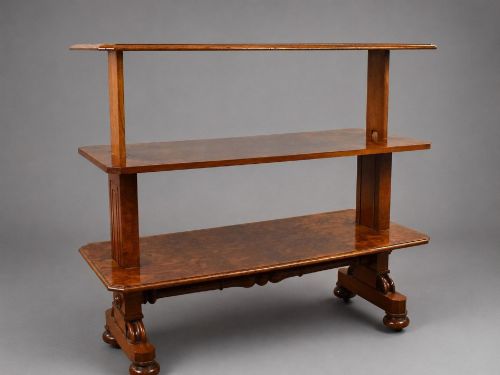
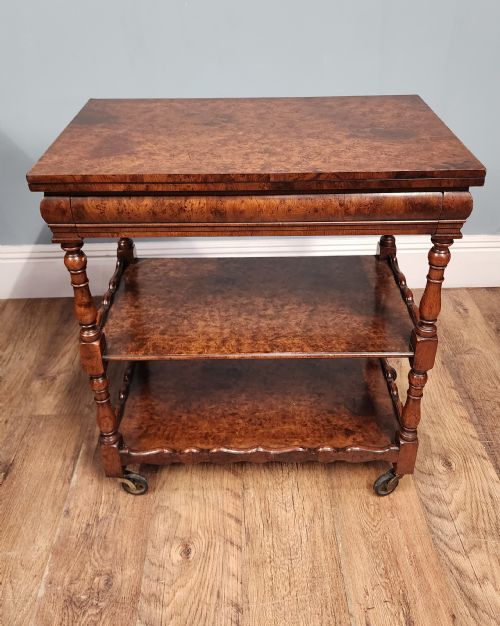
Cabinet makers utilised solid mahogany, walnut and oak for the primary frames, frequently applying burr walnut veneer to display rich grain patterns. Secondary timbers provided sturdy foundations while decorative elements such as barley twist supports and inlaid details showcased fine workshop capabilities.
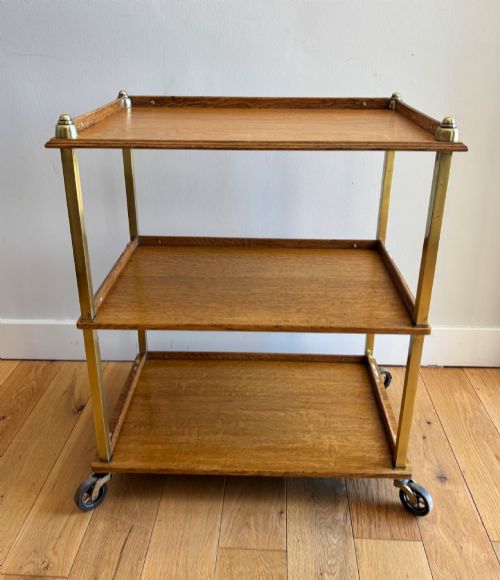
Moving parts relied on brass castor wheels and rise-and-fall mechanisms that allowed tiers to adjust in height. Construction often involved precise joinery to ensure multiple shelves remained stable under heavy loads of china, books or silver.
What varies in quality
Superior examples separate themselves through clever mechanical complexity, such as telescopic columns or fully adjustable drop-down shelves that operate smoothly. The crispness of carved oak or the depth of burr walnut veneer distinguishes workshop production from ordinary utility pieces.
Original castors and intact brass fittings maintain the integrity of a piece far better than later replacements. The balance of the stacked tiers and the weight of the timber dictate how well the piece survives daily movement.
Gillows·Maple & Co
The Victorian Tier Trolley Glossary
- Dumb Waiter
- A tiered serving stand used in dining rooms to hold dishes without needing a servant present. These items evolved into multi-shelf trolleys by the mid nineteenth century.
- Etagere
- A set of open shelves for displaying small objects or books. They share the multi-tier structure of the trolley but focus on display rather than service.
- Whatnot
- A piece of furniture with three or more shelves used for ornaments or books. They often feature turned supports and sit on small castor wheels.
- Buffet
- A sideboard or serving table adapted with tiers for holding food and tableware. These pieces often incorporate cabinets or drawers beneath the open shelves.
- Barley Twist
- A type of turning shaped like a spiral rope used for table legs and support columns. This decorative detail gained popularity during the Victorian period.
Victorian Tier Trolley: Frequently Asked Questions
How were dumb waiters used?
These pieces stood near dining tables to hold extra dishes, wine bottles and serving utensils during long meals. They allowed diners to help themselves without calling servants into the room.
Later variations moved easily on castors, functioning as mobile sideboards or tea trolleys for the drawing room and library.
Can I use an etagere as a drinks trolley?
Many three-tier stands and etageres feature strong timber shelves and original castors that easily support glassware and bottles. Their open design keeps drinks visible and accessible from any angle.
Original moving parts require gentle handling to preserve the nineteenth-century brass mechanisms during everyday use.
What is a rise and fall trolley?
A rise and fall trolley uses a central screw or ratchet mechanism to raise and lower the middle or top tiers. This clever engineering allowed servants to adjust shelf heights for different serving dishes.
Operating the mechanism requires turning the tiers carefully along the central column to avoid straining the original timber threads.
How do I spot an 1880s model?
Pieces from the eighteen-eighties often incorporate ebonised wood or rich burr walnut veneer alongside Aesthetic Movement design influences. Turned supports and distinct bracket feet frequently mark this decade of production.
Makers during this period also favored clever folding mechanisms and combination book shelves built into the trolley frame.