
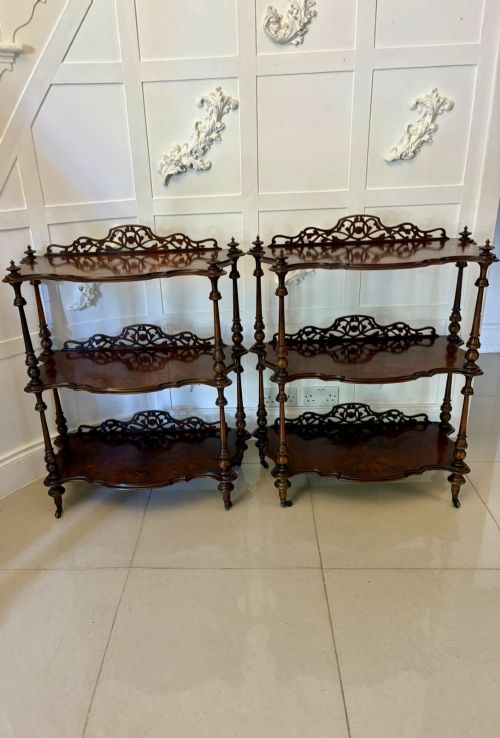
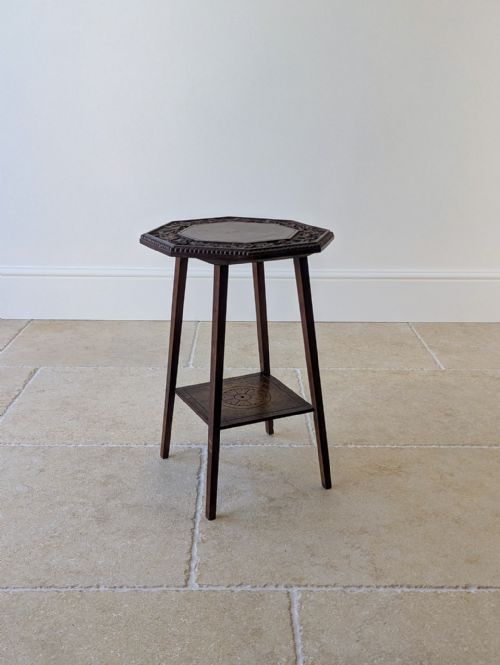
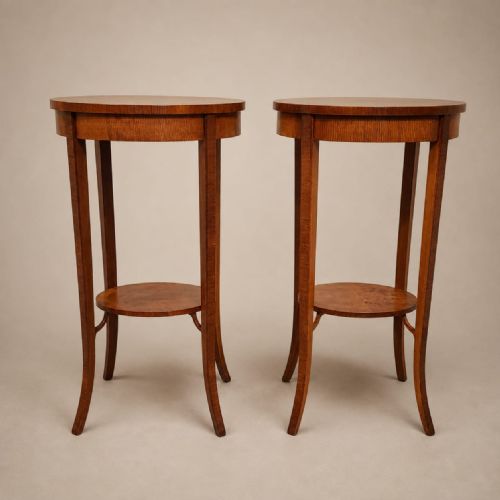
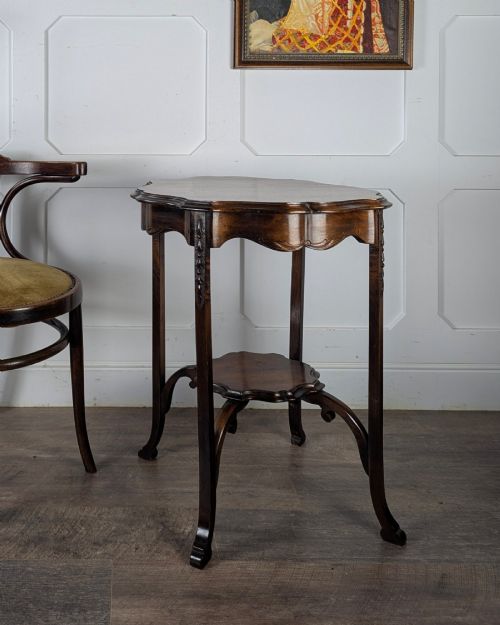
Walnut Tier Table
When you select a walnut tier table, you invite architectural timber and practical surface space into a room.
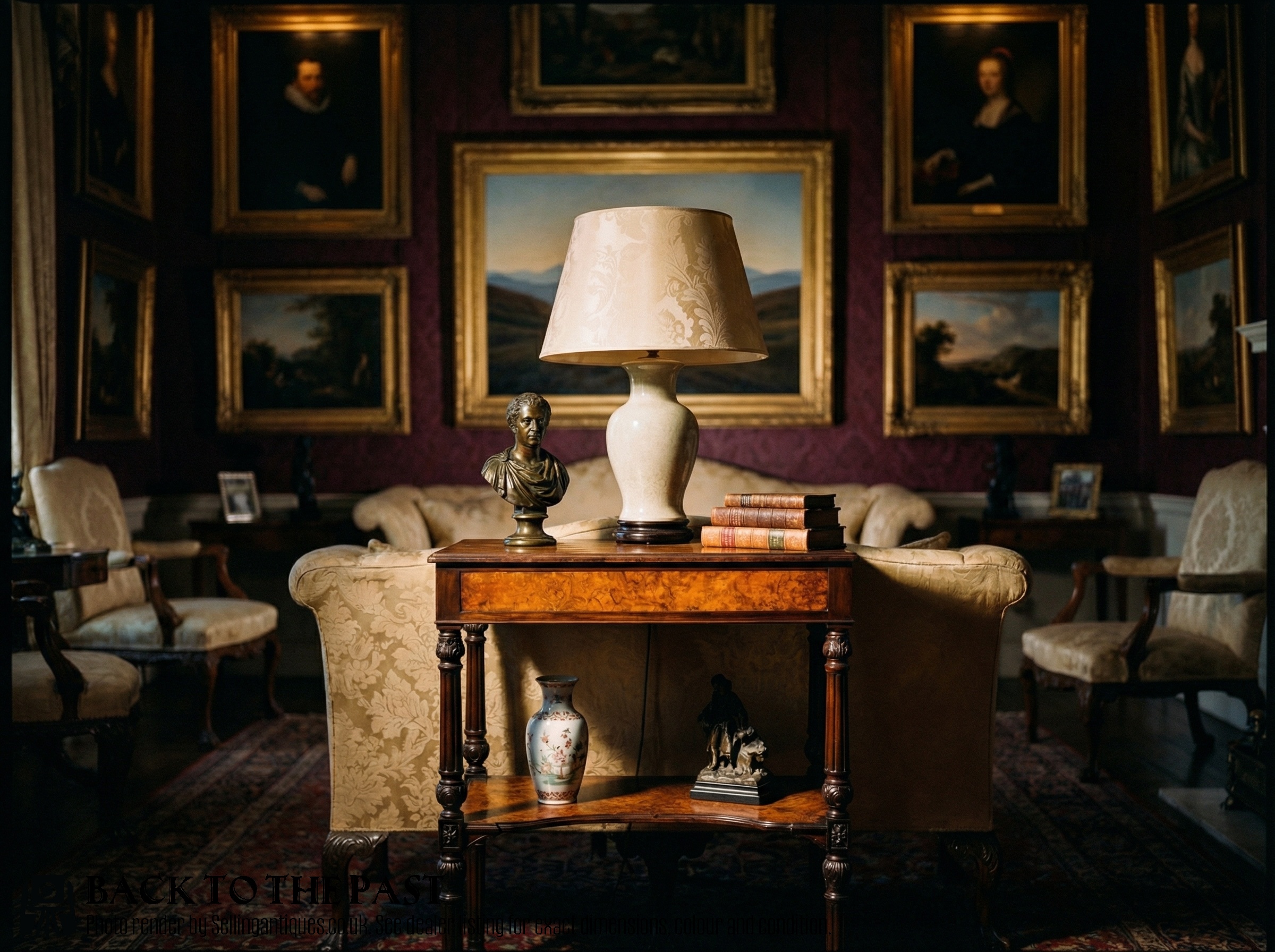
Walnut Tier Table
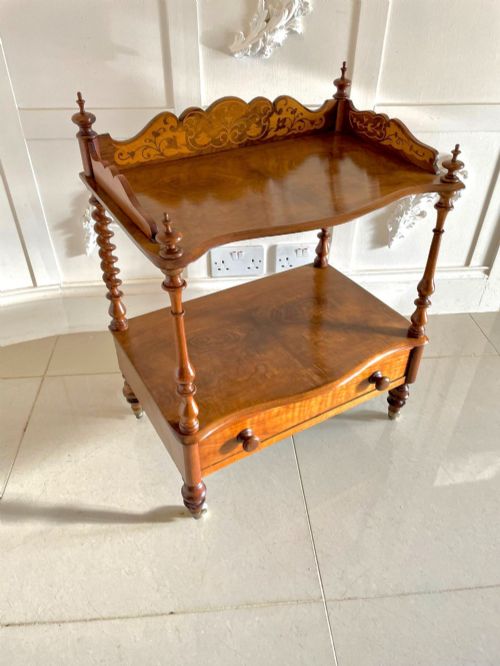
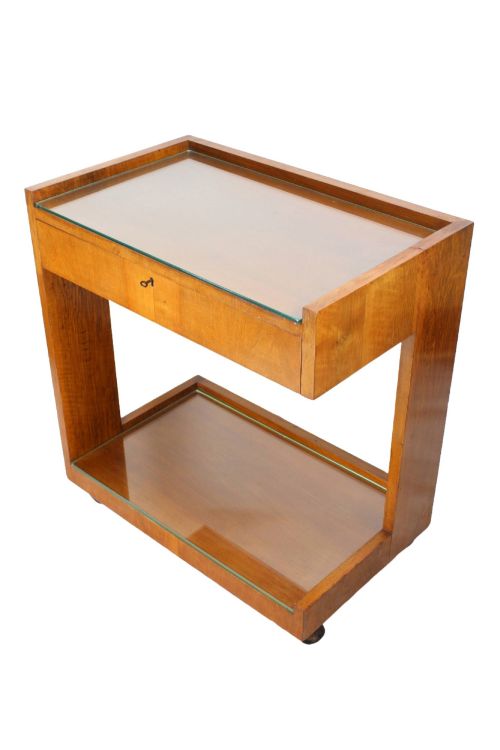
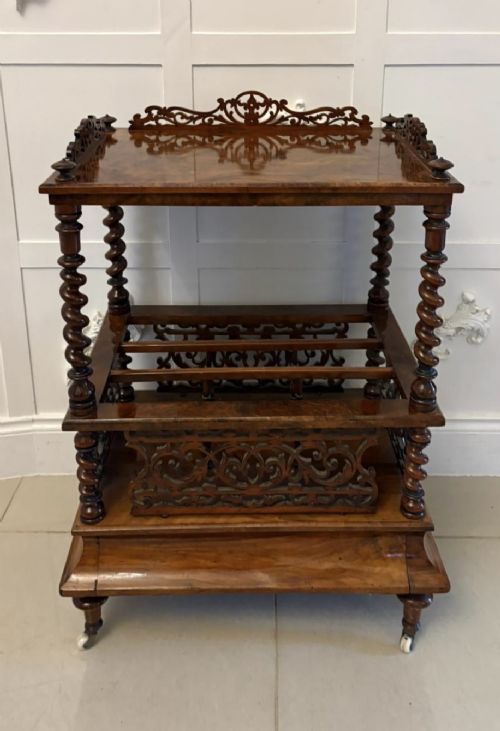
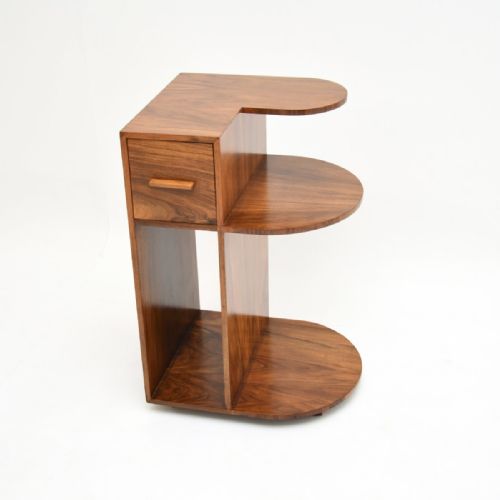
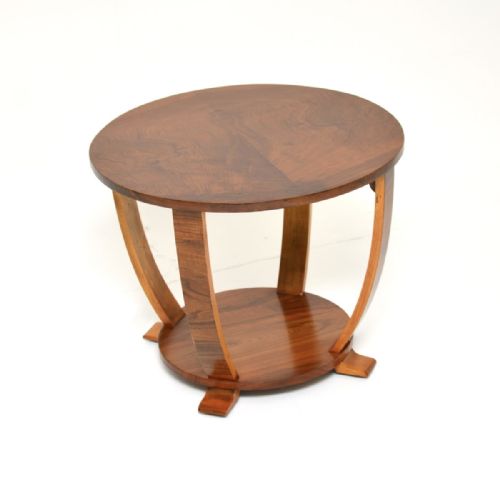
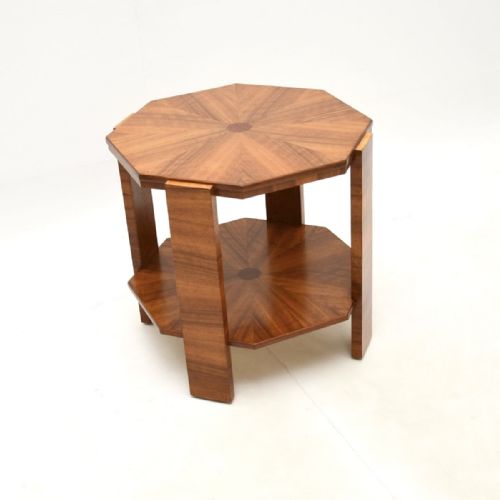
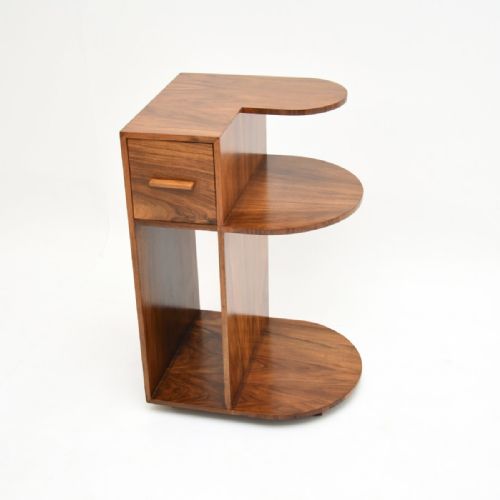
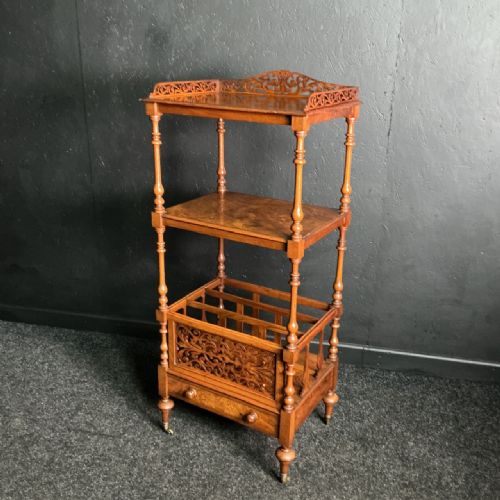
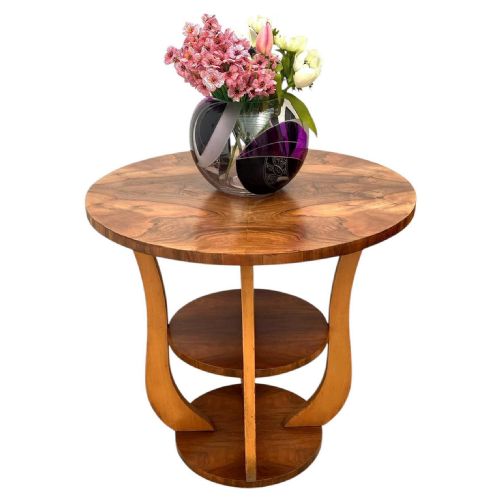
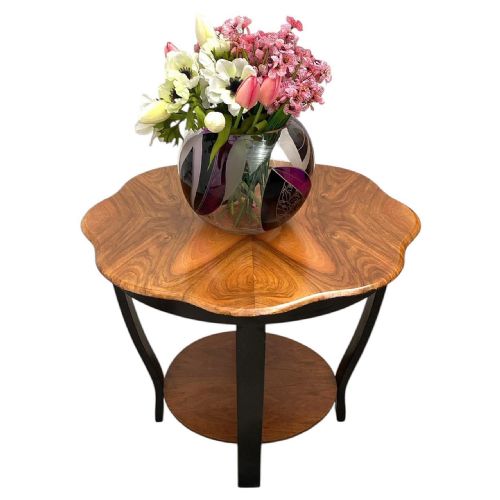
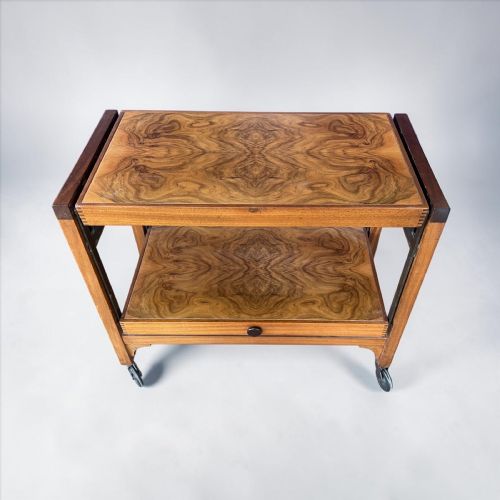
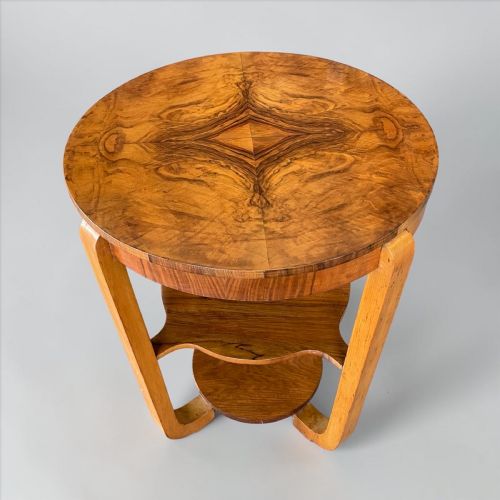
A walnut tier table brings together multiple surfaces arranged vertically, offering practical levels for display and daily use. These pieces appear across Victorian, Edwardian, and Art Deco periods, shifting from ornate Victorian canterburys and whatnots to streamlined 1930s coffee tables and trolleys.
The form encompasses occasional tables, side tables, and etageres featuring distinct platforms supported by turned legs, pillars, or uprights. Victorian examples often display rich burr veneers and inlaid details, whereas interwar pieces favour figured walnut and clean geometric lines.
Originating in English, French, and Syrian workshops, these multi-level surfaces serve as versatile lamp tables, book tables, or serving trolleys. Buyers encounter solid walnut alongside veneered construction, often matched with brass or glass elements.
Materials and construction methods
Cabinet makers utilised walnut timber, applying highly figured burr walnut or straight-grained veneer over secondary woods to create decorative top surfaces. Marquetry inlay, ebonised wood, and brass mounts frequently accent the primary timber framework.
Structural support relies on solid walnut or mahogany legs, sometimes shaped with turning, bobbin details, or metal casters. Multi-tiered designs integrate lower shelves fixed securely between upright pillars or stretcher rails.
Walnut Tier Table Retail Price Guide 2026
Typical asking prices for walnut tier table among the pieces listed under this phrase on Sellingantiques today, from the lower quarter to the upper quarter. They describe what is for sale here now, not the wider market.
Materials recorded on this site include burr walnut, mahogany, brass, ormolu, and ebonised wood.
Distinctions in construction and finish
Superior examples demonstrate careful selection of book-matched burr veneers across the primary tiers, ensuring symmetrical grain patterns that enhance the visual depth of the walnut. Lesser pieces employ plain timber or basic veneer with minimal attention to grain alignment.
Joinery standards define the integrity of the tiers, with high-grade pieces showing rigid vertical supports and precise fitting between shelves and legs. Lower quality items often suffer from loose joints or unstable upper tiers due to inadequate internal framing.
William Birch·Holland and Sons·Tehan
The Walnut Tier Table Glossary
- Burr walnut
- A figured wood grain obtained from the wart-like growths on walnut trees, prized for its swirling patterns. Cabinet makers slice this timber into thin veneers for tabletops.
- Etagere
- A piece of furniture consisting of a set of open shelves for displaying small objects. French examples often feature delicate turned legs and multiple tiers.
- Whatnot
- An open shelved piece of furniture designed for displaying ornaments or holding books. Victorian versions frequently incorporate walnut and burr walnut construction.
- Canterbury
- A low stand originally designed for holding sheet music or loose magazines, often fitted with vertical partitions. Many Victorian models combine this function with an upper tier table surface.
- Marquetry
- The art and craft of applying pieces of veneer to a structure to form decorative designs. Craftsmen use various tinted woods to create intricate surface patterns.
Walnut Tier Table: Frequently Asked Questions
How do I date a walnut tier table?
Dating relies on stylistic markers, such as heavy turned legs and inlaid decoration indicating Victorian origin, or clean geometric planes pointing to the 1930s Art Deco period.
Construction techniques also provide clues, as hand-cut dovetails and solid timber frames generally precede the machine-cut veneers and manufactured wood cores of later decades.
Were these tables used as coffee tables?
Most early examples served as lamp tables, occasional tables, or whatnots rather than low coffee tables. Victorian and Edwardian tiers sat higher to hold reading materials, ornaments, or lighting.
Lower tiered tables emerged predominantly during the 1920s and 1930s, specifically designed to sit beside modern seating arrangements.
How do I care for a veneered walnut surface?
Protect the finish by keeping the timber away from direct sunlight and steady heat sources to prevent the veneer from drying or cracking. Regular dusting with a soft, dry cloth maintains the sheen without damaging the polished surface.
Avoid using silicone sprays or harsh chemical polishes, applying traditional beeswax sparingly instead.